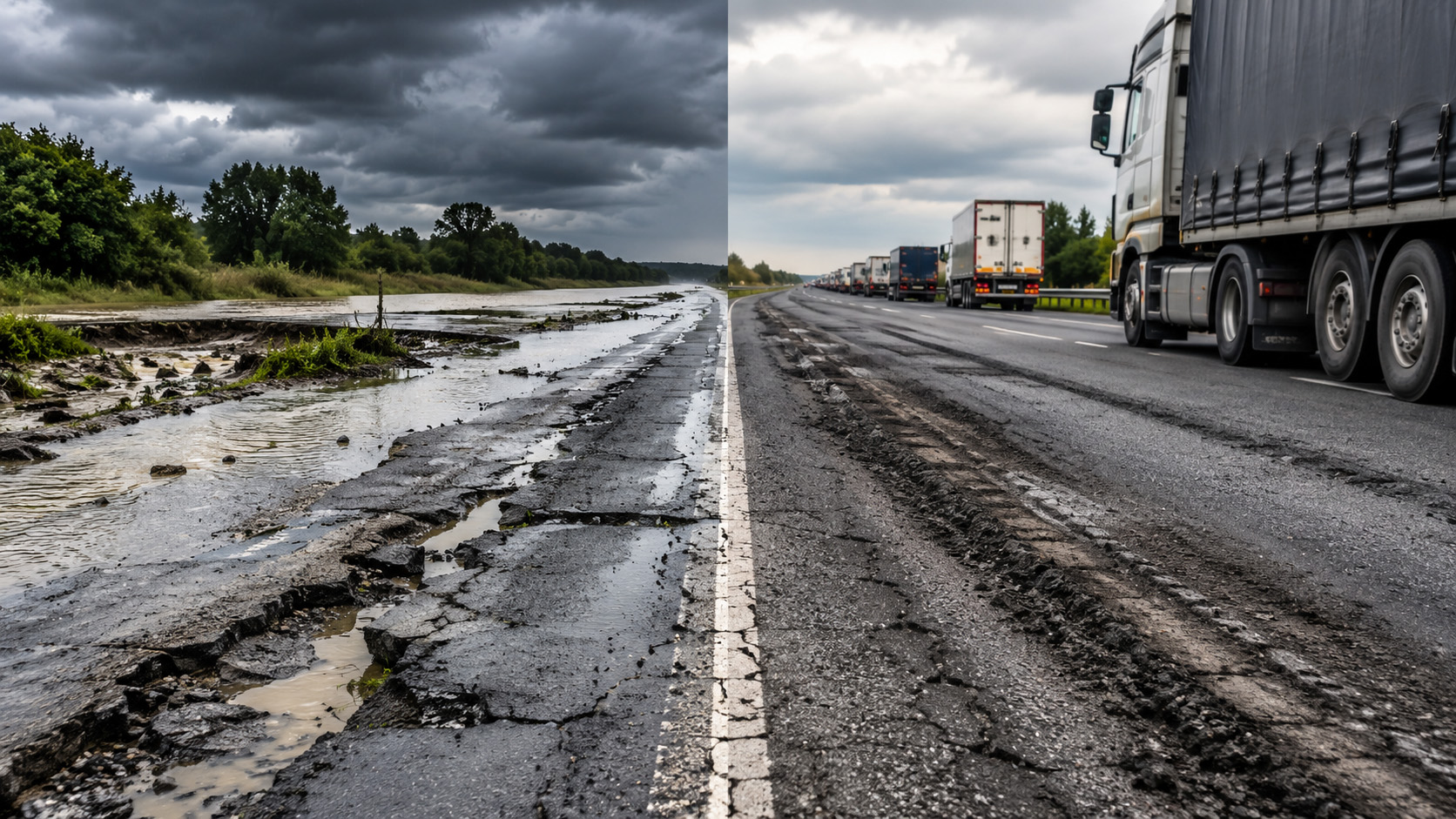
Storm Damage vs Traffic Damage: Which Causes More Surface Failures?
Surface failures are a common concern for property owners, facilities managers, local authorities, and commercial site operators. Whether affecting access roads, car parks, industrial yards, or private estates, deterioration can lead to safety risks, increased maintenance costs, and disruption to daily operations.
One of the most common questions asked when investigating damage is whether storms or traffic are responsible for the problem. The answer is not always straightforward because both forces can significantly affect the lifespan and performance of a surface. Understanding how each contributes to deterioration is essential when planning repairs, maintenance, and future surfacing projects.
In many cases, the most severe failures occur when storm damage and traffic damage work together over time rather than acting independently.
How Storm Damage Affects Surfaced Areas
Storms introduce a range of environmental stresses that can weaken road surfaces and paved areas. Heavy rainfall, flooding, strong winds, and prolonged periods of wet weather all have the potential to compromise the integrity of a surface.
Water is often the greatest threat. Even well-constructed surfaces can become vulnerable if drainage systems are inadequate or if water is allowed to pool for extended periods.
Water Penetration and Structural Weakness
When water penetrates cracks or joints within a surface, it can gradually weaken the underlying structure. The sub-base, which provides support for the surfacing material, may begin to lose strength as moisture accumulates.
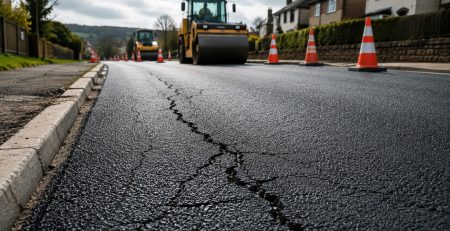
As vehicles continue to travel across the affected area, the weakened foundation becomes increasingly susceptible to movement and deformation. What may begin as a small crack can eventually develop into extensive surface failure.
Proper drainage design is therefore a critical aspect of successful tarmac installation projects, helping to minimise long-term water-related deterioration.
Flooding and Surface Erosion
Severe storms can generate large volumes of surface water in a short period. Flooding may wash away supporting materials beneath road edges or create voids that are not immediately visible.
Over time, these hidden weaknesses can lead to sinking, cracking, and collapse. In rural and commercial environments, repeated flooding events often accelerate deterioration far beyond normal wear rates.
Freeze-Thaw Cycles
Although particularly common during colder months, freeze-thaw action often follows periods of heavy rainfall. Water enters small cracks and expands when temperatures drop below freezing.
This expansion increases the size of existing defects and creates additional pathways for water ingress. Repeated cycles can significantly shorten the lifespan of a surface that would otherwise remain serviceable for many years.
How Traffic Damage Develops
While storms attack a surface from an environmental perspective, traffic damage is caused by mechanical stress. Every vehicle passing over a surface generates pressure that gradually contributes to wear and fatigue.
The impact becomes more significant when surfaces experience frequent heavy vehicle movements.
Repeated Loading and Fatigue
Road surfaces are designed to accommodate expected traffic volumes. However, when traffic exceeds original design assumptions, deterioration often accelerates.
Heavy goods vehicles, delivery fleets, construction traffic, and industrial machinery place considerable strain on surfacing materials. Repeated loading can eventually cause cracking, rutting, and surface deformation.
Sites requiring durable solutions often benefit from specialist commercial surfacing contractors who understand the demands of high-traffic environments.
Rutting and Surface Deformation
One of the most visible signs of traffic-related damage is rutting. This occurs when wheel paths gradually depress under repeated loading.
Ruts can create drainage issues by trapping water on the surface. Once standing water becomes established, storm-related deterioration often accelerates, creating a cycle of ongoing damage.
Turning Movements and Stress Concentration
Certain locations experience greater traffic stress than others. Junctions, loading bays, car park entrances, and turning areas frequently suffer from concentrated pressure caused by braking, acceleration, and steering movements.
These forces can lead to surface displacement, cracking, and aggregate loss even when the surrounding surface remains in good condition.
Which Causes More Surface Failures?
The answer depends on the specific environment, usage patterns, and construction quality of the surface.
In high-traffic industrial and commercial locations, traffic damage is often the primary cause of deterioration. Constant loading gradually weakens the structure until visible defects appear.
In contrast, storm damage tends to be the leading factor in areas with poor drainage, inadequate construction, or prolonged exposure to severe weather conditions.
However, studies across the surfacing industry consistently show that water-related damage is one of the most significant contributors to long-term pavement failure. Water infiltration frequently acts as the catalyst that allows traffic loads to cause far greater damage than they otherwise would.
For this reason, many surface failures cannot be attributed solely to either storms or traffic. Instead, they result from the interaction between environmental exposure and mechanical loading.
Why Storm Damage Often Has a Greater Long-Term Impact
Although traffic damage is highly visible, storm damage frequently causes more extensive structural deterioration beneath the surface.
A road may appear relatively intact while hidden water penetration weakens the sub-base below. By the time visible defects emerge, substantial structural damage may already exist.
Hidden Damage Below the Surface
Surface cracks are often only symptoms of deeper issues. Water infiltration can affect multiple layers of a pavement system, creating instability that remains undetected until major repairs become necessary.
Because the underlying problem is concealed, storm damage often progresses further before intervention occurs.
Accelerated Deterioration Rates
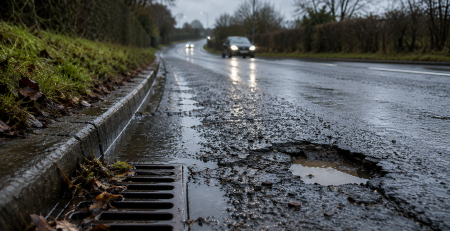
Once water compromises structural support, every vehicle movement contributes more stress than originally intended. Traffic loads that would normally be harmless begin to generate cracks, depressions, and potholes.
This means storm damage frequently amplifies the effects of traffic damage, increasing repair requirements and reducing overall lifespan.
Why Traffic Damage Cannot Be Ignored
Despite the significant role of water, traffic remains a major contributor to surface failures.
Facilities experiencing continuous heavy vehicle movements may encounter deterioration even when drainage systems perform effectively.
Heavy Vehicle Concentration
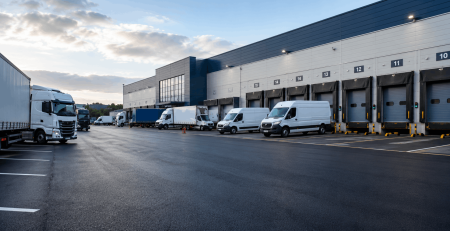
Industrial estates, logistics centres, distribution hubs, and commercial yards often experience concentrated loading that exceeds the demands of standard road designs.
In these environments, professional machine lay tarmac solutions are frequently used to achieve consistent compaction and improved durability.
Surface Fatigue Over Time
All surfacing materials have a finite lifespan. Repeated traffic loading eventually causes fatigue cracking, particularly in older surfaces.
Without routine maintenance, small defects grow larger and become more expensive to repair.
The Combined Effect of Storms and Traffic
The most severe failures rarely result from a single cause. Instead, they develop when storm damage weakens the pavement structure and traffic loading exploits those weaknesses.
A common example involves water entering minor cracks after heavy rainfall. The sub-base softens, support decreases, and vehicles passing over the area create additional movement. Cracks expand, potholes develop, and surface deformation becomes increasingly visible.
This combined mechanism explains why some roads deteriorate rapidly following periods of severe weather despite having handled traffic successfully for many years beforehand.
Preventing Surface Failures Before They Escalate
The most effective approach is proactive maintenance. Addressing minor issues early can significantly reduce long-term repair costs and extend surface lifespan.
Regular inspections help identify developing problems before structural deterioration becomes widespread.
Drainage Management
Effective drainage remains one of the most important protective measures available. Surface water should be directed away from paved areas as efficiently as possible.
Blocked drainage channels, damaged gullies, and poor surface gradients should be addressed promptly to minimise water accumulation.
Early Crack Repairs
Small cracks provide entry points for moisture. Sealing defects quickly helps prevent water penetration and protects underlying layers.
Where potholes or localised failures have already formed, professional pothole repairs can restore safety and prevent further deterioration.
Professional Assessment
When significant damage appears, a detailed assessment is often required to determine whether storms, traffic, or both factors are responsible.
Experienced contractors can identify root causes and recommend appropriate solutions that address underlying structural issues rather than simply treating visible symptoms.
Conclusion
When comparing storm damage and traffic damage, neither can be considered entirely responsible for most surface failures. Traffic creates ongoing mechanical stress, while storms introduce moisture and environmental pressures that weaken structural integrity.
If one factor is more likely to trigger widespread long-term deterioration, storm-related water damage often has the greater impact because it compromises the foundation on which the surface depends. Once that support is weakened, traffic loads accelerate failure dramatically.
The most durable roads, car parks, and access routes are those designed to withstand both challenges simultaneously through quality construction, effective drainage, and ongoing maintenance. Property owners who address early signs of deterioration can significantly reduce repair costs and maximise the lifespan of their surfacing investment.