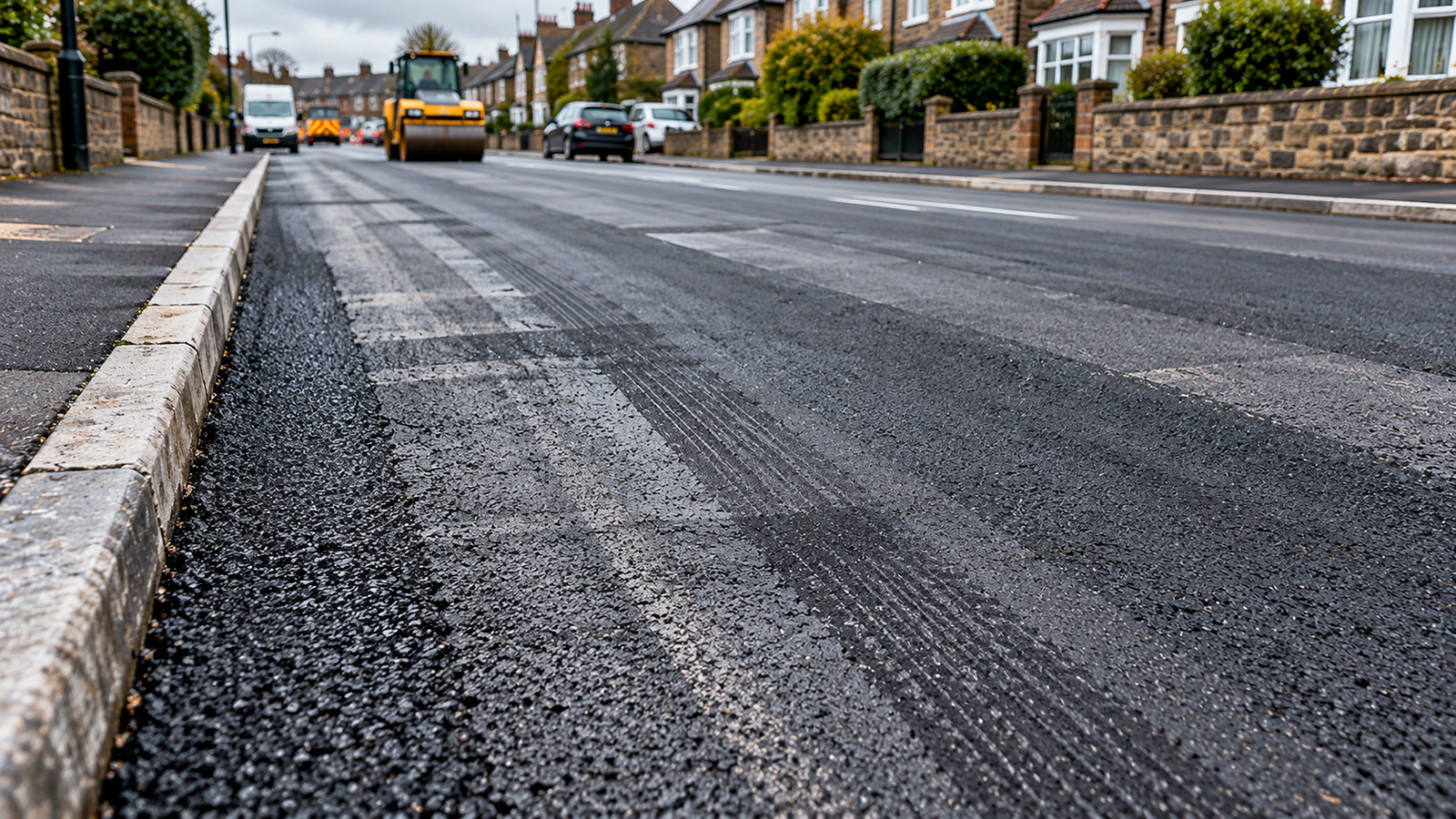
That New Road Already Looks Damaged — But Is It Actually Failing?
A newly surfaced road, access route or car park is expected to look clean, even and finished. When marks, slight variations, visible joints or small surface irregularities appear shortly after completion, it is understandable for property owners and site managers to wonder whether something has gone wrong.
However, appearance alone does not always tell you whether a new surface is failing. Some features are a normal consequence of laying and compacting asphalt or tarmac, while others can indicate problems with preparation, drainage, compaction or installation.
Understanding the difference is important. A surface that looks slightly imperfect may still be structurally sound and capable of delivering many years of service. Conversely, an apparently minor defect can sometimes be an early warning that deterioration will develop if the underlying cause is not addressed.
Why New Road Surfacing Does Not Always Look Perfect
Road surfacing is a construction process rather than a decorative finishing process. The primary objective is to create a stable, properly compacted and durable surface capable of supporting the traffic expected to use it.
Although appearance matters, particularly on private developments, commercial premises and residential access roads, small visual differences do not automatically indicate poor road surfacing quality.
The final appearance can be influenced by the aggregate used in the material, the laying method, weather conditions, access restrictions and the shape of the area being surfaced. Large open areas may be suitable for machine laying, while awkward edges and restricted sections can require additional hand work.
Professional machine lay tarmac can provide excellent consistency across suitable areas because the material is distributed at a controlled thickness before being compacted. Even then, joints, edges and transitions may remain visible.
The important question is therefore not simply whether the road looks completely uniform. It is whether the surface has been constructed correctly and is performing as intended.
Visible Joints Are Not Automatically a Defect
One of the most common concerns with a newly surfaced road is the appearance of joints.
Roads and larger areas cannot always be surfaced as one uninterrupted section. Depending on the size and layout of the project, the material may need to be installed in separate passes. The points where those passes meet can remain visible after completion.
A visible joint does not necessarily mean the road is splitting apart.
The condition of the joint is more important than its appearance. A properly constructed joint should remain closed and stable without significant movement or widening. Water should not be able to penetrate easily into the construction beneath.
Concerns become more justified if a joint begins opening, breaking away or developing into a crack. Those changes can allow moisture into the pavement structure and may eventually lead to more substantial deterioration.
Surface Texture Can Vary Across a New Road
Another issue that can cause concern is variation in texture or colour.
Fresh asphalt and tarmac surfaces can appear slightly different across individual areas, particularly immediately after installation. Traffic movement, weather exposure and normal use can gradually make these variations less noticeable.
Hand-finished areas may also look somewhat different from sections installed mechanically. This is particularly common around drainage channels, kerbs, covers, gateways and confined corners where large machinery cannot operate effectively.
Texture therefore needs to be considered alongside performance.
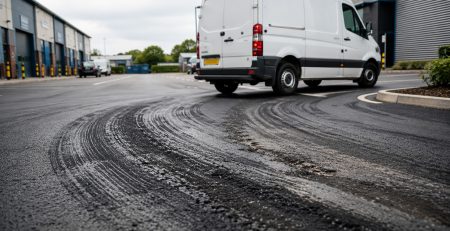
If the material remains tightly bound, properly compacted and stable under traffic, minor visual differences are not necessarily evidence of failure. More serious warning signs include loose aggregate, rapid surface loss or sections that appear to be breaking apart.
Compaction Is Critical to Road Surfacing Quality
Compaction is one of the most important parts of professional tarmac installation and road surfacing.
When surfacing material is laid, it must be compacted correctly while conditions are suitable. This helps create a dense and stable layer capable of supporting vehicles while limiting excessive movement and water penetration.
Insufficient compaction can leave the finished surface vulnerable. Problems may not always become obvious immediately after installation. Instead, repeated traffic loading and weather exposure can gradually reveal weak areas.
Early signs may include localised settlement, movement under vehicles, premature surface deterioration or depressions developing in frequently trafficked areas.
This is why road surfacing quality UK assessments should consider how the surface behaves, rather than relying entirely on its appearance.
Small Marks and Serious Depressions Are Different
A new surface may occasionally contain minor roller marks or slight variations that have little effect on its performance. Significant depressions are different.
A depression can create a low point where water collects. If ponding repeatedly occurs after rainfall, the issue deserves closer attention because drainage is fundamental to long-term surface performance.
Water sitting on a road can increase the opportunity for moisture to enter joints, edges or existing weaknesses. During colder periods, repeated wetting and temperature changes can contribute to deterioration.
The important distinction is between a small cosmetic variation and an area that affects the way water moves across the site.
A professionally designed surface should generally direct rainfall towards appropriate drainage points rather than allowing substantial standing water to remain.
Cracking Soon After Installation Deserves Attention
Cracks are one of the clearest signs that a newly surfaced road should be assessed.
That does not mean every visible line represents catastrophic failure. The type, location and development of the crack all matter.
A small isolated crack may have a different cause from widespread interconnected cracking. Cracks appearing over existing joints or unstable underlying construction can also indicate movement beneath the new surface.
What matters particularly is whether the cracking is changing.
If cracks widen, multiply or begin breaking around the edges, the problem is unlikely to be purely cosmetic. Water can enter through those openings and weaken the surrounding construction.
Early inspection is valuable because localised pothole repairs and surface repairs may sometimes address deterioration before a larger area becomes affected.
The Problem May Be Below the New Surface
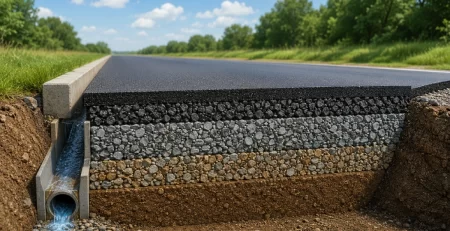
A road can only perform as well as the construction supporting it.
The visible asphalt or tarmac is the part everyone notices, but the layers underneath are equally important. If the underlying construction is weak, poorly prepared or unstable, placing a new surface on top does not necessarily remove those problems.
Movement beneath the surface can eventually become visible through settlement, cracking or deformation.
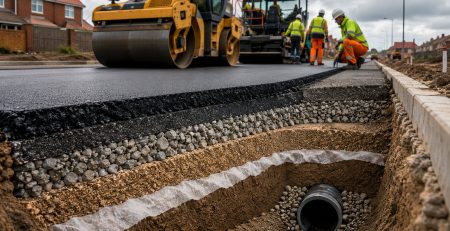
This is why preparation is such an important part of road surfacing. Existing failed material may need to be removed, weak areas corrected and the base prepared before the final surface is installed.
Simply covering a badly deteriorated road can improve its appearance temporarily without necessarily providing the long-term performance expected from a properly constructed scheme.
Drainage Can Reveal Whether a New Surface Is Performing Properly
Rainfall provides a useful opportunity to observe how a new road behaves.
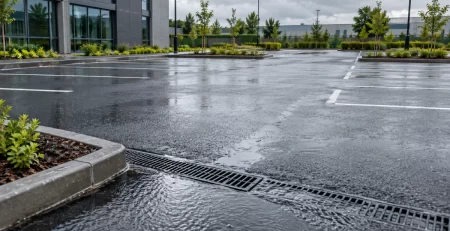
After rain, look at where the water travels. It should generally move towards drainage channels, gullies or other intended collection points.
Small temporary wet areas are not automatically evidence of failure, but extensive or persistent ponding can indicate problems with surface levels.
Water flowing in an unintended direction can also cause difficulties elsewhere on a site. For example, runoff directed towards entrances, buildings or pedestrian areas may create operational problems even if the road itself remains structurally sound.
For commercial premises in particular, drainage should be considered as part of the complete surfacing system rather than as a separate afterthought. Experienced commercial surfacing contractors should consider traffic requirements, levels and water management when planning the work.
Edges Need Particular Attention
Road edges are vulnerable because they do not always have the same lateral support as material located within the main carriageway.
A neat edge is desirable, but stability is more important. If vehicles repeatedly drive over an unsupported edge, the material can begin breaking away.
This is particularly relevant on narrow access roads, rural routes, private estates and commercial entrances where vehicles may regularly move close to the edge of the surfaced area.
Early edge deterioration should not simply be dismissed because the centre of the road still looks good. Once the edge begins breaking down, water can penetrate and traffic can progressively damage a larger section.
Heavy Vehicles Can Expose Weaknesses Quickly
Commercial roads and yards face very different demands from lightly used residential driveways.
HGVs, delivery vehicles, refuse vehicles and plant impose substantial loads on a surface. Turning movements can be particularly demanding because tyres create forces across the surface rather than simply travelling in a straight line.
A newly surfaced commercial area that quickly develops rutting, deformation or movement under normal expected traffic should therefore be examined carefully.
The design and construction should reflect how the site will actually be used. A road intended for occasional cars does not necessarily require the same construction as an industrial yard experiencing frequent heavy vehicle movements.
Road surfacing quality should always be assessed in relation to the intended traffic and operating environment.
When Does a Cosmetic Issue Become a Performance Problem?
The simplest distinction is whether the issue is stable or developing.
A visible joint that remains closed may be completely acceptable. A joint that progressively opens is more concerning. A slight texture variation may have little practical importance, whereas an area shedding aggregate under ordinary traffic requires investigation.
The same principle applies to surface levels. Minor visual variations can be harmless, while depressions that hold substantial water may affect long-term durability.
Site managers should therefore observe changes rather than judging the entire installation from a single visual inspection immediately after completion.
Photographs can be useful for monitoring questionable areas because they provide a clear reference point. If a crack, depression or damaged edge becomes noticeably larger over time, there is stronger evidence that the condition is developing rather than simply reflecting the original finish.
Why Early Inspection Can Prevent Larger Repairs
Road defects rarely improve by themselves.
When deterioration begins, traffic and weather can gradually enlarge the affected area. Water penetration can accelerate this process, particularly when it reaches weak underlying material.
Identifying a genuine defect early can therefore make intervention more manageable. Localised corrective work may be possible before deterioration spreads into surrounding areas.
This does not mean every mark on a newly surfaced road requires immediate repair. It means unusual movement, cracking, settlement, standing water or surface breakdown should be assessed before assuming they are harmless.
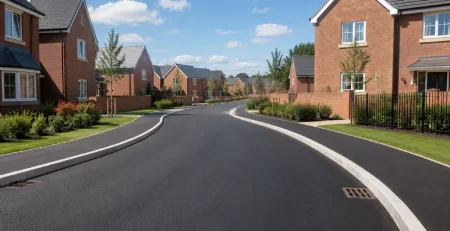
Examples of completed surfacing projects can also help property owners and site managers understand what professionally completed road and access surfaces typically look like in practical environments.
What Good Road Surfacing Quality Actually Looks Like
A good road surface should ultimately be judged by performance.
It should provide a stable running surface, support the expected traffic, manage water appropriately and resist premature deformation or deterioration. Joints should remain secure, edges should remain stable and the material should not begin rapidly breaking apart.
Visual consistency contributes to a professional finish, but a perfectly uniform appearance is not the sole measure of workmanship.
For property owners and commercial site managers, the most useful approach is to consider the complete surface. Look at drainage, stability, cracking, movement, edges and how the road responds to everyday traffic.
A new road that contains a few visible joints or minor texture variations may be performing exactly as intended. A road that is already moving, cracking extensively, holding significant amounts of water or breaking apart requires closer examination.
The difference between cosmetic appearance and genuine failure is therefore not always obvious from a photograph or a quick glance. Proper assessment considers how the surface was constructed, how it is being used and whether the condition is stable or continuing to deteriorate.
Where there is uncertainty about a recently completed road, car park or access surface, a professional inspection can help establish whether the issue is simply part of the normal finished appearance or an early indication that corrective work may be required. Property owners and site managers can contact Total Surfacing Solutions to discuss the condition of an existing surface and the appropriate next steps.