What Happens During a Full Car Park Resurfacing Project?
A full car park resurfacing project is more involved than simply placing a fresh layer of material over an existing surface. For commercial property owners, facilities managers and site operators, resurfacing is an opportunity to address deterioration, improve drainage, restore safe vehicle movement and create a professional finish that is suitable for continued daily use.
The exact scope depends on the condition and construction of the existing car park. Some sites have a fundamentally sound base but a worn surface, while others have extensive cracking, potholes, deformation or drainage problems that indicate deterioration below the visible surface. A professional assessment therefore needs to establish what is happening throughout the pavement structure before resurfacing begins.
Experienced commercial surfacing contractors will consider the expected traffic, condition of the existing material, drainage, access requirements and areas exposed to particularly demanding vehicle movements. This allows the resurfacing work to be planned around the actual needs of the site rather than simply improving its appearance.
The Initial Car Park Site Assessment
Before machinery arrives and the existing surface is removed, the contractor needs to understand the condition of the car park.
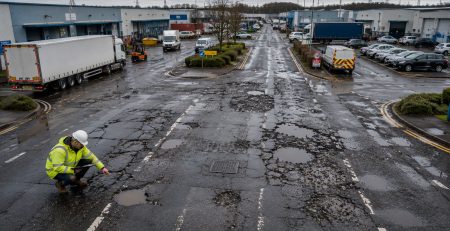
This normally starts with a detailed site inspection. Cracking, potholes, depressions, damaged edges and areas of standing water can provide useful indications of how the existing pavement is performing. Particular attention may be given to entrances, exits, turning areas, loading zones and frequently used vehicle routes because these areas can experience greater stress.
The contractor will also consider existing kerbs, drainage channels, gullies, inspection covers and other fixed features. Their levels matter because the finished surface must integrate correctly with the surrounding infrastructure.
A good assessment is especially important when significant surface deterioration is visible. Covering an underlying structural problem with a new surface course may improve appearance temporarily, but it does not necessarily resolve the cause of the failure.
Planning Around an Operational Commercial Site
Car park resurfacing UK projects often take place at active business premises, schools, warehouses, offices, retail sites and other locations where access cannot simply be ignored.
Planning therefore includes considering how vehicles, pedestrians, staff, customers and deliveries will move around the site while the work is underway. Depending on the size and layout of the car park, resurfacing may be completed in phases so that part of the area remains accessible.
The working sequence also needs to accommodate surfacing machinery and material deliveries. Careful planning before work starts can reduce unnecessary disruption while allowing contractors enough space to complete the installation correctly.
Preparing the Existing Car Park Surface
Preparation is one of the most important stages of a resurfacing project. The long-term performance of the finished car park depends heavily on the condition of the structure beneath it.
Loose material, failed surfacing and severely deteriorated sections need to be addressed rather than concealed. Where necessary, defective areas can be broken out and excavated so that weak material is removed.
The required level of preparation varies considerably between projects. A relatively sound car park may require less intervention, while a heavily deteriorated site may need more extensive reconstruction.
Professional tarmac installation and road surfacing should always take account of the supporting layers beneath the final surface. The visible tarmac is only one component of the overall pavement construction.
Removing Failed Areas
Potholes, severe cracking and localised depressions can sometimes indicate that the material below the surface has also deteriorated.
Where this has happened, simply filling the visible defect may not provide a suitable foundation for complete resurfacing. The affected area may need to be cut out or excavated until stable material is reached. Suitable replacement material can then be installed and properly compacted.
This stage helps create a more consistent foundation before the wider car park is surfaced.
Checking the Sub-Base and Foundation
The sub-base distributes vehicle loads and provides structural support for the surfacing above it. Its condition is therefore particularly important in commercial car parks used by vans, delivery vehicles or other heavier traffic.
Where the existing foundation is stable and adequately constructed, much of it may remain in place. Where weak or unsuitable sections are identified, additional work may be necessary.
The objective is to provide a firm and appropriately prepared platform for the subsequent surfacing layers. If movement occurs beneath newly laid material, cracks, depressions and deformation can eventually become visible at the surface.
Compaction is equally important. Newly installed foundation material needs to be compacted thoroughly so that it forms a stable layer rather than continuing to settle after the car park returns to service.
Addressing Car Park Drainage
Drainage deserves careful attention during any full car park resurfacing project.
Water should be directed away from the surface towards appropriate drainage points rather than being allowed to remain in low areas. Persistent standing water can create inconvenience for pedestrians and vehicles, while water entering defects can contribute to longer-term deterioration.
During preparation, existing levels and falls can be assessed to determine how water currently moves across the site. Recurring puddles may indicate local depressions, unsuitable falls or problems with existing drainage infrastructure.
Where necessary, resurfacing provides an opportunity to correct levels or integrate improvements around drainage channels and gullies. This work needs to be planned before the final surface is installed because the finished levels determine where rainwater travels.
Drainage is particularly important around entrances, pedestrian routes and heavily trafficked areas where surface water can interfere with normal site use.
Adjusting Kerbs, Covers and Surface Levels
Commercial car parks often contain drainage covers, utility chambers, kerbs and other fixed features. These need to meet the finished surface at suitable levels.
During resurfacing, covers may require adjustment so that they sit neatly within the completed car park rather than creating abrupt raised or sunken areas. Edges and transitions also require careful attention where the new surface meets surrounding roads, pathways, entrances or existing surfacing.
These details may seem minor compared with the main surfacing operation, but they contribute significantly to the quality and usability of the completed project.
Installing the Binder Course
Depending on the existing construction and the extent of the work, a binder course may be installed before the final surface course.
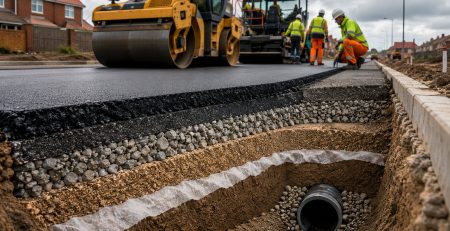
The binder course forms a strong intermediate layer beneath the visible finish and contributes to the overall structural performance of the pavement. It is laid at an appropriate thickness for the design and compacted before the final layer is applied.
The specification should reflect how the car park will actually be used. A lightly trafficked private parking area and a commercial site experiencing frequent deliveries may place very different demands on the pavement.
A resurfacing contractor should therefore consider traffic levels and vehicle types when determining the appropriate construction rather than treating every car park as an identical project.
Machine Laying the New Tarmac Surface
Once the preparation and underlying construction are ready, the final tarmac or asphalt surface can be installed.
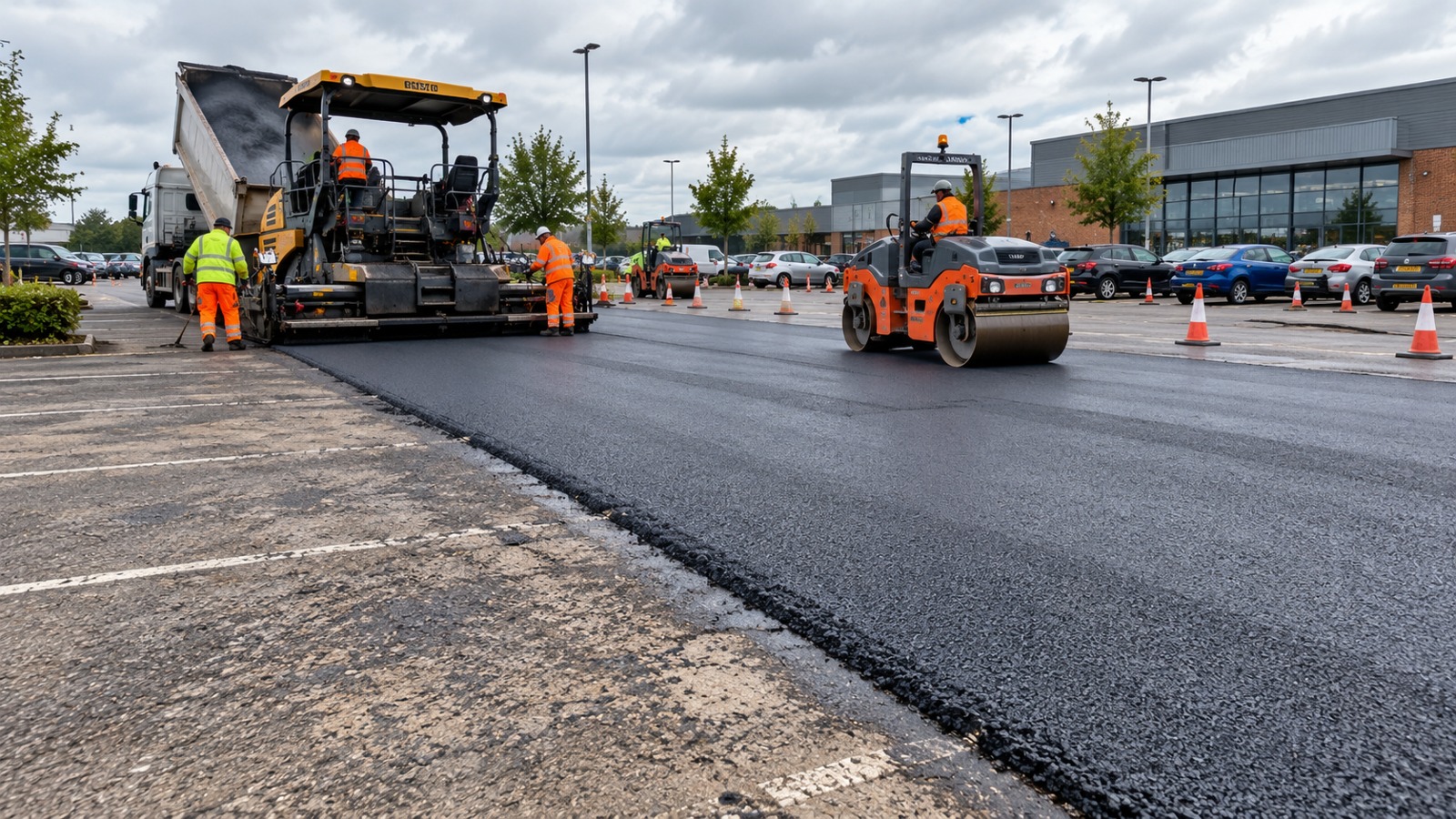
For larger car parks, machine-laid tarmac provides an efficient way to achieve consistent levels and an even finish across substantial areas. The paving equipment distributes the hot surfacing material at a controlled width and depth before rollers compact it.
Large car parks may require several paving passes because the working width of the equipment is narrower than the complete site. Contractors therefore plan the laying sequence so that joints, transitions and access requirements can be managed properly.
Temperature and timing also matter during this stage. Surfacing material needs to be laid and compacted within the appropriate working conditions, making coordination between deliveries, paving equipment and rollers an important part of the operation.
Why Compaction Matters
After the material has been laid, rollers compact the surface to achieve the required density and finish.
Correct compaction helps the material form a strong, stable surface capable of coping with repeated vehicle movements. Particular care is required around edges, joints, drainage features and other areas where larger equipment may have restricted access.
A newly surfaced car park should appear smooth and consistent, but appearance alone does not determine quality. Preparation, material specification, laying technique and compaction all contribute to long-term performance.
Completing Joints, Edges and Transitions
A large commercial car park is rarely surfaced as one uninterrupted piece. Construction joints can occur between paving passes or where work is divided into separate phases.
These joints need careful treatment so that adjoining areas form a suitable connection. Transitions where the new car park meets existing roads, access routes or surrounding surfaces also require accurate finishing.
Edges are similarly important. Properly supported and finished edges help maintain the shape of the pavement and reduce the risk of material breaking away where vehicles repeatedly pass close to the perimeter.
Final Inspection of the Resurfaced Car Park
Before the site returns to normal operation, the completed surface should be inspected.
The contractor can check the general finish, levels, joints, transitions, drainage areas and interfaces around covers and kerbs. Any project-specific requirements can also be reviewed at this stage.
For property managers, this final stage provides an opportunity to ensure the completed car park matches the agreed scope before normal traffic resumes.
Examples of completed commercial resurfacing work can also be useful when planning a future project, particularly when comparing different site conditions and finishes. Reviewing relevant surfacing case studies can provide a clearer understanding of how different commercial areas are approached.
Reinstating Car Park Markings
A resurfaced car park also needs to function effectively once vehicles return.
Where required, parking bays, directional markings, pedestrian areas and other surface markings can be reinstated once the new surface is suitable for the next stage of work. The exact layout will depend on the individual site and its operational requirements.
Clear markings help drivers understand how the car park is intended to operate and can improve the organisation of vehicle and pedestrian movement. For commercial premises, this finishing stage is therefore part of restoring the car park as a functional working area rather than simply creating a new black surface.
Returning the Car Park to Service
The contractor should advise when the newly surfaced area can be reopened based on the materials used, site conditions and work completed.
Managing reopening carefully helps protect the new surface during the immediate post-installation period. On larger commercial sites, sections may be handed back progressively where resurfacing has been completed in phases.
Once reopened, routine inspection and maintenance remain important. Small defects, blocked drainage points or localised damage are generally easier to manage when identified early. Where isolated failures occur over time, professional pothole repairs can help prevent localised defects from developing into larger areas of deterioration.
How Long Does a Full Car Park Resurfacing Project Take?
There is no single project duration that applies to every car park. The programme depends on the area being resurfaced, the condition of the existing pavement, the amount of excavation required, drainage work, access restrictions, weather and the complexity of the site.
A straightforward resurfacing project on a sound existing structure can be considerably less involved than a car park requiring widespread reconstruction and drainage corrections.
Commercial operators should therefore discuss programme requirements during the planning stage. Where maintaining access is essential, phased working may provide a practical solution, although it can influence how the project is sequenced.
The important point is that speed should not come at the expense of preparation. The time spent addressing failed foundations, unsuitable levels and drainage problems can be critical to the long-term performance of the finished car park.
What Makes a Successful Car Park Resurfacing Project?
Successful car park resurfacing depends on much more than the appearance of the final layer.
The process begins with understanding why the existing surface has deteriorated. It then requires appropriate preparation, a stable foundation, effective drainage, suitable materials, controlled laying, thorough compaction and careful finishing around joints and fixed features.
For commercial site managers, planning is equally important. Vehicle access, pedestrian movement, deliveries and working hours all influence how resurfacing can be completed with manageable disruption.
A properly planned project should leave the site with a smooth, durable and practical surface suited to its expected use. Where an existing car park has extensive cracking, recurring potholes, poor drainage or widespread deterioration, arranging a professional assessment can establish whether localised repair remains appropriate or whether full resurfacing is the more suitable approach. Property owners and site managers can contact Total Surfacing Solutions to discuss the condition and requirements of a commercial car park before deciding on the scope of work.