From Deep Black to Grey: How Tarmac Changes Over Time
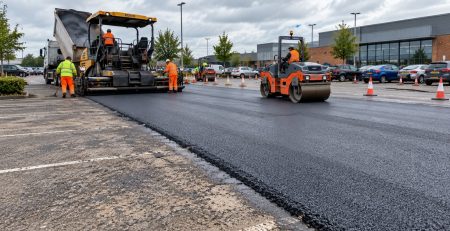
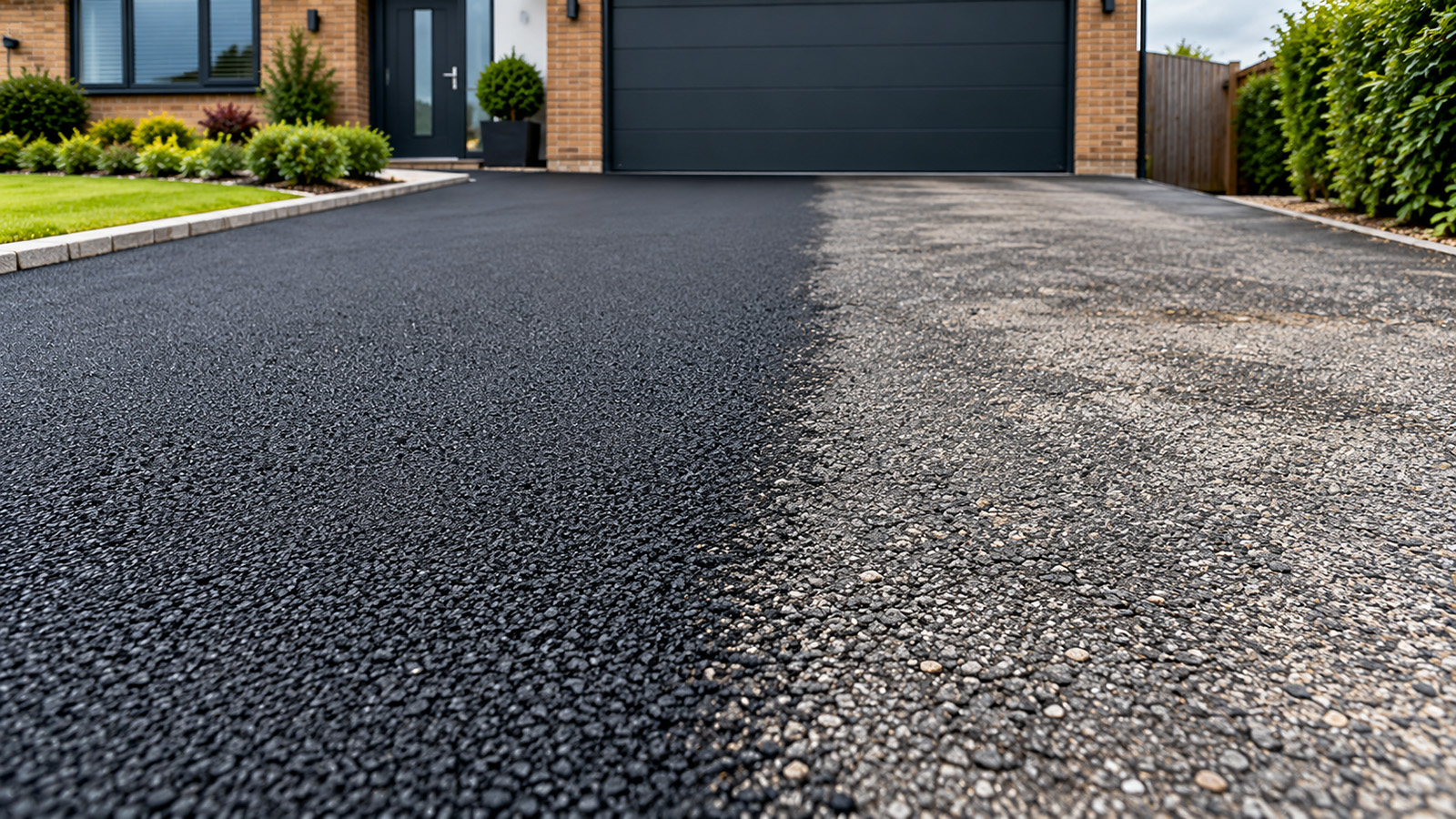
One of the most noticeable features of newly laid tarmac is its deep, almost jet-black appearance. For property owners and commercial site managers, that fresh colour is often associated with a newly completed surface: clean edges, an even finish and a uniform appearance across the driveway, car park or access road.
The dark colour comes primarily from the bituminous binder used within the surfacing material. This binder coats the stone aggregate in the mixture, giving freshly installed tarmac its characteristic black finish. As the surface settles into normal use and becomes exposed to the British climate, however, that appearance naturally begins to change.
A professionally completed tarmac installation should not be expected to remain exactly the same shade throughout its working life. Gradual colour change is a normal part of the way bituminous surfaces weather and mature.
In fact, a surface changing from deep black to dark grey does not automatically mean there is anything wrong with it. Understanding why this happens makes it easier to distinguish ordinary ageing from signs that the surface genuinely requires maintenance or repair.
What Makes Tarmac Turn Grey?
The gradual transition from black to grey is mainly associated with weathering of the bitumen at the surface and the increasing visibility of the aggregate underneath.
Freshly laid material initially appears black because the aggregate is coated by bituminous binder. As the surface experiences sunlight, oxygen, rainfall and traffic, that uppermost coating changes. The underlying stone becomes increasingly visible, so the eventual appearance can partly depend on the colour of the aggregate used in the original mixture.
This means two tarmac surfaces installed at a similar time may not necessarily age to precisely the same shade.
A surface containing relatively light aggregate may eventually develop a noticeably lighter grey appearance, while darker aggregate can retain a darker overall finish. The visual change is therefore influenced by both the ageing binder and the materials underneath it.
Oxidation of the Bitumen
Oxidation is one of the most important processes affecting tarmac as it ages.
The bituminous binder is continually exposed to oxygen once the surface has been installed. Over time, chemical changes occur within the binder. Research into asphalt ageing shows that oxidative ageing increases binder stiffness, while ultraviolet exposure can contribute to changes occurring particularly close to the surface.
The colour change that property owners notice is therefore part of a wider ageing process.
Initially, the difference may simply be visual. A glossy black surface becomes less shiny before gradually taking on a charcoal or grey appearance. As ageing continues over a much longer period, the binder can also become less flexible.
This distinction matters because an evenly grey but otherwise sound surface can be perfectly serviceable, whereas grey tarmac accompanied by cracking, loose aggregate or surface deterioration deserves closer attention.
How Quickly Does Tarmac Lose Its Black Appearance?
There is no single timetable that applies to every driveway, access road or commercial surface.
Some newly laid surfaces lose their initial glossy appearance relatively quickly. Guidance on newly installed asphalt notes that the gloss can fade within weeks and that the colour may develop towards dark grey within roughly six months to a year as the surface is exposed to sunlight and normal use.
That does not mean the surface has reached the end of its useful life.
The important point is that colour and structural condition are not the same thing.
A tarmac road can be grey and remain perfectly capable of performing its intended function. Conversely, a relatively dark surface could still contain localised defects that require attention.
Property owners should therefore avoid judging tarmac purely by colour.
How Sunlight Changes the Surface
Even in the UK, where prolonged periods of strong sunshine cannot always be relied upon, ultraviolet radiation contributes to the ageing of bituminous materials.
UV exposure affects the upper portion of the binder and contributes to photo-oxidative ageing. Over time, this can increase stiffness and reduce flexibility. Research into asphalt ageing has found that environmental factors including UV radiation, temperature and water can interact rather than acting independently.
The result is gradual rather than immediate.
A driveway does not suddenly turn grey after one sunny summer. Instead, repeated exposure accumulates over months and years.
Areas receiving different levels of sunlight can occasionally age at slightly different rates. Sections shaded by buildings, trees or other structures may therefore develop differently from fully exposed areas.
The Effect of Rain and the British Climate
British tarmac has to cope with more than sunlight.
Regular rainfall, seasonal temperature changes, frost and repeated wetting and drying all form part of the environment in which an outdoor surface has to operate.
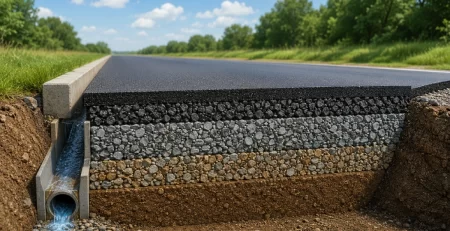
Water itself does not mean a properly constructed tarmac surface will immediately deteriorate. Good installation is designed around outdoor exposure. The more significant concern develops when water gains access through cracks, failed edges or defects and begins affecting the construction beneath the surface.
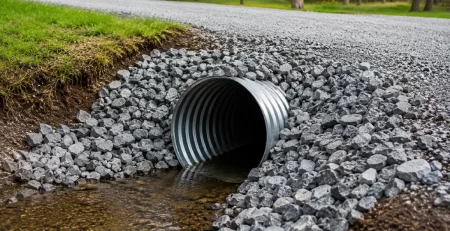
This is why drainage and surface condition matter throughout the life of the installation.
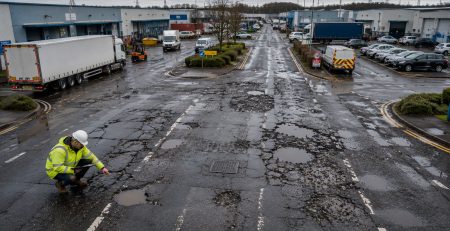
Standing water should not simply be accepted as inevitable. Persistent puddling may indicate falls, drainage or local settlement issues that deserve investigation, particularly on commercial access roads and frequently trafficked areas.
Colour change alone may be normal. Colour change combined with cracking and persistent water is a different situation.
Traffic Also Changes the Appearance of Tarmac
Vehicle movements contribute to the way a tarmac surface develops visually.
As tyres repeatedly travel across the surface, the uppermost material experiences abrasion. Over time, this can expose more of the aggregate and influence the final colour of the tarmac. The underlying aggregate becomes an increasingly important part of the visible finish as the original surface coating weathers.
The effect can be particularly noticeable on frequently used commercial roads, entrances, loading areas and car parks.
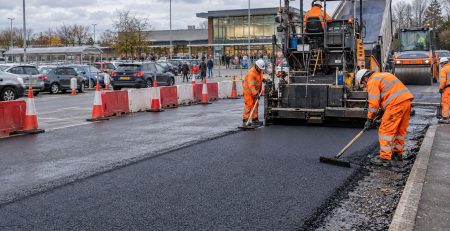
For larger sites where consistency and compaction are particularly important, machine-laid tarmac can provide a controlled, uniform installation suitable for substantial areas.
Traffic patterns may still become visible as the surface ages. Turning points, entrances and frequently used vehicle routes experience different stresses from areas that receive very little traffic.
That is not necessarily evidence of poor workmanship. It is often simply evidence of how the site is being used.
When Grey Tarmac Is Completely Normal
A gradual and reasonably even transition from black to grey should usually be viewed as a normal characteristic of tarmac ageing.
The most reassuring sign is consistency.
If a surface remains firm, relatively even and securely bound, without significant cracking or loose material, its lighter appearance alone is not necessarily cause for concern. Asphalt repair guidance also recognises that fading to a lighter grey with age and sunlight can occur naturally and is not, by itself, necessarily a defect.
This is useful for property owners to understand because replacing an otherwise serviceable surface purely because it no longer looks freshly laid may be unnecessary.
Condition should take priority over colour.
When the Colour Change Comes With Other Warning Signs
Although greying itself can be normal, an ageing surface should still be monitored.
The key is to look beyond colour.
Cracks Developing Across the Surface
Cracking indicates something more significant than cosmetic fading.
Small cracks can allow water into the surface and underlying construction. Once moisture gains access, repeated traffic and seasonal temperature changes can contribute to further deterioration.
Individual cracks do not automatically mean an entire road or driveway needs replacing, but they should not be ignored simply because the surrounding tarmac still appears generally sound.
Loose Aggregate and Surface Fretting
Another warning sign is aggregate becoming increasingly loose.
As bituminous binder ages, it can become harder and more brittle. If the surface begins losing aggregate rather than merely exposing it, deterioration may be progressing beyond normal visual weathering. Research into asphalt ageing associates oxidative and UV ageing with increased binder stiffness and reduced flexibility.
Loose stones, a roughening surface and material breaking away under traffic therefore deserve professional assessment.
Potholes and Localised Failure
Once potholes develop, the issue is no longer simply about appearance.
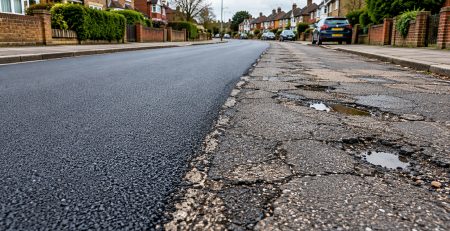
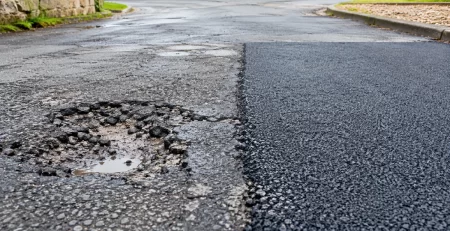
A pothole represents localised loss of surfacing material and can worsen as vehicles repeatedly pass over it or water reaches the affected area. Early pothole repairs can address isolated failures before they become larger defects affecting surrounding material.
For commercial sites in particular, timely repairs also help maintain safe and practical vehicle routes.
Why Old Repairs Look So Black Against Grey Tarmac
One consequence of natural fading becomes especially obvious when an older surface is repaired.
Fresh repair material is dark.
The surrounding tarmac may have been exposed to weather and traffic for several years and could already be medium or light grey. A new patch can therefore look dramatically darker than the existing surface.
This colour contrast does not necessarily indicate that the wrong material has been used.
It is largely the difference between fresh bituminous material and an aged surface. Asphalt repair guidance specifically notes that repair work can stand out as black patches against older, faded material.
Over time, the newer section will also weather, although perfect colour matching should not always be expected.
Appearance Is Not the Best Measure of Tarmac Condition
For owners and site managers, the most useful approach is to assess performance rather than focusing entirely on colour.
Consider whether vehicles can travel over the surface comfortably, whether water drains effectively, whether edges remain secure and whether cracks or potholes are developing.
A grey road that remains stable and well drained may continue performing effectively for years.
A black-looking road containing cracks, depressions or drainage problems may require attention much sooner.
This is particularly important when managing commercial surfacing, where the surface may be exposed to delivery vehicles, regular staff traffic and heavier loading than a typical residential driveway.
Can You Keep Tarmac Looking Black?
It is possible to improve or refresh the appearance of ageing tarmac using appropriate surface treatments, but the condition of the underlying surface should always be considered first.
Cosmetic treatment should never be used to disguise structural problems.
If cracking, potholes, failed edges or significant surface deterioration are already present, those defects need to be assessed and dealt with appropriately. Applying a treatment simply to make damaged tarmac look darker does not correct the underlying problem.
For some owners, allowing tarmac to develop its natural grey appearance is perfectly acceptable. A properly installed and maintained surface does not have to remain jet black to continue doing its job.
Maintenance Matters More Than Colour
The long-term objective should be to preserve the integrity of the surface rather than attempting to preserve its original shade indefinitely.
Routine observation can identify small problems before they become extensive. Drainage should remain clear, cracks should be monitored, potholes should be addressed and areas experiencing unusually rapid deterioration should be investigated.
Commercial sites can benefit particularly from periodic inspections because heavy or frequent traffic can make small defects deteriorate faster.
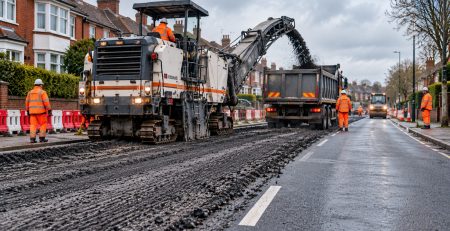
When substantial deterioration develops across a wider area, resurfacing may eventually become more practical than repeatedly repairing individual defects. Professional assessment can establish whether local repairs remain appropriate or whether the condition of the existing surface justifies more extensive work.
Examples of completed surfacing projects can also help property owners and site managers understand the finish achievable across different types of roads, access areas and premises.
Understanding the Natural Life of a Tarmac Surface
The journey from deep black to grey is one of the most visible signs that a tarmac surface is maturing.
Fresh bitumen initially gives the installation its distinctive dark finish. Exposure to oxygen and sunlight gradually alters the binder, while normal traffic and weathering reveal more of the aggregate beneath. The precise final shade depends partly on the materials used, the site’s exposure and the amount of traffic it receives.
For property owners, the important distinction is between normal ageing and physical deterioration.
An evenly faded surface that remains stable, properly drained and securely bound may simply be showing its age. Cracking, loose aggregate, potholes, failed edges and persistent drainage problems indicate something more significant.
Tarmac should therefore be judged by how it performs, not simply by whether it still has the deep-black appearance it had on installation.