What Happens to Old Tarmac After a Road Is Resurfaced?
When a worn road is resurfaced, attention naturally focuses on the new surface. Freshly laid material provides a smoother finish, improves driving conditions and restores an area that may have suffered from cracking, potholes or general deterioration. What is less obvious is what happens to the old tarmac that has been removed during the work.
In many resurfacing projects, the existing material does not simply become waste. Depending on its condition, composition and the requirements of the project, old road surfacing material can be removed, processed and potentially reused. This makes the management of existing surfaces an important part of modern road resurfacing.
Understanding what happens to old tarmac also helps property owners and commercial site managers see why professional preparation is such an important part of a resurfacing project. The finished surface may be the most visible element, but the work beneath it has a significant influence on the quality and longevity of the result.
Why Is Old Tarmac Removed During Resurfacing?
Not every resurfacing project requires the complete removal of the existing road. The approach depends on the condition of the surface, its levels, the underlying construction and the type of traffic the area needs to accommodate.
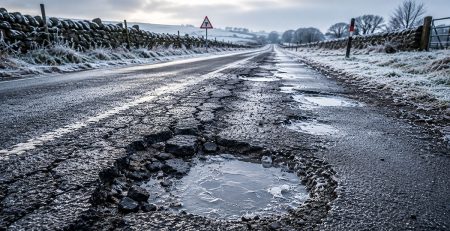
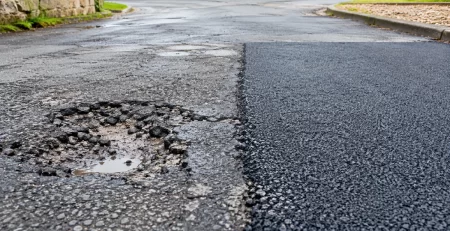
Where an existing surface has deteriorated significantly, sections may need to be removed before new material can be installed. Cracking, deformation, previous repairs and surface irregularities can all affect whether an existing layer is suitable to remain in place.
Levels are another important consideration. Simply adding new layers indefinitely can alter kerb heights, drainage falls, entrances and connections with surrounding surfaces. Removing part of the old material can allow contractors to restore the required levels before resurfacing.
For larger roads and commercial areas, mechanical equipment can remove the upper layer efficiently and consistently. This creates a prepared surface onto which new material can be installed. Professional machine-laid tarmac can then provide an even finish across larger areas where consistency and efficient installation are particularly important.
How Is Existing Tarmac Removed?
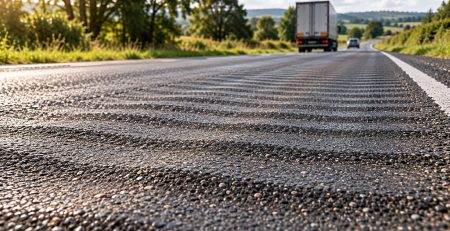
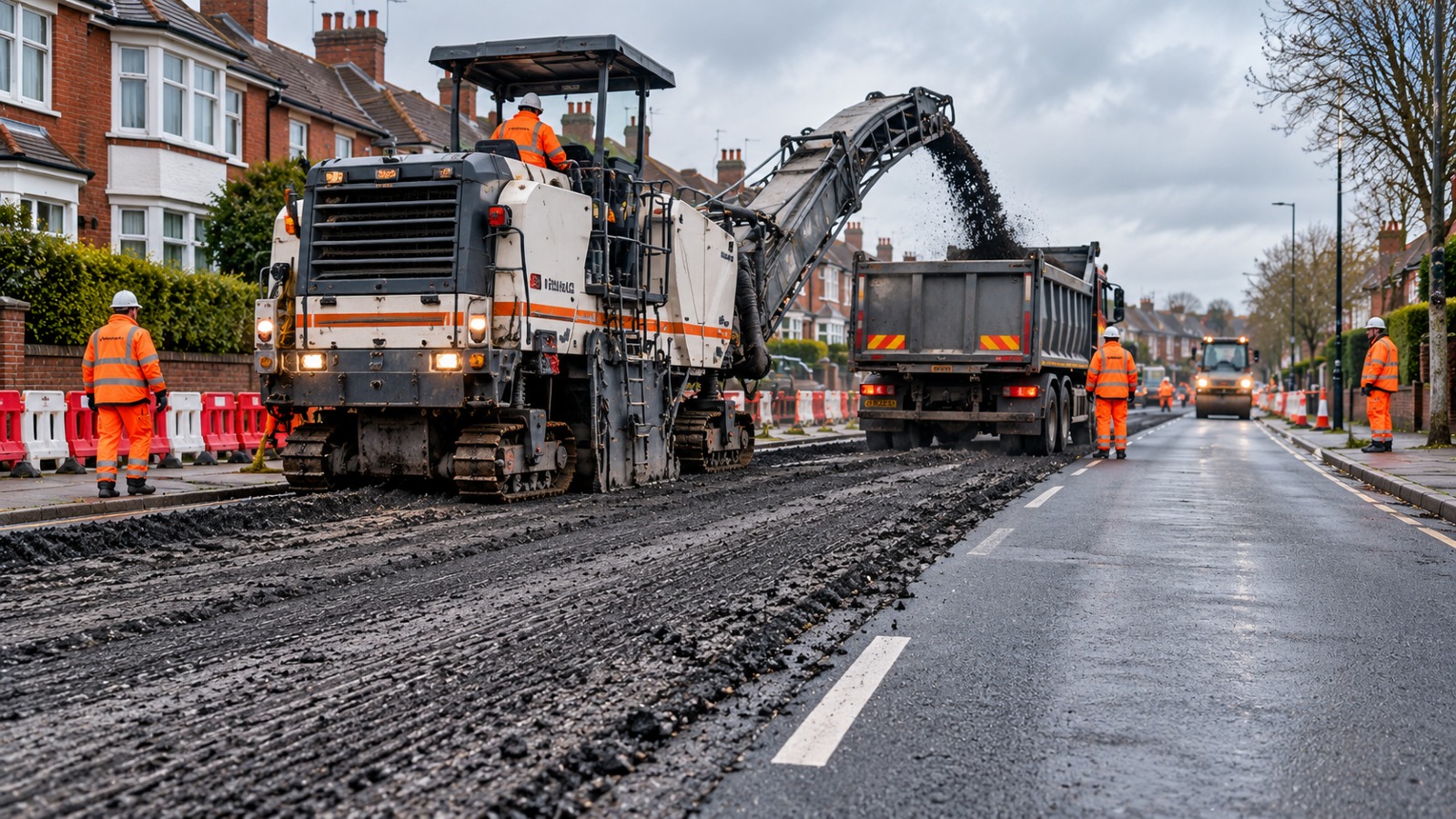
One common method involves milling or planing the existing surface. Specialist machinery removes a controlled depth of the old material rather than excavating the entire road construction.
The removed material is broken into relatively small pieces during the process and collected for transportation away from the working area. The depth of removal can vary according to the condition and specification of the road.
In other situations, particularly around failed sections, edges or smaller areas, more localised excavation may be required. The important point is that removal should form part of a planned resurfacing process rather than simply stripping away material without considering the layers underneath.
Once the required material has been removed, contractors can inspect and prepare the exposed surface. Any underlying defects that could affect the new construction should be dealt with before resurfacing continues.
This preparation is one reason professional tarmac installation and road surfacing involves considerably more than placing a new black layer over an existing road.
Can Old Tarmac Be Recycled?
Old asphalt-based road material can often be recovered and processed for reuse rather than automatically being treated as material with no further purpose.
After removal, suitable material can be transported to a processing facility. It may then be crushed, screened and graded so that it can be incorporated into appropriate asphalt mixtures or used in other suitable applications.
Whether a particular batch can be reused, and how it can be reused, depends on factors such as its composition, cleanliness and the specification of the intended application. Recovered road material therefore needs to be managed correctly rather than assuming that everything removed from a surface can immediately return to another road.
The ability to recover useful material is significant because road surfaces contain aggregates and bituminous materials that required resources and energy to produce originally. Where appropriate processing and specifications permit reuse, those materials can continue to have value after the original road surface has reached the end of its serviceable life.
What Happens at a Tarmac Recycling Facility?
Once suitable old road surfacing material reaches a processing facility, it can be prepared for future use.
The material may first need to be separated from unwanted contaminants. It can then be crushed into manageable sizes and screened to produce more consistent material. Processing is important because material removed from a road can contain pieces of different sizes and may not be immediately suitable for reuse.
Recovered asphalt material can then become an input for suitable new mixtures, subject to the relevant production requirements and project specification. The exact proportion and application will vary rather than following one universal formula for every resurfacing project.
This means the lifecycle of road surfacing materials can be more circular than it first appears. A deteriorated surface can be removed, processed and potentially contribute material to future construction rather than automatically being disposed of.
Does Recycled Material Mean Lower Quality?
The presence of appropriately processed reclaimed material does not, by itself, determine whether a road surface will perform well or poorly. Performance depends on the complete surfacing specification, material production, preparation, installation and compaction.
Road surfacing has to be designed around its intended use. A private access road, commercial yard and heavily trafficked highway may experience very different loading conditions and therefore require different construction specifications.
The same principle applies to reclaimed material. Its use has to be appropriate for the mixture and application rather than being added without control.
For clients commissioning commercial surfacing, the more useful question is whether the complete surface construction is suitable for the traffic, site conditions and expected service life. Material selection is one part of that wider process.
Why Recycling Old Road Materials Matters
Road resurfacing projects can involve substantial quantities of material. Even a relatively straightforward access road can generate a considerable volume when a layer is removed across the full width and length of the surface.
Recovering suitable material reduces the amount that needs to be treated purely as waste. It can also reduce demand for entirely new aggregate resources where reclaimed material is appropriate for reuse.
There are practical benefits as well as environmental considerations. Efficient material management is an important part of planning a resurfacing project because removed material needs to leave the site without disrupting other operations unnecessarily.
This is particularly relevant on commercial and industrial premises where access may need to be maintained while work takes place. Removal, transportation, preparation and resurfacing therefore need to be coordinated as parts of the same operation.
What If the Existing Tarmac Is Too Damaged to Reuse Directly?
A road does not need to be in good condition for its removed material to have potential value. In fact, resurfacing is usually undertaken precisely because the existing surface is no longer performing adequately.
Cracked or fragmented material may still contain useful aggregates and bituminous components. Processing allows recovered material to be reduced and graded rather than attempting to reuse the old surface in the condition in which it was removed.
However, not every material encountered during excavation will necessarily be suitable for the same recycling route. Contamination, mixed construction materials or unsuitable substances can change how removed material must be handled.
Professional assessment and appropriate waste management are therefore essential. The aim is not simply to recycle everything regardless of condition, but to identify materials that can be recovered appropriately and manage the remainder responsibly.
What Happens Beneath the Old Tarmac?
Removing the surface can reveal problems that were not fully visible beforehand.
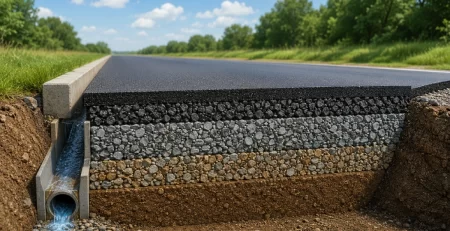
A road may appear to have isolated surface cracking while the underlying construction has weakened over a wider area. Water penetration, inadequate drainage or movement in the supporting layers can contribute to recurring defects.
If those underlying problems are ignored and a new surface is installed immediately, deterioration may eventually reappear through the replacement layer. Preparation should therefore address the cause of significant failures where necessary, rather than concentrating only on appearance.
Drainage deserves particular attention. Standing water and persistent moisture can contribute to deterioration over time, especially where cracks or damaged edges allow water to enter the construction.
Similarly, an area suffering repeated potholes may require more investigation than a simple surface treatment. Professional pothole repairs should consider the condition of the affected area so that the repair deals with the failed material rather than merely disguising the visible opening.
Is the Whole Road Always Removed?
Full removal is not automatically necessary whenever a road is resurfaced.
If the underlying construction remains sound, contractors may only need to remove the deteriorated upper layer. Retaining serviceable parts of the existing road can reduce unnecessary excavation and keep the project focused on the material that genuinely needs replacement.
In other circumstances, deeper reconstruction may be required. Severe structural failure, poor foundations or extensive deformation can indicate that replacing only the surface would not adequately address the problem.
The correct depth of work should therefore be determined by the existing condition and the requirements of the site. This is especially important for highway surfacing, where surface performance, traffic loading and construction quality all need careful consideration.
How Preparation Affects the New Surface
What happens to the old tarmac is closely connected to what happens to the new road.
Once defective material has been removed, the remaining construction needs to provide a suitable foundation. Areas requiring repair should be dealt with, levels need to be correct and the surface must be appropriately prepared before the new material is installed.
The new surfacing material is then laid to the required specification and compacted. Correct compaction is particularly important because it contributes to surface density, stability and long-term performance.
Edges, joints and connections with existing surfaces also require attention. A road can look smooth across its main area but still develop problems if vulnerable transitions are poorly constructed.
For property owners and site managers, this is why comparing resurfacing work purely on the appearance of the finished surface can be misleading. Much of the work that determines performance happens before the final layer is visible.
Old Tarmac Can Have a Useful Second Life
Road resurfacing does not necessarily mean that the material removed from the existing surface has reached the end of its usefulness. Suitable old asphalt material can be recovered, processed and potentially incorporated into future surfacing materials or other appropriate applications.
The process also highlights the importance of viewing resurfacing as more than simply laying fresh material. Existing layers have to be assessed, defective areas removed where necessary, underlying problems addressed and removed materials managed correctly before the replacement surface is completed.
For UK property owners and commercial site managers, understanding this process makes it easier to assess what a professional resurfacing project should involve. A durable result begins with appropriate treatment of the existing road, careful preparation and a surfacing specification suited to the way the area will actually be used.
Examples of completed surfacing work can also provide useful context when planning a future project. Total Surfacing Solutions’ surfacing case studies show how professional road and access surface projects can be approached across different types of sites.