Understanding Visible Seams in Asphalt Road Surfaces
Visible seams in asphalt road surfaces are lines or joints that appear where two separate sections of asphalt meet. These seams are common in road construction, car parks, commercial access roads and other areas where asphalt is installed in multiple passes or at different stages.
Although visible seams can sometimes raise concerns about installation quality, their presence does not automatically indicate a structural problem. In many cases, they are a normal feature of asphalt construction.
However, the condition, appearance and construction quality of these joints can influence the long-term performance of the finished surface.
For property owners, facilities managers and commercial site operators, understanding why asphalt seams occur is important when assessing newly installed surfaces or identifying potential maintenance requirements.
Professional tarmac installation and road surfacing services involve careful planning, material placement and compaction to ensure joints remain durable and perform effectively under regular traffic.
Why Do Visible Seams Appear in Asphalt?
Asphalt is typically installed using specialist paving equipment that distributes hot material across a prepared surface.
On larger projects, the entire road or car park cannot always be completed in one continuous pass. Contractors may need to install asphalt in separate strips, sections or phases.
Where these sections meet, a joint is formed.
Longitudinal Joints Between Asphalt Sections
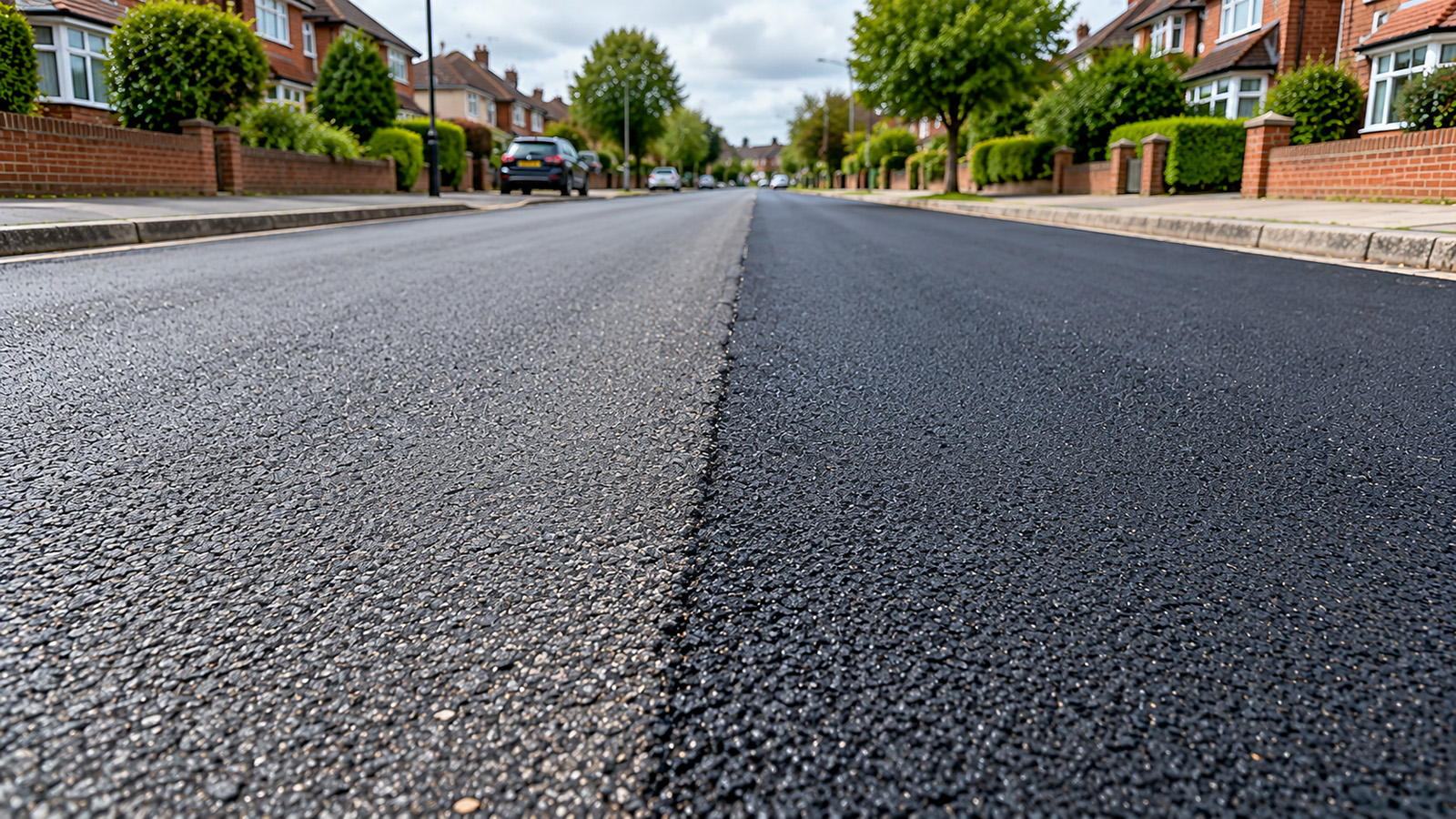
Longitudinal joints run in the same direction as the road or traffic flow.
They commonly appear when an asphalt paving machine completes one strip before moving alongside it to install the next.
The point where the two strips meet creates a longitudinal seam.
These joints are particularly common on wider roads, commercial access routes, industrial estates and large car parks.
A visible difference in surface texture or colour may remain even when both sections have been installed correctly.
The main consideration is whether the adjoining asphalt sections have been properly joined and compacted.
Transverse Joints Across the Road
Transverse joints run across the direction of travel.
They usually occur where paving operations stop and restart.
For example, a contractor may complete one section of road surfacing before continuing the following day.
The connection between the previously installed asphalt and the new material forms a transverse joint.
These joints require careful preparation because the existing asphalt may have cooled before the adjoining section is installed.
Correct joint construction helps prevent movement, water penetration and premature deterioration.
Differences in Asphalt Temperature
Temperature plays an important role in asphalt installation.
Hot asphalt must be placed and compacted within an appropriate temperature range to achieve the required density.
When adjoining sections are installed at different temperatures, the resulting joint may appear more noticeable.
The older section may also have a slightly different surface texture because it has already cooled and undergone compaction.
This does not necessarily mean the surface has been installed incorrectly.
However, significant temperature differences can make achieving consistent compaction at the joint more challenging.
Are Visible Asphalt Seams a Sign of Poor Workmanship?
One of the most common questions following a road surfacing project is whether visible seams indicate poor installation.
The answer depends on the condition of the joint rather than its appearance alone.
A visible seam can be entirely acceptable when the adjoining asphalt sections are properly bonded, adequately compacted and level with one another.
However, certain joint characteristics may indicate installation problems that require further investigation.
Normal Surface Colour Differences
Fresh asphalt can display variations in colour and texture.
These differences may become more noticeable where separate paving passes meet.
One section may appear darker because it was installed more recently, while another may have experienced greater exposure to traffic or weather.
Minor visual differences are not necessarily evidence of reduced structural performance.
Over time, normal weathering and traffic can make some colour variations less noticeable.
Open or Poorly Compacted Joints
A more significant concern occurs when a joint contains visible gaps, loose aggregate or poorly compacted material.
These conditions can allow water to enter the pavement structure.
Repeated exposure to moisture and traffic may gradually weaken the surrounding asphalt.
In colder conditions, water entering an open joint may freeze and expand, contributing to further deterioration.
Professional installation aims to minimise these risks through appropriate joint preparation and compaction.
Uneven Surface Levels
A properly constructed asphalt joint should provide a reasonably smooth transition between adjoining sections.
Noticeable height differences may create discomfort for vehicle users and increase the likelihood of localised wear.
On commercial premises, uneven joints may also affect forklifts, delivery vehicles and other equipment operating across the surface.
Where a joint creates a significant level difference, an assessment may be necessary to determine whether corrective work is required.
How Professional Asphalt Installation Reduces Visible Seams
Although asphalt joints cannot always be eliminated, their appearance and performance can be improved through appropriate construction techniques.
Experienced surfacing contractors consider paving sequences, material temperatures, equipment selection and compaction requirements before work begins.
Careful Planning of Paving Operations
Effective planning helps reduce unnecessary joints.
Contractors assess the dimensions of the area, site access restrictions and the equipment required.
Where practical, paving operations can be organised to complete larger continuous sections.
This reduces the number of construction joints and helps maintain a consistent surface finish.
For larger projects, professional machine-laid tarmac can provide controlled material placement and consistent paving widths.
Machine laying is particularly suitable for roads, commercial yards and car parks where uniformity and efficient installation are important.
Correct Joint Preparation
When new asphalt is installed alongside an existing section, the joint must be prepared appropriately.
Depending on the specification, this may involve creating a clean, sound edge and applying a suitable bonding treatment.
The objective is to establish an effective connection between the adjoining asphalt sections.
Poorly prepared joints may become vulnerable to separation, moisture penetration and edge deterioration.
Correct preparation is therefore essential for long-term pavement performance.
Effective Asphalt Compaction
Compaction is one of the most important stages of asphalt construction.
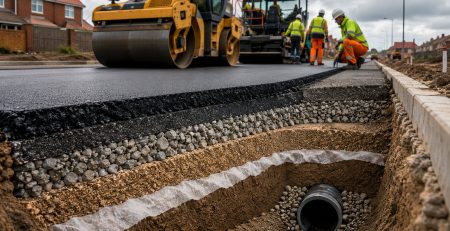
Specialist rollers compress the asphalt mixture to achieve the required density and reduce internal air voids.
Joint areas require particular attention because they can be more difficult to compact than the main body of the surface.
Insufficient compaction may leave the joint vulnerable to water penetration and progressive deterioration.
Appropriate rolling techniques, material temperatures and paving methods help achieve a durable connection.
Can Visible Asphalt Seams Affect Road Durability?
Visible seams do not automatically reduce the lifespan of an asphalt road.
However, poorly constructed joints can become areas of weakness.
The long-term impact depends on the quality of installation, traffic loading, drainage conditions and ongoing maintenance.
Water Penetration Through Asphalt Joints
Water is a major contributor to pavement deterioration.
When an asphalt joint is open or inadequately sealed, rainwater may enter the underlying pavement layers.
Over time, moisture can weaken the supporting structure and reduce its ability to withstand traffic loads.
This may lead to cracking, deformation or localised surface failure.
Good drainage and effective joint construction help limit these risks.
Heavy Vehicle Traffic
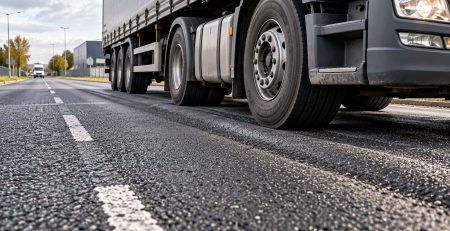
Commercial roads and industrial access routes often experience repeated loading from heavy goods vehicles.
These loads place considerable stress on asphalt surfaces.
If a construction joint has insufficient density or inadequate support, repeated vehicle movements may accelerate deterioration.
This is particularly important in loading areas, distribution centres and industrial yards.
Experienced commercial surfacing contractors consider expected traffic loads when selecting materials and determining installation requirements.
Seasonal Weather Conditions
The UK climate exposes asphalt surfaces to frequent rainfall, temperature changes and occasional freezing conditions.
These environmental factors can influence the performance of construction joints.
Water entering an open seam may contribute to deterioration during freeze-thaw cycles.
Repeated temperature changes can also cause small movements within the pavement.
Correctly constructed joints are designed to withstand normal environmental exposure, but damaged areas should be addressed before deterioration spreads.
When Should Visible Asphalt Seams Be Investigated?
Not every visible seam requires repair.
A newly installed asphalt surface may contain noticeable construction joints while remaining structurally sound.
The important distinction is between normal joint visibility and evidence of physical deterioration.
Cracking Along the Joint
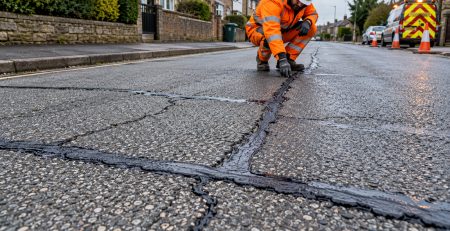
Cracks developing directly along a construction joint may indicate that the connection between adjoining sections is weakening.
These cracks can create pathways for water penetration.
If cracking becomes wider or extends along a significant length of the joint, professional assessment is advisable.
Early intervention may prevent more extensive damage.
Loose Aggregate or Surface Fretting
Surface fretting occurs when aggregate particles begin separating from the asphalt mixture.
Around construction joints, this can indicate localised deterioration or inadequate material cohesion.
The affected area may gradually become rougher as particles are displaced by traffic.
Where fretting continues, repairs may be required to restore the surface.
Water Collecting Around Seams
Standing water near a construction joint should be investigated.
Although the seam itself may not be responsible, water accumulation can indicate drainage or surface-level problems.
Persistent moisture increases the risk of deterioration, particularly where cracks or open joints are present.
An assessment should consider both the condition of the asphalt and the surrounding drainage arrangements.
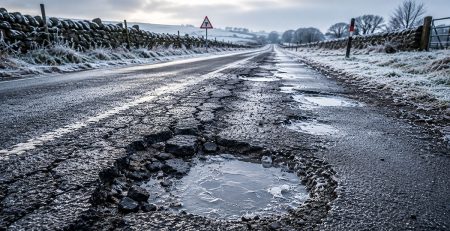
Developing Potholes
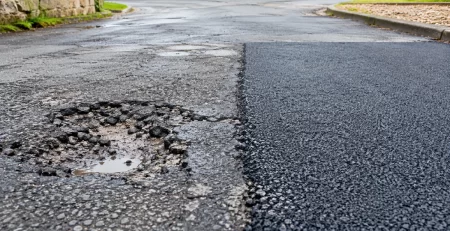
If deterioration progresses, damaged joint areas may eventually develop potholes.
These defects can create hazards for vehicles and pedestrians.
Professional pothole repairs can restore damaged areas, although the appropriate repair method depends on the underlying cause and extent of deterioration.
Simply filling a surface defect without addressing underlying weakness may result in recurring damage.
How Are Damaged Asphalt Seams Repaired?
The appropriate repair method depends on the severity of the problem.
Minor joint defects may require relatively limited intervention, while extensive deterioration can justify replacing a section of asphalt.
Joint Sealing
Where a joint has opened but the surrounding pavement remains structurally sound, a suitable joint-sealing treatment may help prevent water penetration.
The joint must be assessed and prepared before sealing.
The selected material should be appropriate for the pavement conditions and expected movement.
Sealing is not a substitute for repairing structurally damaged asphalt.
Localised Asphalt Repairs
Where the joint has deteriorated beyond the point where sealing would be effective, the damaged material may need to be removed.
The repair area can then be prepared and reinstated using an appropriate asphalt mixture.
Correct edge preparation, bonding and compaction are essential to achieving a durable repair.
This approach can be suitable for isolated areas of joint failure.
Partial or Full Resurfacing
When joint deterioration affects a substantial area, more extensive resurfacing may be necessary.
This is particularly relevant where multiple joints are failing or where the surrounding asphalt has reached the end of its serviceable life.
A professional assessment can determine whether localised repairs remain economical or whether resurfacing would provide better long-term value.
The decision should consider the condition of the pavement structure, expected traffic and future maintenance requirements.
Visible Seams in Commercial Car Parks and Access Roads
Commercial car parks and access roads frequently contain visible asphalt joints because of their size and layout.
Large surfaces are often completed in several paving passes, particularly where buildings, drainage channels and access restrictions influence installation.
For property managers, the appearance of these seams is generally less important than their condition and performance.
A properly installed joint should withstand normal vehicle movements without developing premature cracking or separation.
Car Parks With Frequent Vehicle Movements
Car parks experience repeated braking, turning and low-speed manoeuvring.
These movements can place concentrated stresses on the asphalt surface.
Construction joints located within heavily used turning areas may experience greater wear than those positioned in lightly trafficked sections.
Appropriate material selection and installation methods help reduce the likelihood of premature deterioration.
Industrial Yards and Loading Areas
Industrial yards often experience heavier traffic than conventional car parks.
Forklifts, delivery vehicles and heavy goods vehicles can impose substantial loads on the pavement.
Joint construction is particularly important in these environments because repeated loading may expose weaknesses in poorly compacted areas.
Surface design should account for vehicle weights, turning movements and operational requirements.
Residential Access Roads
Private estates and residential developments may also contain visible asphalt seams.
These surfaces generally experience different traffic patterns from industrial roads, but correct installation remains important.
Poor drainage, inadequate compaction and insufficient pavement support can contribute to joint deterioration regardless of traffic volume.
For residential developments, professional road surfacing services help establish suitable construction methods for the intended use.
How Drainage Influences Asphalt Joint Performance
Drainage is closely connected to asphalt durability.
Even a well-constructed surface can deteriorate prematurely when water is allowed to accumulate.
The pavement should be designed with appropriate gradients and drainage arrangements to direct surface water away from vulnerable areas.
Where water repeatedly collects along construction joints, the risk of moisture penetration may increase.
For commercial sites, drainage performance should be reviewed alongside the condition of the asphalt.
Blocked drainage channels, settlement and inadequate surface falls can all contribute to standing water.
Addressing these problems can help protect the pavement and reduce the likelihood of future repairs.
Maintaining Asphalt Surfaces With Visible Seams
Regular inspection is an effective way to identify joint deterioration before significant damage develops.
Property owners and facilities managers should pay attention to changes in the appearance and condition of existing seams.
A joint that remains stable, closed and level may require no immediate intervention.
However, developing cracks, loose material or increasing surface irregularities should be investigated.
Routine Surface Inspections
Periodic inspections help establish whether joints are performing as expected.
The frequency of inspection should reflect the site’s traffic levels, operational requirements and exposure to weather.
Busy commercial premises may benefit from more frequent assessments than lightly used private access roads.
Inspections should consider the condition of the joints alongside the wider pavement surface.
Preventative Maintenance
Preventative maintenance can reduce the likelihood of minor defects developing into more extensive failures.
Timely sealing, localised repairs and drainage maintenance may help extend the serviceable life of the asphalt.
Maintenance decisions should be based on the condition of the pavement rather than appearance alone.
Recording Changes Over Time
For larger commercial sites, keeping records of surface condition can support effective maintenance planning.
Photographs and inspection notes can help identify whether a visible seam is changing.
This is particularly useful where cracking or fretting develops gradually.
Comparing inspection records allows site managers to prioritise repairs according to actual deterioration.
What Should Property Owners Expect From Newly Installed Asphalt?
A newly installed asphalt road or car park should provide a reasonably uniform, stable and durable surface suitable for its intended use.
Some visible construction joints may remain, particularly on larger projects.
Their presence alone should not be treated as evidence of defective workmanship.
However, property owners should expect joints to be properly constructed, with no significant gaps, loose material or unacceptable changes in surface level.
The finished surface should also provide appropriate drainage and meet the agreed project specification.
Where concerns arise, the most reliable approach is to request an assessment of the joint condition rather than relying solely on visual appearance.
Experienced surfacing contractors can explain how the pavement was installed and whether any visible joints require attention.
Understanding the Difference Between Appearance and Performance
Visible seams in asphalt road surfaces are a normal consequence of many paving operations.
They occur where separate asphalt sections meet and may remain noticeable because of differences in texture, temperature or installation sequence.
The presence of a visible line does not necessarily indicate a defect.
What matters is whether the joint has been constructed correctly and continues to perform under traffic and environmental conditions.
For commercial property owners and site managers, the most useful approach is to assess joint condition alongside drainage, surface levels and the wider pavement structure.
Proper installation, effective compaction and appropriate maintenance can help prevent construction joints from becoming areas of premature deterioration.
Understanding this distinction allows property owners to make informed decisions about inspections, repairs and long-term road surface management.