Need a Car Park Resurfaced but Can’t Close Your Business? Here’s How It’s Done
For many businesses, resurfacing a car park presents an obvious problem. The existing surface may be cracked, uneven, worn or affected by potholes, but the car park is also essential for customers, employees, suppliers and delivery vehicles. Closing the entire site while work takes place may simply not be practical.
The good news is that professional car park road surfacing UK projects can often be planned around an operational business. Instead of treating the whole car park as one work area, experienced contractors can divide the project into carefully controlled phases. Sections are temporarily taken out of use while other areas remain accessible.
This approach requires considerably more planning than working on an empty site. Vehicle movements, pedestrian access, delivery requirements, working hours and the condition of the existing surface all need to be considered before resurfacing begins.
Experienced commercial surfacing contractors can assess these requirements and develop a programme that balances the practical needs of the business with the requirements of the surfacing work.
The objective is not simply to lay a new surface. It is to complete the work safely, efficiently and with as little disruption to normal operations as reasonably possible.
Why Phased Car Park Resurfacing Is Often the Best Approach
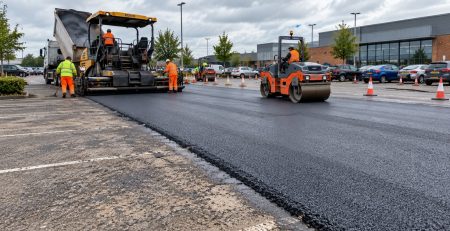
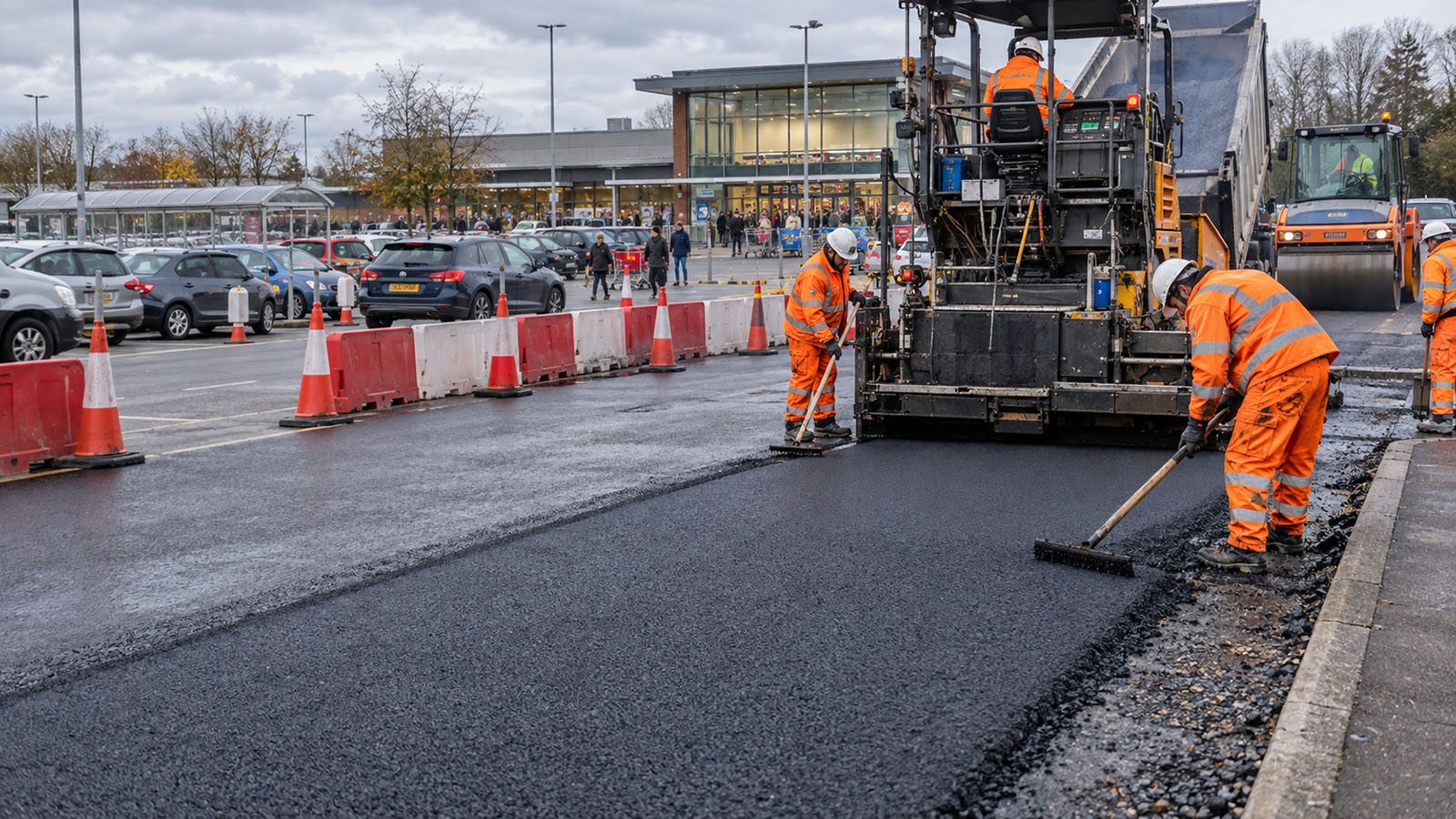
Phased resurfacing involves dividing a car park into separate working zones rather than closing the entire area at once. One section can be prepared and resurfaced while vehicles continue using another part of the site.
Once the completed section is ready to accept traffic, access arrangements can be changed and work can move into the next zone.
For a busy commercial property, this can make a substantial difference. Customers may still be able to reach the premises, employees can retain designated parking areas and essential deliveries can continue according to an agreed access plan.
The exact phasing depends on the layout of the car park. A large retail or industrial site may have several practical working zones, whereas a smaller car park could require tighter scheduling and shorter resurfacing stages.
Entrances and exits also require particular attention. If a site has only one access point, the surfacing programme needs to be designed so that this route remains usable whenever the business requires it.
Good phasing is therefore about much more than dividing the car park into equal sections. It involves understanding how the property actually operates throughout the day.
Planning Around Customers, Staff and Deliveries
Before machinery arrives, the contractor needs a clear understanding of how vehicles and pedestrians use the site.
A car park that appears relatively quiet during an initial inspection may become much busier at particular times. Offices can experience concentrated traffic at the beginning and end of the working day, while retail sites may have predictable customer peaks. Industrial and commercial premises can also have scheduled deliveries involving large vehicles that require significant turning space.
These movements should influence the resurfacing programme.
Keeping Essential Routes Available
One of the priorities is maintaining sensible access to the building wherever the site layout allows it. Temporary vehicle routes may be introduced so drivers are directed away from the active work zone.
Pedestrian movements are equally important. People should not have to walk through an area containing surfacing machinery, freshly laid material or ongoing preparation work simply to reach an entrance.
Clear separation between operational areas and construction zones helps the project progress while reducing unnecessary interaction between site users and surfacing operations.
For complicated commercial premises, the contractor and site manager may agree specific arrangements for staff parking, customer access and delivery movements before work starts.
Assessing the Existing Car Park Before Resurfacing
A successful resurfacing project begins with understanding why the existing car park has deteriorated.
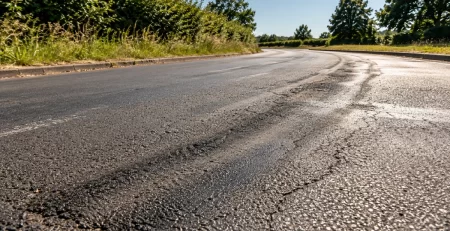
Visible wear is only part of the picture. Cracking, potholes, depressions and standing water can indicate different underlying problems. Simply covering these defects with another layer may not provide the long-term result the property owner expects.
A professional inspection can identify areas that require more substantial preparation before the new surface is installed.
Where isolated defects are present, targeted pothole repairs or localised preparation may form part of the wider resurfacing project. More extensive deterioration can require removal of damaged material and preparation of the underlying layers before resurfacing proceeds.
The condition of kerbs, drainage points, access covers and transitions between different surfaces should also be considered. These details affect both the finished appearance and the practical performance of the car park.
Why Surface Preparation Matters
Resurfacing needs a suitable foundation. If unstable or severely damaged areas are ignored, weaknesses beneath the new material can eventually affect the finished surface.
Preparation will depend on existing conditions. Some car parks may require damaged areas to be excavated and reconstructed. Others may be suitable for resurfacing after local repairs and appropriate preparation of the existing surface.
Levels also need careful consideration. The finished surface must work with existing drainage features and surrounding structures rather than creating new areas where water can collect.
This is why proper tarmac installation and road surfacing involves much more than placing material over an old car park. Preparation and installation need to work together to achieve a durable result.
How the Resurfacing Work Is Phased
Once the site has been assessed, the contractor can establish a practical sequence for the work.
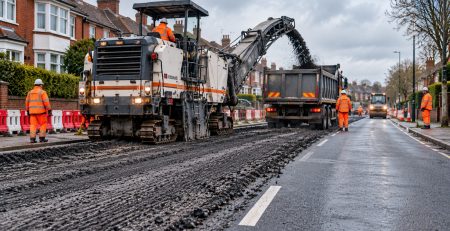
A section of the car park is isolated from vehicles and pedestrians before preparation begins. Existing defects are addressed and the area is made ready for surfacing. New material can then be laid and compacted to create the required finish.
Only after that section reaches the appropriate stage for reopening should traffic be redirected onto it.
The next area can then be isolated and the process repeated.
This sequence allows the contractor to maintain control of the working area while keeping as much of the remaining car park operational as circumstances permit.
The size of each phase is important. Making a work zone too large can unnecessarily restrict parking and access. Making it too small may create inefficient working conditions and extend the overall programme.
The right balance depends on the property, available machinery, traffic requirements and the amount of work needed beneath the surface.
Machine-Laid Surfacing for Commercial Car Parks
Commercial car parks often benefit from machine-laid surfacing because it allows material to be installed consistently across larger areas.
Professional machine-laid tarmac can provide an even finish while supporting efficient installation across suitable commercial sites.
Machinery also influences how the car park should be divided into phases. Surfacing equipment requires sufficient room to operate safely and effectively, so temporary traffic routes cannot simply be placed wherever convenient.
The contractor must consider machine movements, material deliveries, pedestrian separation and access to each work zone as part of the overall plan.
This is another reason why planning the sequence before starting is so important. Efficient resurfacing comes from coordinating the different elements of the project rather than dealing with access problems after machinery is already on site.
Managing Drainage During Car Park Resurfacing
Drainage is a fundamental part of car park performance.
Standing water is inconvenient for pedestrians and drivers, but persistent water can also contribute to deterioration of a paved surface. Depressions and poor falls may allow water to remain on the car park instead of moving towards appropriate drainage points.
Resurfacing provides an opportunity to review how water behaves across the site.
Existing gullies, channels and drainage points should be considered when finished levels are planned. The new surface needs suitable falls so water is directed appropriately rather than trapped in low areas.
Drainage considerations become particularly important around entrances, pedestrian routes and loading areas, where standing water can create recurring operational problems.
Addressing levels during the resurfacing process can therefore improve more than appearance. It can contribute to the long-term practicality of the car park.
Maintaining Safe Access While Work Is Underway
Keeping a business open does not mean allowing normal traffic to move freely through the work area.
Active resurfacing zones need to be separated from customers, staff and other site users. Temporary restrictions and clearly controlled routes help prevent vehicles entering areas where preparation or surfacing is taking place.
Communication within the business is also important. Staff responsible for deliveries, facilities or customer access should understand which sections are unavailable and how traffic arrangements will change as the project moves between phases.
On larger premises, resurfacing may temporarily change familiar driving patterns. A regular entrance route may become an exit route, parking bays may temporarily move to another area, or delivery vehicles may need to arrive through an alternative section of the property.
Planning these arrangements in advance reduces confusion and helps the resurfacing team work without unnecessary interruptions.
Can Resurfacing Be Completed Outside Normal Business Hours?
In some circumstances, adjusting working hours can reduce disruption further.
The practical options depend on the site, surrounding properties, project requirements and the nature of the surfacing operation. A business with predictable quiet periods may be able to schedule particular stages when fewer customers or vehicles are present.
However, working outside normal opening hours is not automatically the right solution for every project.
Access, lighting, noise, material supply, machinery and the time required before newly surfaced areas can be reopened all need consideration.
A better strategy is often to combine sensible working hours with careful phasing rather than relying entirely on overnight or out-of-hours work.
What Happens to Parking During the Project?
Some temporary reduction in parking capacity is normally unavoidable when a live car park is being resurfaced.
The objective is to manage that reduction rather than unexpectedly losing the entire car park.
Where sufficient space exists, staff parking may temporarily move to one side of the site while customer spaces are prioritised closer to the entrance. Once one resurfaced section becomes available, those arrangements can be changed and another zone closed.
Site managers may also choose to communicate temporary parking arrangements to employees before the project begins. For premises receiving regular deliveries or contractor vehicles, arrival times can sometimes be coordinated with the surfacing programme.
The more predictable the normal traffic pattern is, the easier it becomes to build an effective resurfacing plan around it.
Why Commercial Car Parks Should Not Be Left Too Long
Delaying resurfacing can allow relatively manageable defects to become more extensive.
Small cracks can permit water to enter the pavement structure. Potholes can grow as surrounding material deteriorates, while depressions and failed areas may become increasingly uncomfortable for vehicles and pedestrians.
Surface condition also affects the impression created by a commercial property. Customers and visitors often encounter the car park before they enter the building, so badly deteriorated surfacing can undermine an otherwise well-maintained site.
There is also a practical operational consideration. Waiting until a car park reaches widespread failure can mean more extensive preparation is needed when work eventually takes place.
Property owners and facilities managers can review examples of completed surfacing case studies when considering the type and scale of work that may be appropriate for their own premises.
Planning Car Park Road Surfacing UK Businesses Can Work Around
A car park resurfacing project does not necessarily require a business to shut its doors. With suitable site conditions and careful planning, work can often be divided into controlled phases that maintain essential access while individual sections are resurfaced.
The key is to plan around the actual operation of the premises. Parking demand, customer movements, pedestrian routes, deliveries, drainage, entrances and machinery requirements all influence how the project should be sequenced.
Preparation is equally important. Existing failures should be properly assessed rather than simply covered, while finished levels and drainage need to be considered as part of the new surface.
For businesses considering car park road surfacing UK work, early coordination with an experienced contractor makes it possible to establish what access can realistically be maintained and how the resurfacing can be phased. Property owners and site managers can contact Total Surfacing Solutions to discuss the practical requirements of a commercial car park and the most appropriate approach to carrying out the work.