Why Some Roads Develop a Washboard or Corrugated Surface
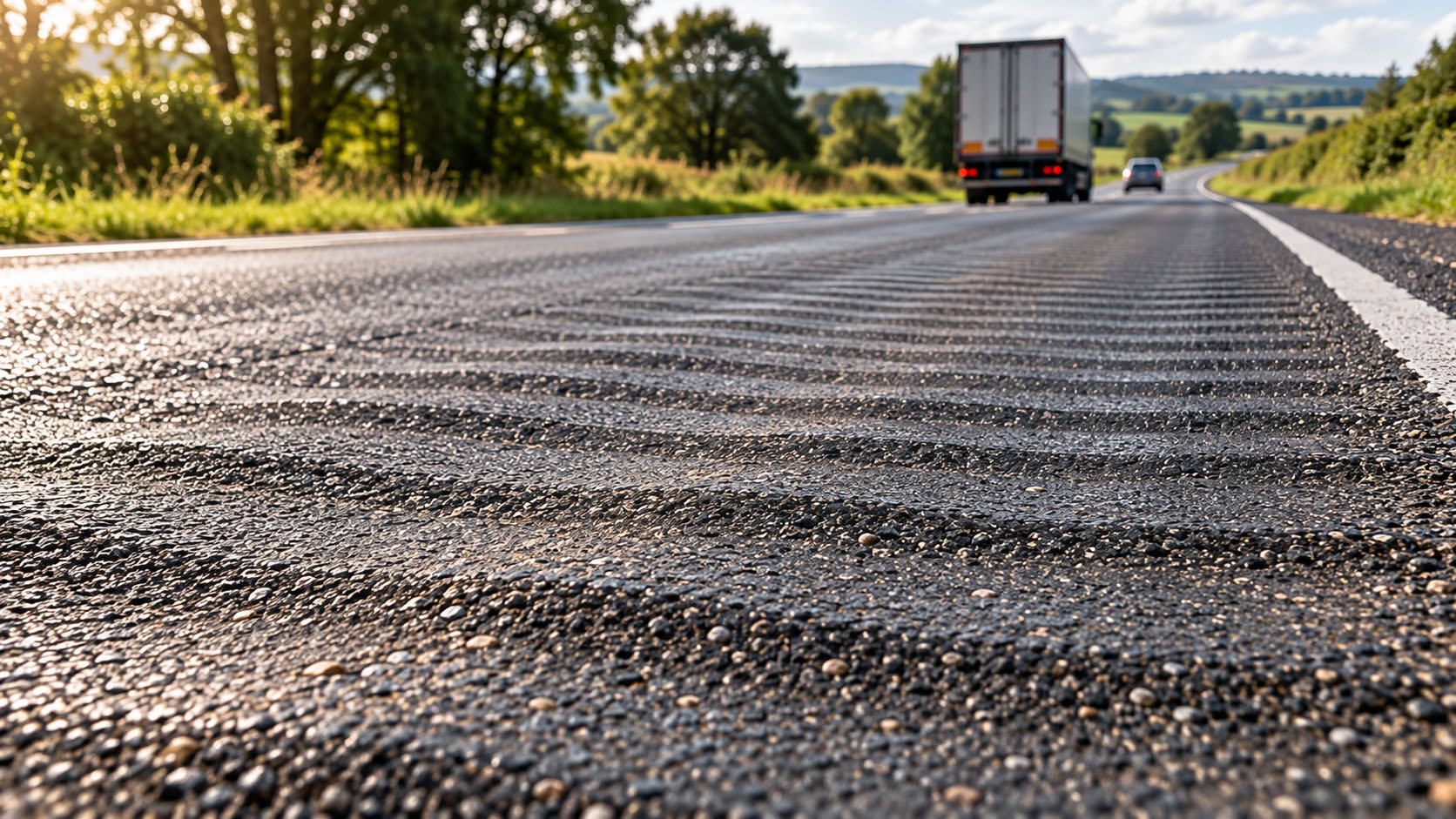
A washboard or corrugated road surface is characterised by a repeating series of small ridges and depressions running across the direction of travel. The effect can resemble the surface of an old-fashioned washboard, which is where the commonly used description comes from.
For drivers, the problem is usually most noticeable as vibration through the vehicle. At lower speeds, individual ridges may be clearly felt, while at higher speeds the vehicle can begin to bounce or feel less settled on the road. The condition can also make a road look neglected even when there are no major potholes or obvious areas of structural failure.
Road surface corrugation can develop for several reasons, and understanding the underlying cause is important. Simply smoothing the visible ridges may improve the road temporarily, but if the conditions that created them remain unchanged, the uneven surface can return.
Why Does Road Surface Corrugation Develop?
Corrugation develops when repeated traffic movement gradually displaces, compresses or deforms material within the road. Instead of remaining consistently level, the surface begins to form a repeating pattern.
The precise mechanism depends on the construction of the road, the materials present, traffic volumes, vehicle types, drainage and the strength of the underlying layers. In many cases, it is not one isolated issue but a combination of factors acting over time.
Roads carrying frequent vehicle movements are particularly dependent on correct preparation and construction. Professional tarmac installation and road surfacing therefore involves considerably more than creating a smooth-looking top layer. The supporting structure beneath the finished surface is fundamental to its long-term performance.
Repeated Traffic Loads Can Create Surface Movement
Every vehicle places a load on a road surface. On a correctly designed and constructed road, those loads are distributed through the surfacing and supporting layers below.
Problems can arise when a road is repeatedly subjected to forces that its construction is not capable of handling effectively. Over time, material can begin to move or deform rather than returning to its original position.
This is particularly relevant where vehicles repeatedly accelerate, brake or change speed. These movements introduce horizontal forces as well as downward loading. If the surface or underlying material is vulnerable to movement, repeated traffic can gradually contribute to an uneven pattern.
Commercial access routes can be particularly demanding because delivery vehicles, HGVs, forklifts and other working vehicles may follow similar paths throughout the day. This makes appropriate commercial surfacing important where roads and access areas are expected to carry regular operational traffic.
Braking and Acceleration Increase Stress
A road does not experience the same forces everywhere. Sections where vehicles travel steadily may perform differently from areas where drivers regularly brake, accelerate or turn.
Approaches to junctions, gates, loading areas and entrances are examples of locations where additional stress can occur. A vehicle braking transfers force through its tyres into the surface, while acceleration can produce forces in the opposite direction.
When these movements happen repeatedly in approximately the same location, weak or unsuitable material can gradually become displaced. Once minor irregularities have formed, subsequent vehicles interact with those irregularities, potentially making the pattern more pronounced.
This is one reason road construction should consider how an area will actually be used rather than treating every part of a site identically.
Poor Compaction Can Contribute to Corrugation
Compaction is an essential part of road construction because it helps create a stable and consistent structure. If materials are not compacted correctly, movement may occur after the road enters service.
Uneven compaction is particularly problematic. One section may remain relatively stable while another settles or moves more readily under traffic. Repeated loading can then exaggerate these differences.
The objective is not simply to make the finished surface appear flat on the day it is installed. Each relevant layer must be prepared appropriately so that the complete construction works as a stable system.
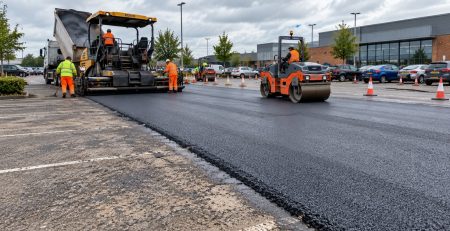
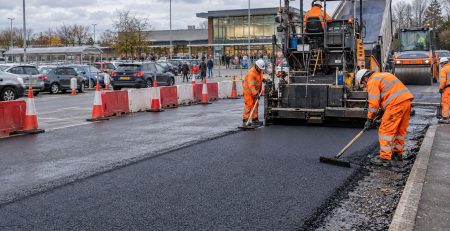
For suitable projects, machine-laid tarmac can help achieve a controlled and consistent surfacing finish. However, the quality of the finished road still depends heavily on preparation and the condition of the supporting layers.
The Importance of the Road Base
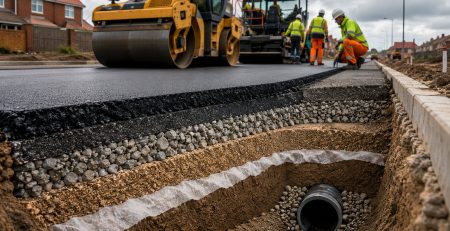
A smooth surface cannot compensate indefinitely for an unstable foundation. If the road base or sub-base lacks sufficient strength, the finished surface above may begin to reflect movement occurring underneath.
This is an important consideration when investigating corrugated roads. The visible ridges may appear to be a surface problem, but the actual cause can exist deeper within the construction.
Applying another layer over an unstable base without addressing the underlying weakness may therefore provide only temporary improvement. The new surface can eventually begin to deform as the same movements continue beneath it.
A professional assessment should consider the condition of the existing road, its construction, traffic demands and drainage before determining an appropriate repair or resurfacing method.
Drainage and Water Can Affect Road Stability
Water is a significant consideration in road performance. Effective drainage helps prevent water from remaining on the surface or entering vulnerable parts of the road construction.
Where drainage is inadequate, water can contribute to deterioration of supporting materials. Saturated or weakened layers may become less capable of carrying traffic loads consistently, potentially leading to settlement, movement and surface deformation.
The problem can become cyclical. An uneven road may begin collecting water in depressions, while standing water can contribute to further deterioration. As the surface becomes increasingly irregular, drainage performance may worsen.
For UK roads, where rainfall and wet conditions are routine considerations, drainage should form part of the overall approach to road design, maintenance and repair.
Heavy Vehicles Can Accelerate Existing Problems
Heavy vehicles place substantially greater demands on a road than ordinary cars. Roads serving industrial premises, farms, warehouses, commercial developments and construction sites may therefore experience deterioration more rapidly if they were not designed for the loads being imposed upon them.
Repeated heavy loading can expose weaknesses that might remain relatively unnoticed on a lightly used road. Where an unstable section already exists, regular HGV traffic may accelerate deformation.
Tyre forces are also important. Heavy vehicles braking, turning or accelerating in concentrated areas can place significant stress on the surface.
This does not mean that heavy traffic will automatically produce corrugation. Correctly designed and constructed roads can accommodate demanding traffic conditions. The issue arises when actual use exceeds what the road structure can reliably support.
Why Corrugation Should Not Be Ignored
A mildly corrugated road may initially appear to be little more than a comfort issue, but continued deterioration can create more significant problems.
Repeated vibration affects the driving experience and can make vehicles feel less stable. Uneven surfaces may also hold water and place additional stress on already vulnerable sections of the road.
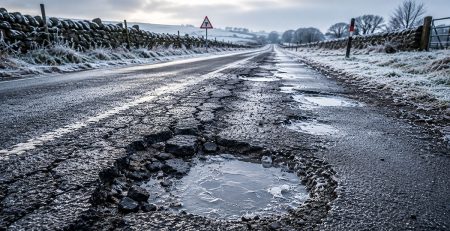
As deterioration progresses, cracking, loose material and localised failures can develop. Eventually, more obvious defects such as depressions or potholes may appear.
Where isolated failures have already developed, professional pothole repairs can restore damaged areas when the surrounding road remains suitable for localised repair. Where corrugation is widespread or connected to deeper structural problems, however, a broader resurfacing solution may be required.
Can a Corrugated Road Simply Be Resurfaced?
Resurfacing can be an effective solution, but only when the existing road provides a suitable foundation for the new surface.
If corrugation has developed because the upper layer has deteriorated while the underlying structure remains sound, removing or preparing the defective material and installing a suitable new surface may provide a long-lasting result.
The situation is different where the base itself is unstable. Covering the road without correcting structural weakness can allow movement to continue underneath the new material.
A site assessment is therefore important before deciding on the extent of the work. The aim should be to determine why the road became corrugated rather than treating the visible symptoms alone.
How Professional Road Construction Helps Prevent Corrugation
Preventing corrugation starts with designing and constructing the road for its intended use. Preparation, material selection, layer thickness, compaction, drainage and surfacing quality all contribute to the performance of the finished road.
Traffic requirements should also be considered from the outset. A private access road serving a small number of cars has different demands from an industrial entrance carrying loaded HGVs throughout the working week.
Professional highway surfacing and road construction should therefore take account of both current requirements and foreseeable future use. Building an appropriate structure from the beginning is generally preferable to repeatedly repairing a road that was never suitable for the traffic it carries.
Maintenance Also Plays an Important Role
Even a well-constructed road benefits from routine observation and maintenance. Small changes in the surface can provide early indications that deterioration is developing.
Areas where water begins collecting, minor cracking, settlement around drainage features and localised surface movement are all worth investigating before they become larger defects. Early attention can sometimes allow relatively contained repairs rather than extensive resurfacing later.
Maintenance is particularly important on commercial and private roads where responsibility for the surface lies with the property owner or site manager. Regular inspection provides an opportunity to identify changing conditions and plan work before road condition begins interfering with access or site operations.
Choosing the Right Response to a Corrugated Road
There is no single repair method that is appropriate for every washboard or corrugated surface. The correct response depends on what has caused the deformation and how extensively the road has been affected.
A relatively shallow surface defect may require a different approach from corrugation associated with weak foundations, drainage problems or repeated heavy traffic. This is why investigation should come before specification.
For property owners and commercial site managers, the practical objective is to establish whether the problem is confined to the surfacing or indicates movement within the road structure. Once that is understood, repairs can be planned around the actual condition of the road and the demands that will be placed upon it.
Professional road surfacing services can assess existing access roads and other surfaced areas before recommending appropriate remedial work. Where substantial repairs are required, addressing the cause of the corrugation as part of the work gives the renewed surface a stronger basis for long-term performance.
Creating a More Stable Long-Term Road Surface
Washboard and corrugated surfaces are ultimately signs that a road is no longer remaining consistently stable under the conditions it experiences. Traffic loading, braking, acceleration, inadequate compaction, weak supporting layers, drainage problems and unsuitable construction can all contribute.
The most effective response is therefore based on understanding the complete road structure rather than concentrating exclusively on the visible ridges.
When preparation, drainage, supporting layers, compaction and surfacing are appropriate for the expected traffic, a road has a much better chance of retaining a smooth and consistent profile. Where corrugation has already appeared, identifying and correcting its underlying cause can help prevent the same pattern from returning after repair.