How to Fix a Muddy Driveway Without Gravel?
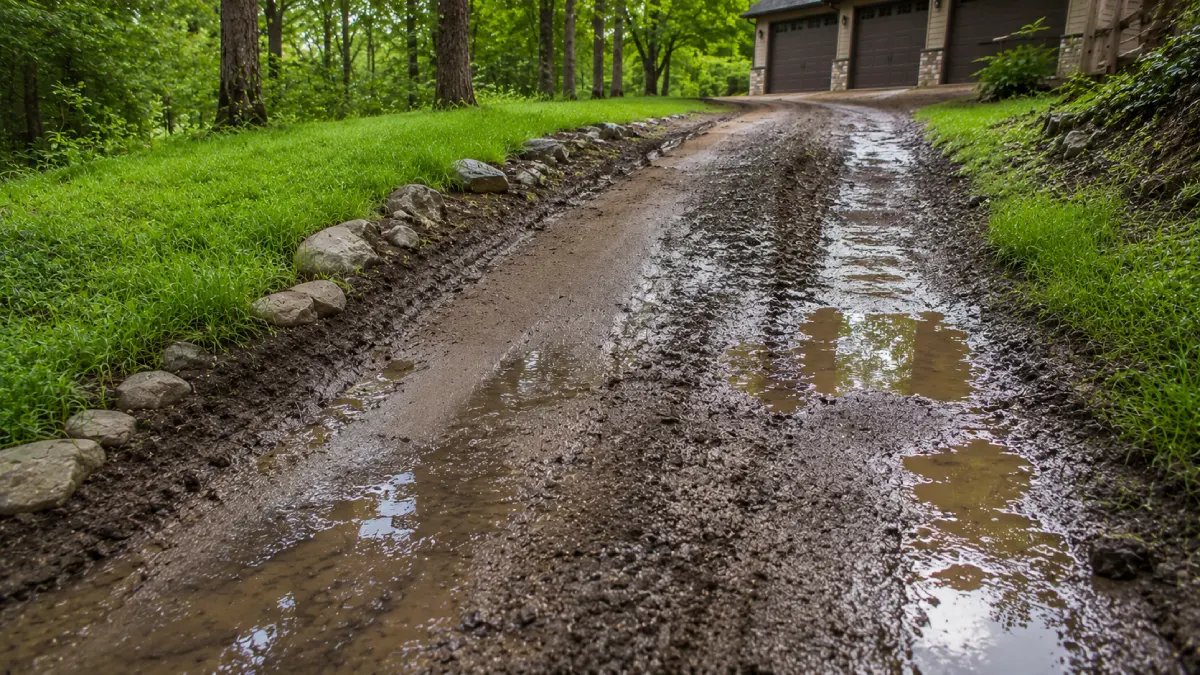
A muddy driveway is not only messy; it usually means water is trapped, the soil is weak, and vehicle weight is pushing the surface deeper every time it rains. The serious step is to control runoff, Build Drainage Swales, Use Geotextile Fabric, and create a stable base before adding any surface material. The experienced solution is to stop the mud at its source with drainage, separation, compaction, and recycled structural materials rather than simply covering the problem.
Tip: Improving drainage and strengthening the driveway base can solve muddy areas without relying on loose gravel. Get A Free Quote for professional solutions.
How to Fix a Muddy Driveway Without Gravel?
A muddy driveway needs drainage and stabilisation before any surface can last. This section explains the core method for fixing mud without relying on traditional loose gravel.
How to Fix a Muddy Driveway Without Gravel? Start by identifying why the driveway is staying wet. Mud forms when water cannot drain away, and tyres repeatedly press soft soil into ruts.
The best non-gravel solution is usually a combination of drainage, geotextile fabric, and compacted recycled material. This creates a firm driving layer while stopping the surface from being swallowed by the mud below.
The main repair path is:
- Redirect water
- Grade the driveway
- Create side drainage
- Install woven geotextile fabric
- Add recycled crushed concrete or asphalt
- Compact the base tightly
- Stabilise edges
- Maintain the drainage route
A professional installer such as Total Surfacing Solutions can assess whether a recycled base, resin-bound driveway, permeable surfacing, or full driveway reconstruction is the better long-term option.
| Muddy Driveway Cause | Better Fix |
| Standing water | Drainage swales or French drain |
| Soft clay | Lime stabilisation or geotextile |
| Tyre ruts | Grid system or compacted base |
| Surface sinking | Woven geotextile fabric |
| Repeated washout | Regrading and edge support |
| Poor entrance drainage | Channel drain or apron correction |
A muddy driveway cannot be fixed by hiding mud. It must be stabilised from the ground upward.
Build Drainage Swales: Move Water
Build Drainage Swales to remove the water that creates mud. This section explains side ditches, crowns, French drains, downpipes, and safe water direction.
Build Drainage Swales before adding any surface material. If water continues to sit in the same low area, the driveway will become muddy again.
A swale is a shallow, shaped channel that moves rainwater away from the driveway. It should guide water toward a safe drainage area without sending runoff onto a neighbour’s land, public footpath, or road.
Drainage improvements may include:
- Side swales
- French drains
- Shallow ditches
- Driveway crown
- Cross-fall shaping
- Downpipe extensions
- Soakaway systems
- Channel drains
- Edge drains
- Riprap stone lining
A crowned driveway is slightly higher in the middle. This encourages rainwater to run off both sides instead of pooling in wheel tracks.
| Drainage Method | Best Use |
| Side swale | Moving water away from the drive |
| French drain | Controlling subsurface water |
| Crown profile | Stopping centre puddles |
| Channel drain | Catching surface runoff |
| Soakaway | Storing water underground |
| Riprap | Slowing fast-moving water |
For water-related surface failure, driveway erosion fix is closely connected. Mud and erosion usually share the same cause: uncontrolled water.
If the driveway crosses a ditch or water path, driveway culvert may also be needed to move water under the entrance safely.
Drainage is the first repair step because mud cannot form without trapped water.
Use Geotextile Fabric: Stop Sinking
Use Geotextile Fabric to separate weak soil from the new driving layer. This section explains woven fabric, overlap, pinning, compaction, and common installation mistakes.
Use Geotextile Fabric when the driveway keeps swallowing surface materials. Fabric acts as a separation barrier between the muddy subgrade and the new stabilising layer above it.
For vehicle areas, woven geotextile fabric is usually the better option because it is designed for soil separation and load support. Thin garden weed fabric is not strong enough for cars.
Correct fabric installation includes:
- Grade the muddy surface
- Remove deep, loose ruts
- Create a slight crown
- Roll out the woven fabric
- Overlap seams by 12–18 inches
- Pin the fabric securely
- Avoid driving on bare fabric
- Add material immediately
- Compact the surface layer
- Protect exposed edges
The fabric stops mud from pumping up through the new surface. It also helps stop expensive topping material from sinking into soft soil.
| Fabric Mistake | Result |
| Using weed fabric | Tears under traffic |
| No overlap | Mud pushes through seams |
| Driving on bare fabric | Fabric shifts or rips |
| No crown below the fabric | Water still pools |
| Dumping material on mud only | Surface sinks again |
| No compaction | Ruts return quickly |
For surface sizing and structural aggregate choices, driveway gravel size is useful even when traditional loose gravel is not the preferred finish.
Geotextile fabric does not replace drainage. It works best when water movement is already controlled.
Create a Stabilising Base with Recycled Materials: Build Firm
Create a Stabilising Base with Recycled Materials when you want strength without traditional loose gravel. This section explains crushed concrete, asphalt millings, decomposed granite, and compaction.
Create a Stabilizing Base with Recycled Materials after drainage and fabric are in place. Recycled crushed concrete or asphalt millings can create a much firmer driveway than loose decorative gravel.
Crushed concrete contains angular pieces and fines that compact together tightly. Recycled asphalt millings can also bind under pressure and warmth, creating a semi-solid driving surface.
Useful non-gravel base options include:
- Recycled crushed concrete
- Recycled asphalt millings
- Decomposed granite
- Crushed brick
- Reclaimed road planings
- Permeable grid fill
- Lime-stabilised clay
- Compacted hardcore
The material should be spread evenly and compacted hard. A plate compactor or roller is usually better than hand tamping, especially for a driveway used by daily vehicles.
| Recycled Material | Best Feature | Watch Point |
| Crushed concrete | Strong compacted base | Needs proper grading |
| Asphalt millings | Binds under compaction | Can soften in heat |
| Decomposed granite | Smooth natural finish | Needs tight compaction |
| Crushed brick | Recycled and decorative | Can break down faster |
| Road planings | Practical surface | Check local suitability |
For cost planning, driveway widening cost can help homeowners compare excavation, base build-up, surfacing, and labour decisions.
A recycled base is only strong when compacted. Loose material over mud is not a lasting solution.
Soil Type Check: Choose Right
Soil Type Check helps choose the right muddy driveway fix. This section explains clay, silt, sand, soft subgrade, lime stabilisation, and drainage response.
Not all muddy driveways behave the same. Clay, silt, sand, and mixed soil each fail in different ways.
Clay holds water and becomes sticky. Lime stabilisation can sometimes help clay by drying and stiffening the surface when done correctly.
Silty soil can turn slick and soupy when wet. It often needs a geotextile fabric because the new material sinks quickly without separation.
Soil clues include:
- Sticky clay
- Powdery silt
- Loose sandy soil
- Organic topsoil
- Wet low spots
- Repeated tyre rutting
- Standing water after rain
- Soft edges
- Mud pumping upward
- Surface material disappearing
| Soil Type | Common Problem | Better Fix |
| Clay | Holds water and ruts | Drainage and lime stabilisation |
| Silt | Turns soupy | Fabric and compacted topping |
| Sand | Shifts under tyres | Grid system or stabilised base |
| Organic topsoil | Weak and spongy | Excavate and replace |
| Mixed fill | Uneven support | Regrade and compact |
For driveways on gradients, driveway on slope is important because slope and soil type together decide how quickly mud, ruts, or washout return.
The right fix depends on the soil below the vehicle path, not only the visible mud.
Grid and Resin Options: Cleaner Surface
Grid and Resin Options can give a cleaner, more controlled driveway surface. This section explains permeable grids, grass reinforcement, resin-bound surfacing, and long-term appearance.
Some muddy driveways need more than a recycled compacted base. Permeable grid systems can spread vehicle weight and prevent tyres from sinking into soft ground.
Grass pavers and plastic geocells can be filled with soil, grass, recycled aggregate, or compatible fill. They help keep the surface stable while still allowing water movement.
Resin-bound surfacing can be a cleaner long-term upgrade when the base and drainage are suitable. It provides a bound finish rather than a loose driving surface.
Options to consider:
- Permeable driveway grids
- Grass pavers
- Recycled aggregate grids
- Resin-bound surfacing
- Permeable block paving
- Stabilised road planings
- Reinforced grass tracks
- Compacted recycled bases
For surface comparison, resin driveway pros cons can help homeowners compare resin-bound driveways with loose or recycled surface options.
For winter safety, resin driveways slippery is useful because wet, shaded, or sloped driveways need extra attention to grip and maintenance.
A contractor such as Total Surfacing Solutions can inspect whether the site is ready for resin-bound surfacing or still needs deeper drainage and sub-base work first.
Temporary Fixes: Short-Term Traction
Temporary Fixes can help during a wet season, but they should not replace drainage and stabilisation. This section explains short-term materials and their limits.
Sometimes the driveway needs an urgent traction fix before a proper repair is planned. Temporary options can reduce wheel spin and mud tracking for a short time.
Wood chips, mulch, pine needles, boards, or temporary track mats can help create traction. These are useful for light vehicles or short-term access, but they break down, shift, or rot.
Temporary options include:
- Wood chips
- Mulch
- Pine needles
- Timber boards
- Track mats
- Crushed shell in suitable areas
- Recycled offcuts
- Temporary geogrid panels
These methods are not permanent. Organic materials eventually rot into softer soil and may make the mud problem worse if left too long.
| Temporary Fix | Best Use | Limit |
| Wood chips | Immediate traction | Rots down |
| Pine needles | Light vehicle access | Not structural |
| Boards | Short access route | Can shift |
| Track mats | Heavy temporary use | Higher hire cost |
| Mulch | Short wet-season fix | Breaks down |
Temporary traction is useful only when paired with a future drainage and base plan. It buys time, not a permanent driveway.
Area Coverage for Muddy Driveway Fixes
Muddy driveway repair depends on soil, rainfall, driveway slope, drainage layout, and preferred surface finish. These area sections explain how Bedfordshire, Cambridgeshire, Essex, Hertfordshire, and Oxford homeowners should approach long-term stabilisation.
Modern Resin Driveway In Bedfordshire
For resin bound driveways in Bedfordshire, muddy driveway fixes should begin with the sub-base. Many muddy entrances fail because soft soil is covered without separation or compaction.
Bedfordshire homeowners should use woven geotextile fabric where mud is pushing through the surface. A compacted recycled base can then provide a stable platform for daily vehicles.
If the homeowner wants a cleaner finish, resin-bound surfacing may be suitable after drainage and base stability are corrected. The finish should never be installed over unstable mud.
Resin Bound Driveway In Cambridgeshire
For resin bound driveways in Cambridgeshire, water control is often the first priority. Flat or wet ground can hold surface water and keep the driveway soft for longer.
Cambridgeshire homeowners should check whether rainwater has a clear exit route. If it does not, swales, French drains, or a slight crown may be needed before any surface material is added.
A recycled base or resin-bound finish can work well when installed over stable ground. Without drainage correction, mud may return underneath the new driveway layer.
Smooth Resin Driveways In Essex
For resin bound driveways in Essex, muddy driveway repair often needs to balance practical access with kerb appeal. Mud at the entrance can make the whole frontage look poorly maintained.
A compacted recycled base can make the surface drivable, but resin-bound surfacing may offer a cleaner final appearance when drainage and base strength are ready.
Homeowners thinking about property presentation may also review driveway increase home value. A dry, stable driveway usually supports a better first impression than repeated temporary fixes.
Best Resin Driveway Finishes In Hertfordshire
For resin bound driveways in Hertfordshire, muddy driveways often become worse on slopes because rainwater moves faster and cuts into soft areas.
Hertfordshire homeowners should prioritise grading, crowns, swales, and edge support before adding recycled material. Without those controls, the surface may wash downhill or rut quickly.
A resin-bound surface can be considered when the slope, drainage, and sub-base are suitable. Grip and runoff control should be checked carefully before final surfacing.
Resin Driveway Alternatives In Oxford
For resin bound driveways in Oxford, muddy driveway issues may come from older surfaces, mixed layers, compacted soil, or poor drainage at the entrance.
Oxford homeowners should inspect whether previous gravel, soil, or hardcore has been swallowed by mud. If materials have disappeared into the ground, geotextile fabric is usually a key part of the next repair.
A durable fix should separate soil from the new base, redirect water, and compact the surface properly. Once stable, a resin-bound finish may provide a more polished and lower-maintenance driveway.
Final Muddy Driveway Checklist: Fix Properly
A muddy driveway fix should control water, separate weak soil, build a stable base, and protect the finished surface. This checklist helps avoid short-lived repairs.
Before fixing a muddy driveway, check:
- Where does the water come from?
- Does the driveway need swales?
- Is the centre crowned?
- Is the soil clay, silt, or sand?
- Will woven geotextile fabric be used?
- Is the recycled base compacted?
- Are edges restrained?
- Will vehicles use it daily?
- Is the surface permeable?
- Is planning permission needed?
For driveway entrance planning, driveway apron meaning may help where mud forms near the road or crossover area.
| Checklist Point | Best Result |
| Water redirected | Less mud return |
| Fabric installed | Less sinking |
| Recycled base compacted | Stronger driving surface |
| Crown shaped | Faster runoff |
| Edges supported | Less spreading |
| Permeable finish | Better drainage |
For access design, the driveway width guide can help ensure the stabilised area is wide enough for daily vehicle movement.
A muddy driveway fix should not be based on one product. It should combine drainage, separation, compaction, and a stable surface.
Frequently Asked Questions
1. What is the cheapest way to fix a muddy driveway?
The cheapest short-term fix is usually wood chips, mulch, boards, or temporary mats. For a longer fix, improve drainage, lay woven geotextile fabric, and compact recycled crushed concrete or asphalt.
2. Can geotextile fabric stop a muddy driveway?
Yes, woven geotextile fabric can stop new surface material from sinking into mud. It works best with grading, drainage, and a compacted stabilising layer above it.
3. What can I use instead of gravel for a driveway?
Recycled crushed concrete, asphalt millings, decomposed granite, permeable grids, grass pavers, road planings, and resin-bound surfacing can all be alternatives depending on drainage and soil conditions.
4. How do you stop mud from coming back?
Stop trapped water first. Add swales, drains, a crown, or downpipe extensions, then separate the soil with geotextile fabric and compact a stable surface layer.
5. Can resin-bound go over a muddy driveway?
No, resin-bound should not be installed over unstable mud. The driveway needs proper excavation, drainage, a suitable sub-base, and stable ground before resin-bound surfacing is installed.