Can Driveway Be Sealed In Rain?
Can Driveway Be Sealed In Rain? Generally, no. Most conventional driveway sealers need a dry surface and a suitable rain-free period to bond, dry, and cure properly. Applying sealer during rainfall can dilute certain products, interfere with adhesion, create uneven coverage, and leave the driveway with patches that peel or remain sticky. Even light rain can cause problems when the coating has not developed sufficient water resistance. The correct approach depends on the driveway material, sealer formulation, surface temperature, and manufacturer’s application requirements.
Total Surfacing Solutions helps homeowners and commercial clients across Hertford, Hertfordshire, Bedfordshire, Oxford, Cambridgeshire, and Essex maintain and improve their outdoor surfaces. The company provides resin-bound driveways, tarmacadam installation, road surfacing, block paving, and driveway repairs where weather resistance and surface condition matter. Whether the issue involves a damp driveway, failed coating, damaged tarmac, or a surface that repeatedly collects water, Total Surfacing Solutions can assess the underlying condition and recommend an appropriate surfacing solution.
Quick Check: If rainfall has damaged your driveway coating or exposed cracks, uneven areas, or surface deterioration, Total Surfacing Solutions can assess the problem and recommend rain-damaged driveway restoration options suited to your property and existing surface.
Can Driveway Be Sealed In Rain? What Happens?
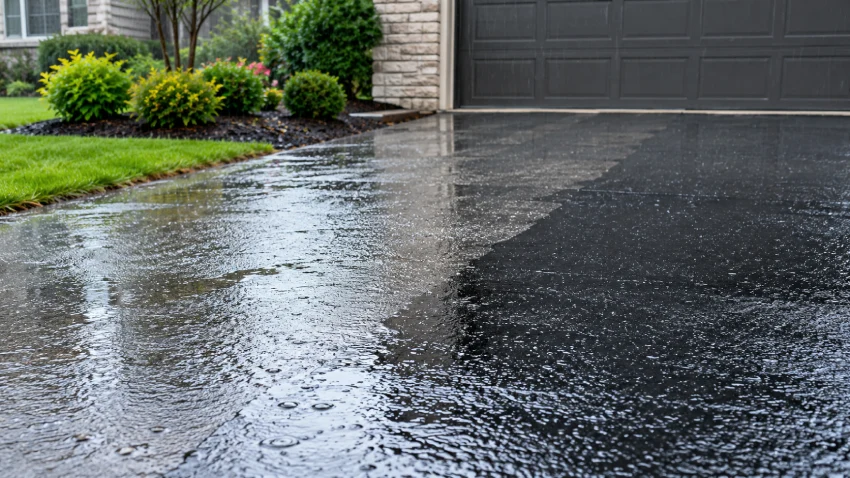
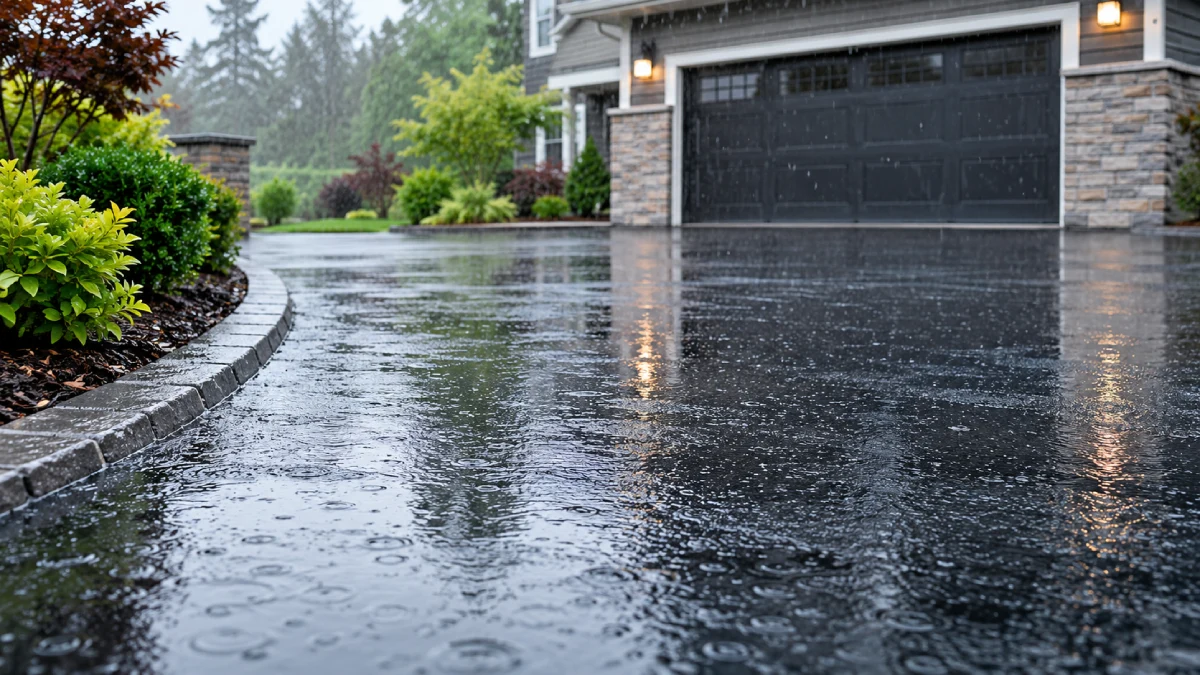
Driveway sealing during rain is risky because the coating needs suitable conditions to form a consistent protective layer.
Water can interfere with the way a sealer wets the existing surface, penetrates pores, or forms a film. Depending on the formulation, rainfall may disrupt the coating before it becomes water-resistant.
The outcome varies between water-based acrylic products, solvent-based sealers, asphalt emulsions, and specialist paving treatments. A product suitable for one surface should not automatically be used on another.
| Weather or surface condition | Possible sealing problem | Appropriate response |
| Active rainfall | Coating dilution, wash-off or poor film formation | Postpone conventional sealing |
| Damp driveway | Reduced adhesion or moisture-related defects | Wait for the specified surface condition |
| Rain shortly after application | Streaking, whitening or coating damage | Protect the area and assess after drying |
| High humidity | Slower drying for some products | Check humidity requirements |
| Low surface temperature | Delayed drying or curing | Follow product temperature limits |
| Strong direct sunlight | Rapid drying and application marks | Work within the recommended conditions |
| Dry, stable weather | More predictable coating performance | Apply according to manufacturer guidance |
The most important distinction is between surface drying, rain resistance, and full curing.
A coating may feel dry to the touch while remaining vulnerable to rainfall, vehicle tyres, or abrasion.
Total Surfacing Solutions approaches damaged driveways by checking whether the problem is limited to the coating or involves the surface underneath. When the base or wearing course has failed, another layer of sealer is unlikely to provide a lasting solution.
Why Rain Affects Driveway Sealer Adhesion?
Driveway sealer adhesion depends on the relationship between the product and the material beneath it.
On porous concrete or paving, some sealers are designed to penetrate the surface. Others form a film over the existing material. Rainwater can interfere with either process, depending on the chemistry involved.
Water-Based Driveway Sealers
Water-based sealers contain ingredients dispersed or dissolved in water. As the coating dries, water evaporates and the remaining ingredients form the intended protective treatment.
Rainfall during the vulnerable drying stage can interfere with this process.
The coating may become uneven, lose material from the surface, or fail to form the expected film.
Solvent-Based Driveway Sealers
Solvent-based sealers can also be affected by wet weather.
Moisture on the driveway may prevent proper contact between the product and the substrate, while trapped water can contribute to cloudy patches or adhesion problems.
The exact risks depend on the formulation. Being solvent-based does not mean a product is suitable for application in rain.
Specialist Sealing Products
Some specialist products are formulated for particular moisture conditions, but their suitability must be confirmed in the technical data sheet.
A product described as moisture-tolerant should not be assumed suitable for active rainfall.
The driveway coating drying stages explain why drying and curing are different processes and why application conditions matter.
How Long Should Rain Stay Away After Sealing?
There is no single rain-free waiting period that applies to every driveway sealer.
The required time depends on the formulation, application thickness, substrate, temperature, ventilation, and humidity.
Some products develop rain resistance before they reach full cure. Others require a longer protected period.
The safest approach is to identify the manufacturer’s stated time until rain exposure is permitted, then check that the weather forecast provides a reasonable margin.
Do not rely only on the coating feeling dry.
If the forecast changes and rain arrives earlier than expected, avoid walking or driving across the coating until its condition has been assessed.
For vehicle access, the post-sealing traffic reopening requirements explain why a surface may need additional curing time before normal use resumes.
A driveway should be reopened according to the product instructions, not simply because rainfall has stopped.
Can A Damp Driveway Be Sealed?
Most conventional driveway sealers require the substrate to meet specified moisture conditions before application.
A driveway may appear dry from a distance while moisture remains in joints, pores, cracks, shaded areas, or low spots.
Applying a coating too soon after rainfall or pressure washing can contribute to adhesion failure, whitening, bubbles, or inconsistent appearance.
However, not all products require identical moisture conditions. Some specialist treatments are designed for substrates that are not completely dry.
The product’s technical data sheet should determine what is acceptable.
For homeowners, the practical rule is to avoid applying conventional driveway sealer to a damp surface unless the manufacturer explicitly permits it.
Total Surfacing Solutions can also assess whether persistent dampness indicates poor drainage rather than temporary surface moisture.
If the driveway never seems to dry properly, surface levels, blocked outlets, and the underlying base may need attention before any coating is considered.
What If Rain Starts During Driveway Sealing?
Unexpected rain can interrupt driveway sealing even when the weather initially appears suitable.
The correct response depends on how much coating has been applied, how far it has cured, and the manufacturer’s instructions.
If rainfall begins during application, stop work rather than continuing to spread conventional sealer across the wet surface.
Avoid brushing, rolling, or washing the fresh coating in an attempt to correct the damage while it is still vulnerable.
Allow the surface to dry and assess the result before deciding whether further treatment is required.
Possible symptoms include:
- Milky or cloudy patches
- Uneven surface sheen
- Visible streaks or runs
- Sticky or soft areas
- Poor adhesion
- Coating washed away from exposed sections
Some defects are cosmetic, while others indicate that the coating has not formed correctly.
If the surface remains soft, slippery, or visibly damaged, keep vehicles off it until the condition is understood.
Do not immediately apply another coat over a failed layer. Additional material can make removal or repair more difficult.
Best Weather Conditions For Driveway Sealing
The ideal sealing conditions depend on the product rather than a universal temperature or time of year.
A suitable weather window generally includes a substrate that meets the manufacturer’s dryness requirements, acceptable air and surface temperatures, and enough time without rain for the coating to develop the required resistance.
Temperature And Surface Conditions
Air temperature and driveway temperature are not always the same.
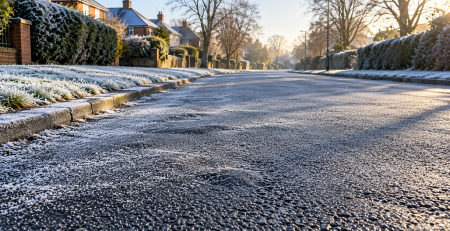
A driveway can remain cold after a chilly night even when the afternoon feels mild.
Some sealers have minimum application temperatures, while others specify an acceptable range for both the air and the substrate.
Applying outside these limits can affect drying, film formation, and adhesion.
Humidity And Morning Dew
High humidity can slow evaporation from certain driveway coatings.
Morning dew is another concern because it can leave moisture on the surface even when there has been no rainfall.
Shaded driveways may take longer to dry than exposed areas.
Seasonal Application Planning
Spring, summer, and suitable early autumn periods may provide useful sealing opportunities, but the calendar alone does not guarantee appropriate conditions.
The UK driveway sealing season checklist discusses the seasonal considerations that affect application planning.
Total Surfacing Solutions recommends assessing the existing driveway before choosing a treatment, particularly where winter damage, standing water, or cracking is already present.
Can Resin-Bound Driveways Be Sealed In Rain?
Resin-bound driveways differ from traditional tarmac, concrete, and block paving surfaces.
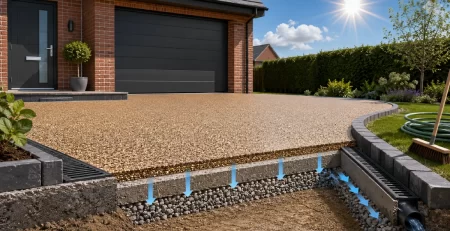
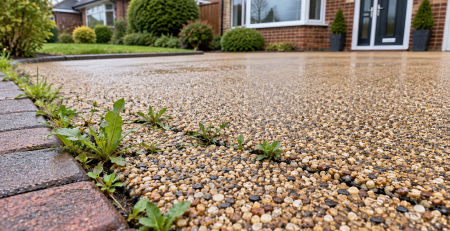
A resin-bound driveway is constructed by mixing aggregate and resin before laying the material as a continuous surface. The finished system is designed around the properties of the resin, aggregate, and prepared base.
Resin-bound installation should not be confused with applying conventional driveway sealer.
A finished resin-bound surface does not automatically need a general-purpose sealing treatment. Any compatible maintenance coating must be suitable for the existing system.
Applying an inappropriate product may alter its appearance, surface texture, or permeability.
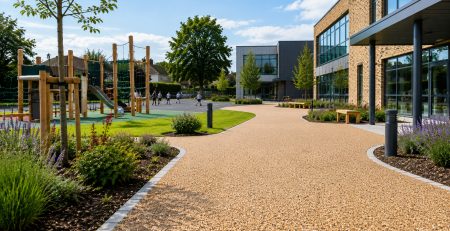
Total Surfacing Solutions provides resin driveway services for homeowners who want a contemporary driveway designed for everyday use.
The company also carries out professional resin surfacing using aggregate-based systems suited to residential and commercial areas.
The resin-bound protective coating workflow offers further information about assessment and preparation where specialist treatment is being considered.
For a damaged resin-bound driveway, the original system should be assessed before attempting sealing or recoating.
Is Tarmac Sealing Safe During Rain?
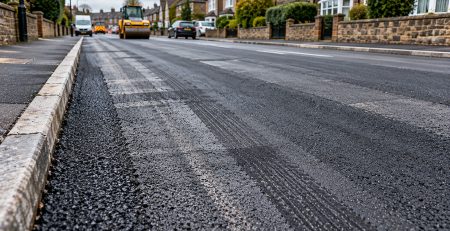
Tarmac and asphalt-compatible sealing products generally require suitable dry-weather conditions.
Rain can interfere with certain coatings before they have developed adequate water resistance, potentially producing streaking, loss of coverage, or inconsistent finishes.
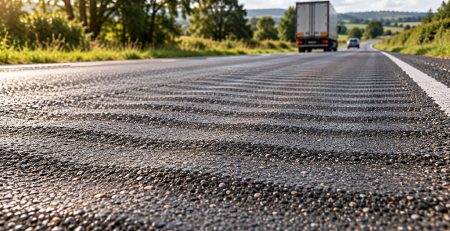
A worn tarmac driveway may also have cracks, open joints, potholes, or low spots that allow moisture to penetrate its structure.
Sealing these defects without appropriate repair can leave the underlying problems unresolved.
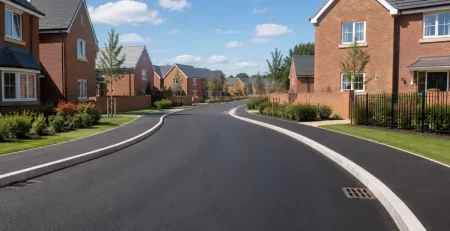
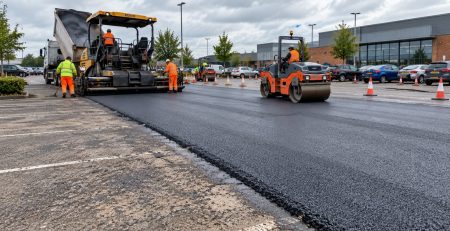
Total Surfacing Solutions provides tarmac installation and resurfacing for residential and commercial properties.
Homeowners researching tarmacadam resurfacing Hertford should first establish whether their existing driveway needs a protective treatment, localised repair, or replacement of the worn surface layer.
The tarmac resurfacing assessment criteria can help distinguish surfaces suitable for resurfacing from those requiring deeper reconstruction.
A sound tarmac driveway may be suitable for a compatible maintenance treatment, but structurally damaged tarmac needs more than sealing.
Can Block Paving Be Sealed In Wet Weather?
Block paving sealing can be particularly sensitive to moisture trapped in the blocks and joints.
Pavers may look dry at the surface while the bedding material or joints retain water from earlier rainfall or washing.
Applying an unsuitable sealer can contribute to whitening, inconsistent appearance, or poor bonding.
Block paving also requires preparation that goes beyond coating the visible blocks.
Joint condition, vegetation, staining, drainage, and previous treatments all need attention.
The block paving joint sealing procedure explains why preparation and product compatibility matter.
For homeowners searching for block paving experts Watford, Total Surfacing Solutions’ wider surfacing work includes resin-bound driveways, tarmacadam, and related driveway improvements. Any block paving sealing project should use a product specifically suitable for the paving system.
If blocks are loose or the driveway has settled, those issues should be corrected before considering a protective treatment.
Cleaning A Driveway Before Rain-Sensitive Sealing
Cleaning is an important part of preparation, but it can introduce moisture that delays sealing.
Pressure washing, rinsing, stain removal, and joint cleaning should be completed early enough for the driveway to meet the sealer’s required moisture condition.
An apparently clean surface may still contain dirt in cracks or moisture beneath porous areas.
Cleaning Resin-Bound Surfaces
Resin-bound surfaces require cleaning methods compatible with the aggregate and binder.
The resin driveway washing and debris removal steps explain how regular maintenance helps keep the surface tidy.
Cleaning should not be followed immediately by an incompatible coating simply because the finish looks dry.
Cleaning Block Paving
Block paving joints can retain moisture after washing.
The paving block cleaning and joint care process is relevant where jointing material, moss, or embedded dirt affects preparation.
The area should be inspected again once dry before a compatible product is applied.
Cleaning Costs And Equipment
Pressure washing requirements depend on driveway size, staining, access, and surface material.
The driveway pressure washing cost components can help homeowners understand the preparation stage.
Cleaning attachments should also be chosen carefully. Excessive pressure may disturb paving joints or damage vulnerable surfaces.
How Rain Reveals Cracks And Surface Damage?
Rainfall can reveal problems that are less obvious in dry weather.
Water entering an existing crack can travel beneath the visible driveway surface, potentially contributing to deterioration of the base and surrounding material.
If a driveway repeatedly develops damp patches, cracking, or standing water, sealing alone may not be the appropriate response.
The early driveway fracture progression stages help explain why small cracks should be assessed before they expand.
For concrete surfaces, the concrete crack repair preparation method provides additional information about addressing defects before further treatment.
Total Surfacing Solutions can assess whether a worn driveway needs repair, drainage correction, or resurfacing.
Where the structure is compromised, surface restoration should address the underlying problem rather than covering it with another coating.
Rain-Sensitive Sealing For Commercial Car Parks
Commercial car parks present additional challenges because sealing or surfacing work can affect vehicle access, pedestrian movement, and business operations.
An unexpected rain shower may disrupt the application schedule and delay reopening.
Commercial sites also need a practical plan for protecting treated areas from vehicles during drying and curing.
Total Surfacing Solutions works on commercial surfacing, access roads, tarmac areas, and car parks where appropriate material selection and installation planning matter.
Where parking bays, loading areas, or pedestrian routes need restoration after surfacing work, the company’s line marking contractors in Hertfordshire provide markings for commercial environments.
Line marking itself has separate material-specific application and curing requirements. It should not be applied over a wet or uncured surface unless the selected marking system expressly permits those conditions.
When A New Driveway Is Better Than Sealing?
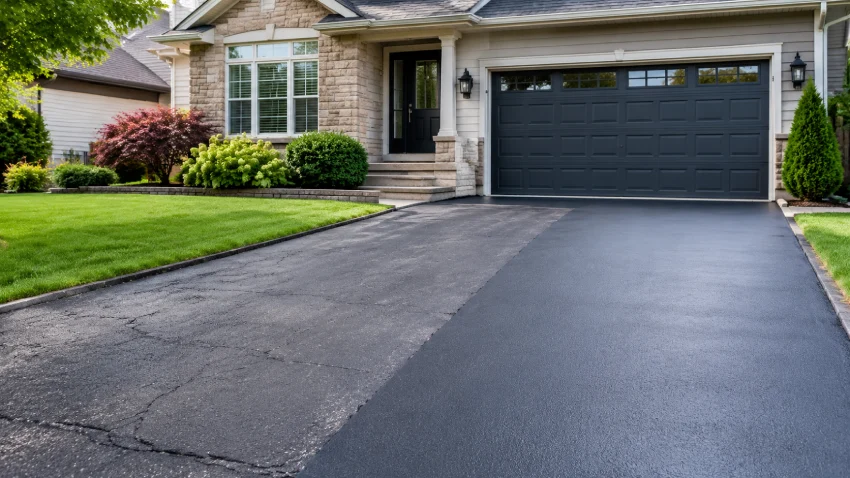
Not every driveway benefits from another application of sealer.
Some surfaces have structural defects, poor drainage, widespread cracking, or an unstable base.
Others have been repeatedly coated without correcting underlying deterioration.
For these properties, resurfacing or replacement may be the more appropriate investment.
Total Surfacing Solutions provides resin-bound installations and tarmac surfacing for homeowners who want a new driveway surface rather than continued cosmetic repairs.
Choosing a replacement material should involve assessment of vehicle loads, drainage, maintenance requirements, and the existing ground conditions.
For properties prioritising appearance, the company’s resin driveway colour and texture finishes offer decorative aggregate options.
The right decision depends on whether the existing driveway remains structurally suitable for maintenance.
Can Driveway Be Sealed In Rain? Area Coverage
Rain-sensitive driveway maintenance is relevant across Hertfordshire, Bedfordshire, Oxford, Cambridgeshire, and Essex. Local projects should account for the driveway’s existing condition, drying requirements, drainage, and suitable application weather. Total Surfacing Solutions provides surfacing alternatives where sealing is insufficient to restore a worn driveway.
Can Driveway Be Sealed In Rain In Bedfordshire?
Homeowners in Bedfordshire, including Bedford, Luton, and Dunstable, should avoid applying conventional driveway sealer during rainfall unless the product specifically permits it. Where a driveway suffers from repeated surface deterioration or drainage problems, Total Surfacing Solutions offers resin-bound driveway installations as an alternative to ongoing coatings.
Can Driveway Be Sealed In Rain In Oxford?
Oxford homeowners should consider the drying conditions of the existing surface before scheduling sealing work. Areas shaded by buildings or landscaping may retain moisture after rain. Total Surfacing Solutions provides resin-bound surfacing in Oxford and surrounding locations, helping property owners compare maintenance with a new driveway finish.
Can Driveway Be Sealed In Rain In Cambridgeshire?
In Cambridgeshire, including Cambridge, Ely, and Huntingdon, driveway sealing should be planned around the selected product’s moisture and curing requirements. Total Surfacing Solutions installs resin-bound driveways for residential and commercial clients where surface appearance, drainage, and ongoing maintenance are important considerations.
Rain-Ready Resin Driveway Options In Essex
Essex homeowners comparing sealing with replacement should assess whether the existing surface is structurally sound. In Chelmsford, Harlow, Colchester, and surrounding areas, Total Surfacing Solutions provides resin-bound driveway installations with a permeable finish when supported by an appropriately designed base.
Wet Weather Driveway Resurfacing In Essex
For Essex driveways affected by repeated coating failure, standing water, or worn surfacing, the appropriate response may involve more than resealing. Total Surfacing Solutions provides driveway installation and resurfacing options, including resin-bound and tarmac finishes, suited to the surface condition and intended use.
Can Driveway Be Sealed In Rain In Hertfordshire?
Homeowners in Hertfordshire, including Hertford, Watford, Stevenage, and St Albans, should check surface dryness and weather conditions before using driveway sealer. Total Surfacing Solutions provides resin-bound driveway installation across the county where a new, low-maintenance surface is preferable to repeated coating work.
Rain-Damaged Driveway Surfacing In Hertfordshire
Driveways in Hertfordshire that repeatedly suffer from failed coatings, cracks, or surface deterioration may benefit from resurfacing assessment. Total Surfacing Solutions works on residential and commercial driveways, helping property owners compare tarmac and resin-bound options against the condition of the existing surface.
Choosing The Right Approach After Rain
When rain interrupts driveway sealing, the first priority is to avoid further damaging the coating.
Allow the surface to dry, inspect the result, and follow the product manufacturer’s instructions before attempting repair or reapplication.
If the driveway already has cracks, settlement, poor drainage, or failing surfacing, another coating may not be sufficient.
Total Surfacing Solutions can assess the existing surface and recommend an appropriate route, whether that involves preparation, repair, or new surfacing.
For homeowners seeking complete resurfacing solutions, the company provides options suited to residential driveways, commercial areas, and access routes.
Protect Your Driveway With Suitable Surfacing
Most conventional driveway sealers should not be applied in rain, and freshly treated surfaces need sufficient protection while the coating develops water resistance. Applying sealer during unsuitable weather can lead to avoidable appearance and adhesion problems.
Total Surfacing Solutions can assess driveways affected by coating failure, damaged surfacing, or recurring water problems. Where repairs or a replacement surface are appropriate, its residential and commercial driveway surfacing options provide a starting point for choosing a suitable finish. The correct approach depends on the surface material, structural condition, drainage, and maintenance expectations.
FAQs
Can driveway be sealed in light rain?
Most conventional driveway sealers should not be applied during light rain. Even a small amount of rainfall can interfere with product adhesion, film formation, or drying, particularly when the coating is still vulnerable. Some specialist products have different moisture requirements, so the technical data sheet should always be checked. If rain has begun, postponing ordinary sealing work is usually preferable to risking an uneven or poorly bonded finish.
What happens if rain falls on freshly sealed tarmac?
Rainfall can damage a freshly applied tarmac-compatible coating if it arrives before the product has developed sufficient water resistance. Depending on the sealer, the result may include streaks, loss of material, uneven colouring, or slower drying. Allow the area to dry before assessing the damage. Do not immediately add another coat, as underlying moisture or damaged material may need removal or correction first.
How long should a driveway stay dry after sealing?
The required dry period depends on the sealer formulation, substrate, temperature, humidity, and applied thickness. The manufacturer’s instructions should specify when the coating can tolerate rain, when foot traffic is permitted, and when vehicles may return. These are not necessarily the same milestones. A driveway that feels dry can still be curing and remain vulnerable to water or tyre damage.
Can resin-bound driveway sealer be applied in rain?
A specialist treatment for resin-bound surfacing should only be applied under conditions expressly permitted by the treatment manufacturer and compatible with the installed resin system. Standard driveway sealers are not automatically suitable for resin-bound surfaces. Rain or retained moisture may affect adhesion and appearance. The existing binder, aggregate, drainage characteristics, and product requirements should be checked before any treatment is attempted.
Can I seal my driveway immediately after pressure washing?
Usually, the driveway needs time to reach the moisture condition required by the sealer before application. Pressure washing can leave water in concrete pores, paving joints, cracks, and shaded sections long after the visible surface begins to dry. The waiting period varies with material and weather conditions. Follow the product requirements rather than assuming a fixed drying time is suitable for every driveway.
Is driveway sealing possible during winter?
Driveway sealing may be possible during suitable winter conditions if the product’s minimum temperatures, surface moisture requirements, and curing conditions are met. However, cold weather, frost, short daylight hours, dew, and frequent rainfall can make application more difficult. Some products should not be applied at low temperatures. Check the technical data sheet and the forecast before deciding whether work can proceed.
Can rain cause driveway sealer to turn white?
Yes, moisture exposure can contribute to whitening, cloudiness, or hazy patches in certain driveway coatings. However, similar defects may result from trapped moisture, excessive application thickness, incompatible coatings, or poor surface preparation. The correct treatment depends on the specific sealer and the condition of the underlying material. Wait until the coating has dried before evaluating whether cleaning, removal, or reapplication is required.
Should I reseal or resurface a rain-damaged driveway?
Resealing may be appropriate when the underlying driveway remains sound and the existing coating can be prepared for a compatible treatment. Resurfacing may be more appropriate when there is significant cracking, settlement, pothole damage, or repeated drainage failure. The decision should be based on surface condition rather than appearance alone. Total Surfacing Solutions can assess whether driveway maintenance or a new resin-bound or tarmac surface is the more practical choice.