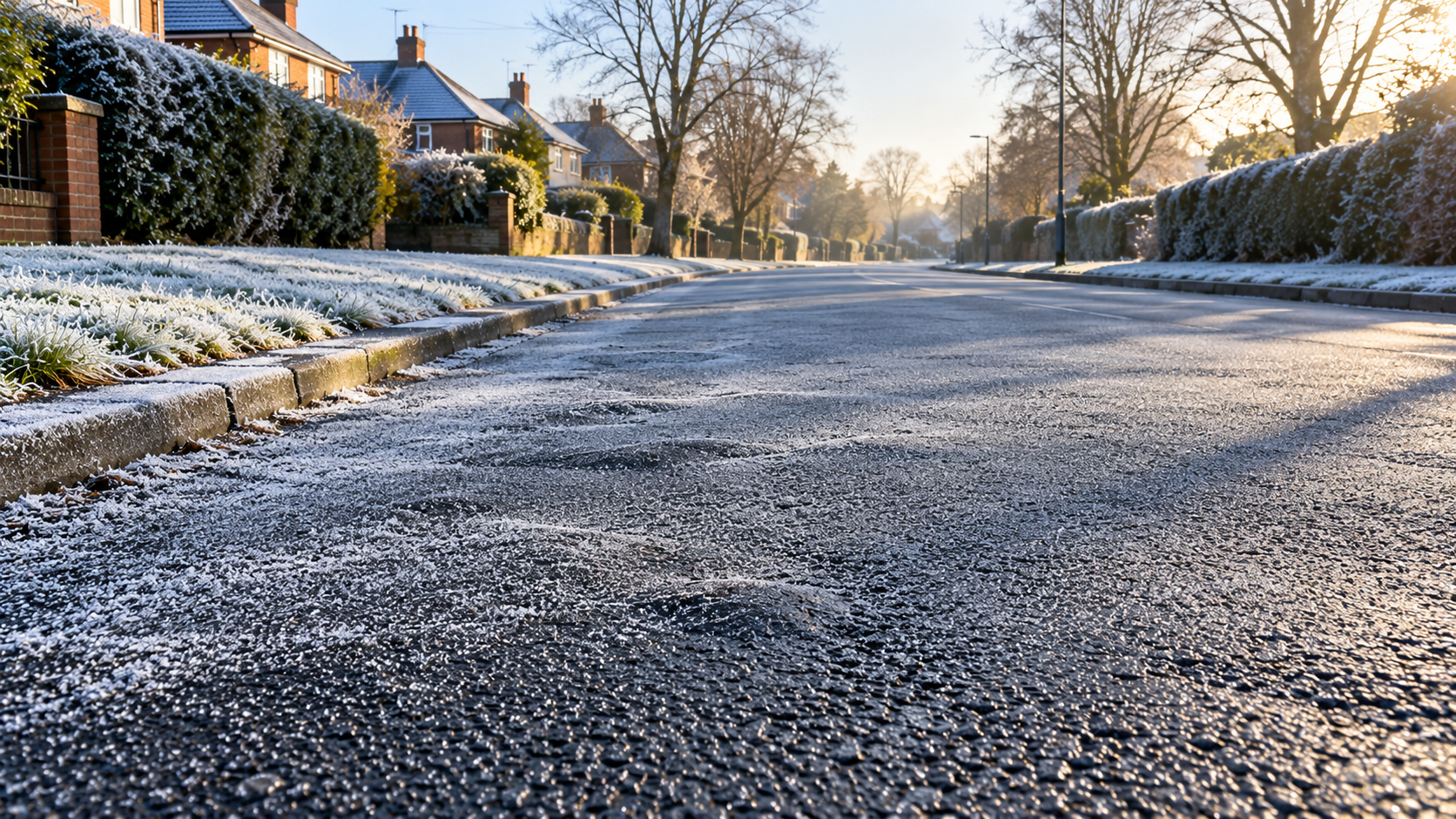
Can Frost Damage a Road Without Creating Visible Cracks?
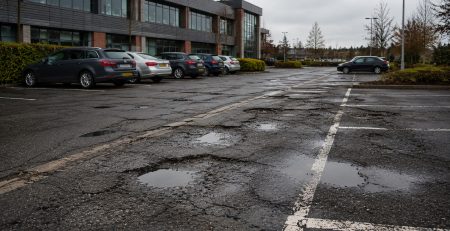
Frost damage to roads is commonly associated with visible cracking, potholes and broken tarmac. However, freezing temperatures can cause significant deterioration beneath a road surface without producing any immediately noticeable signs.
A road may appear smooth and structurally sound while moisture within its underlying layers freezes, expands and alters the stability of the pavement construction. When temperatures rise, the affected materials can lose strength, leaving the road more vulnerable to deformation and damage under normal traffic loads.
This type of hidden deterioration is particularly relevant in the UK, where winter conditions frequently involve repeated periods of freezing and thawing rather than consistently frozen ground.
For commercial property owners, facilities managers and those responsible for private access roads, understanding how frost affects road construction is important for maintaining safe and durable surfaces.
Recognising that visible cracks are not the only indication of damage can help prevent relatively minor winter-related problems from developing into expensive structural repairs.
How Does Frost Damage a Road?
Frost damage occurs when freezing temperatures interact with moisture present within a road’s construction.
Although tarmac and asphalt are designed to withstand normal environmental conditions, the underlying pavement layers can be vulnerable when water is present and temperatures fall sufficiently.
The severity of damage depends on several factors, including ground conditions, drainage performance, material composition and the depth to which freezing temperatures penetrate.
What Happens When Water Freezes Beneath Tarmac?
Road construction typically consists of several layers, each performing a specific structural function.
The asphalt surface distributes traffic loads and protects the materials beneath it. Supporting layers provide stability and help transfer vehicle loads into the underlying ground.
If moisture accumulates within frost-susceptible materials, freezing conditions can cause ice to form.
Under suitable conditions, water can migrate towards the freezing zone and form concentrated layers of ice known as ice lenses.
As these develop, they can displace surrounding materials and cause upward movement within the pavement structure.
This process is known as frost heave.
Importantly, frost heave does not always produce immediate cracking at the surface. The road may temporarily move without developing an obvious fracture.
Why Thawing Can Be More Damaging Than Freezing
The thawing stage can present a significant risk to road stability.
As temperatures rise, ice within the pavement structure melts and releases moisture into the surrounding materials.
Where drainage is inadequate, this water may remain trapped within the construction.
The resulting increase in moisture can reduce the strength of the supporting layers, particularly where the subgrade contains frost-susceptible soils.
A road that appeared relatively stable during freezing conditions may therefore become weaker during the subsequent thaw.
When vehicles travel across these weakened areas, the pavement can begin to deform or deteriorate even though visible cracking has not yet developed.
Can Frost Damage Exist Beneath an Apparently Healthy Road Surface?
Yes. One of the challenges associated with frost damage to roads is that the visible asphalt surface does not always accurately reflect the condition of the underlying construction.
The uppermost layer may remain intact while changes occur within the sub-base or subgrade.
This means that a visual inspection alone may not identify every frost-related problem.
Hidden Weakening of the Sub-Base
The sub-base plays an important role in distributing vehicle loads and supporting the asphalt layers.
If moisture accumulates within the construction, freezing and thawing can affect its performance.
Although well-specified granular sub-base materials are generally selected to reduce frost susceptibility, problems can arise where unsuitable materials, excessive fines or inadequate drainage are present.
Following a thaw, the supporting structure may become less stable.
Repeated vehicle movements can then accelerate deterioration.
In some cases, the first visible indication is not a crack but a shallow depression or an area that begins to deform under traffic.
Loss of Subgrade Strength
The subgrade is the natural ground or prepared formation beneath the engineered pavement layers.
Its condition has a direct influence on road performance.
Certain soils, particularly those containing fine particles, are more susceptible to frost-related movement when sufficient moisture is available.
During freezing conditions, ice formation can disturb the soil structure.
When thawing occurs, the material may temporarily lose bearing strength.
If the pavement above is not adequately designed to accommodate these conditions, traffic loading can cause settlement or deformation.
This is why appropriate ground assessment and preparation are essential during professional tarmac installation and road surfacing.
What Are the Early Signs of Frost Damage Without Visible Cracks?
Although hidden frost damage may not immediately produce obvious surface fractures, other changes can indicate that a road is experiencing problems.
Recognising these early symptoms allows site managers to investigate potential defects before more extensive deterioration occurs.
Uneven Surface Levels
One possible indication is a change in the road’s surface profile.
Frost heave can cause sections of the pavement to rise slightly, creating uneven areas that may become more noticeable when vehicles pass over them.
After thawing, some affected sections may settle.
This movement can produce shallow depressions or irregularities without necessarily breaking the asphalt surface.
Changes around kerbs, drainage channels and existing surface joints may also become noticeable.
Localised Depressions and Rutting
Where thawing has weakened the supporting materials, repeated traffic loading may gradually deform the pavement.
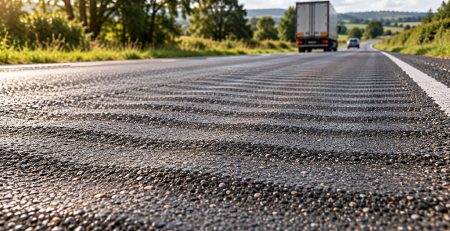
Wheel paths can begin to develop shallow ruts, particularly in areas used by heavier vehicles.
Commercial access roads, delivery routes and industrial yards can be vulnerable because they regularly accommodate concentrated vehicle loads.
Rutting does not automatically indicate frost damage, but its appearance following prolonged freezing and thawing conditions may justify further investigation.
Standing Water in Previously Dry Areas
Changes in surface levels can also affect drainage.
A road that previously directed rainwater towards gullies or drainage channels may begin retaining water in localised depressions.
Standing water can indicate that settlement or deformation has altered the original surface falls.
It can also contribute to further deterioration by increasing moisture exposure.
Where these changes appear following winter conditions, both the surface and underlying pavement structure should be considered.
Why Are UK Roads Vulnerable to Hidden Frost Damage?
The British climate creates conditions in which road surfaces may experience repeated freezing and thawing during a relatively short period.
Unlike regions where the ground remains frozen for extended periods, many parts of the UK experience fluctuating winter temperatures.
This can create recurring opportunities for moisture to freeze and subsequently thaw within vulnerable pavement materials.
Repeated Freeze-Thaw Cycles
A freeze-thaw cycle occurs when temperatures fall sufficiently for moisture to freeze before rising and allowing the ice to melt.
Repeated cycles can progressively affect vulnerable materials.
The extent of deterioration depends on the moisture available, the susceptibility of the materials and the severity of the temperature changes.
Where the road construction is already weakened, repeated freezing and thawing can accelerate existing problems.
Persistent Winter Rainfall
Winter rainfall can increase the amount of moisture present within and around a road.
If surface drainage is ineffective, water may enter the pavement through joints, existing defects or poorly protected edges.
Moisture can also reach the pavement structure from surrounding ground.
When freezing temperatures follow periods of heavy rainfall, saturated frost-susceptible materials may become vulnerable to movement.
This makes effective drainage an important part of long-term road maintenance.
Shaded Roads and Commercial Access Areas
Roads that receive limited sunlight may remain frozen for longer than surrounding areas.
Shaded access routes, areas beside industrial buildings and roads bordered by dense vegetation can experience different temperature conditions from more exposed surfaces.
These local variations can contribute to uneven freezing and thawing.
Consequently, different sections of the same road may respond differently to winter weather.
How Does Poor Drainage Increase the Risk of Frost Damage?
Drainage is one of the most important considerations when assessing the likelihood of frost-related pavement deterioration.
Freezing temperatures alone do not necessarily cause significant structural damage. The presence of moisture and frost-susceptible materials is a critical part of the process.
Water Accumulation Within Pavement Layers
Where drainage is inadequate, water can accumulate beneath the asphalt.
This may result from blocked drainage channels, unsuitable construction materials, poor surface gradients or moisture entering from adjacent ground.
If water remains within frost-susceptible layers, freezing conditions can encourage ice formation and movement.
The subsequent thaw may leave supporting materials weakened.
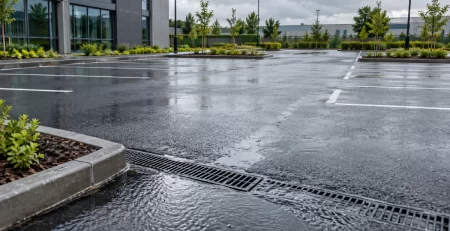
A properly designed drainage system helps limit the amount of water retained within the pavement construction.
Why Surface Drainage Is Not Always Enough
A road can have functioning surface gullies while still experiencing moisture problems beneath the asphalt.
Subsurface drainage conditions must also be considered.
Where groundwater levels are high or surrounding soils retain significant moisture, additional drainage measures may be required.
Simply removing standing water from the surface will not necessarily resolve deeper moisture-related problems.
A comprehensive assessment should therefore consider both surface runoff and the movement of water within the underlying construction.
Can Heavy Vehicles Make Hidden Frost Damage Worse?
Heavy vehicles can accelerate deterioration where frost and thawing have already weakened a pavement.
This is particularly relevant to commercial premises, distribution facilities, industrial yards and private access roads.
Traffic Loading During Thawing Conditions
When the supporting layers become saturated and lose strength, their ability to distribute vehicle loads can be reduced.
Heavy goods vehicles place substantial stresses on the pavement structure.
Repeated loading during vulnerable thawing conditions can contribute to rutting, settlement and progressive structural deterioration.
The road surface may initially remain intact, but continued deformation can eventually result in cracking.
Commercial Loading Areas and Turning Points
Loading bays and vehicle manoeuvring areas often experience concentrated loading.
Slow-moving heavy vehicles, repeated braking and tight turning movements can place additional demands on the pavement.
Where the supporting construction has been weakened by frost-related moisture changes, these areas may deteriorate more rapidly.
Appropriate pavement design is therefore important for sites accommodating regular commercial traffic.
Experienced commercial surfacing contractors can assess the operational requirements of a site and recommend suitable construction methods for the expected vehicle loads.
How Can Hidden Frost Damage Be Identified?
Because frost-related deterioration may occur below the visible surface, identifying its extent sometimes requires more than a routine visual inspection.
The appropriate investigation depends on the symptoms present and the importance of the affected road.
Visual and Level Surveys
An initial inspection can identify changes in surface levels, drainage performance and pavement condition.
Comparing affected areas with previous inspection records may reveal gradual settlement or deformation.
Surface level surveys can provide more accurate information where movement is suspected.
These assessments are particularly useful when investigating recurring depressions or unexplained changes in drainage patterns.
Investigating the Underlying Construction
Where structural deterioration is suspected, further investigation may be necessary.
This can involve examining pavement thickness, underlying materials and moisture conditions.
Depending on the site, suitable methods may include trial pits, pavement coring or other specialist investigations.
The purpose is to determine whether the problem is confined to the asphalt surface or extends into the supporting layers.
Identifying the affected materials helps establish the most appropriate repair strategy.
How Can Frost-Damaged Roads Be Repaired?
The correct treatment depends on the severity and location of the damage.
Where the asphalt remains intact and the underlying construction has not suffered permanent deterioration, extensive repairs may not be necessary.
However, roads displaying progressive settlement, deformation or structural weakness may require intervention.
Addressing Drainage Problems First
If excessive moisture has contributed to the deterioration, drainage improvements should be considered before permanent repairs are completed.
This may involve restoring surface falls, clearing existing drainage infrastructure or improving subsurface water management.
Without addressing the underlying moisture problem, repaired areas may remain vulnerable during future winters.
Localised Pavement Repairs
Where damage is limited to a particular section, localised reconstruction may be appropriate.
The affected asphalt can be removed to allow inspection of the supporting materials.
Any weakened or unsuitable construction layers should be addressed before the surface is reinstated.
This approach is particularly relevant where localised settlement or deformation has developed.
Resurfacing and Structural Reconstruction
Where the asphalt has deteriorated but the supporting pavement remains sound, resurfacing may restore the road’s condition.
However, installing a new asphalt layer over structurally weakened materials will not resolve the underlying problem.
If frost-related deterioration has affected the sub-base or subgrade, more extensive reconstruction may be necessary.
The repair specification should reflect the ground conditions, drainage requirements and expected traffic loading.
For larger projects, professional machine-laid tarmac can provide a consistent finished surface once the underlying construction has been appropriately prepared.
How Can Frost Damage to Roads Be Prevented?
Reducing the likelihood of frost damage begins during road design and continues throughout the pavement’s operational life.
Suitable materials, effective drainage and regular maintenance all contribute to long-term durability.
Appropriate Pavement Design
The pavement construction should reflect local ground conditions, environmental exposure and expected vehicle loading.
Where frost-susceptible soils are present, the design may require suitable protective measures.
These can include appropriate material selection, adequate construction depth and measures to manage moisture.
The objective is to limit frost-related movement and maintain sufficient structural support throughout changing seasonal conditions.
Correct Installation and Compaction
Proper preparation and compaction help create a stable pavement structure.
Poorly compacted materials may be more vulnerable to settlement and moisture-related deterioration.
Each construction layer should be installed in accordance with the required specification.
This is particularly important for highway surfacing and heavily trafficked access routes where pavement performance has direct implications for safety and reliability.
Regular Winter Maintenance
Routine maintenance helps identify conditions that could increase frost-related damage.
Drainage channels should be kept clear, existing surface defects should be addressed and areas prone to standing water should be monitored.
Inspections following significant freezing and thawing conditions can help identify changes in surface levels or pavement performance.
Maintaining accurate records also makes it easier to recognise recurring problems.
When Should a Road Be Professionally Inspected After Frost?
A professional inspection may be appropriate where a road develops unusual surface movement, localised settlement or new drainage problems following winter weather.
Particular attention should be given to areas that accommodate heavy vehicles or provide essential access to commercial premises.
An inspection is also advisable where defects repeatedly appear in the same location despite previous repairs.
These patterns may indicate an unresolved problem within the pavement construction.
Early assessment can help establish whether the road requires monitoring, targeted repairs or more extensive investigation.
Why Visible Cracks Are Not the Only Measure of Road Condition
Frost can damage a road without immediately creating visible cracks because deterioration may begin within the supporting pavement layers rather than at the asphalt surface.
Ice formation, frost heave and subsequent thawing can alter the condition of underlying materials while the road initially retains a relatively normal appearance.
For property owners and commercial site managers, this highlights the importance of assessing road performance rather than relying exclusively on visible surface defects.
Changes in surface levels, unexpected standing water and deformation under traffic can all provide useful indications of potential problems.
Maintaining effective drainage, selecting appropriate construction materials and investigating unusual changes following winter conditions can help preserve the structural integrity of tarmac roads and reduce the likelihood of more extensive repairs.