How Poor Ground Preparation Shortens a Driveway’s Lifespan
A driveway may look relatively simple once it is finished, but the visible surface is only one part of the construction. Much of the strength, stability and durability of a driveway depends on what sits underneath it. This makes proper ground preparation one of the most important stages of any driveway installation.
Poor driveway ground preparation can significantly shorten the lifespan of an otherwise good-quality surface. Even when suitable tarmac, asphalt or another durable material is used, the finished driveway can only perform properly when the layers beneath it provide consistent support.
For UK property owners, this is particularly important because driveways are exposed to frequent rainfall, changing temperatures and repeated vehicle loading. Weak or poorly compacted ground can move under these conditions, eventually causing visible defects at surface level.
Professional domestic surfacing contractors therefore consider the condition of the existing ground before deciding how a new driveway should be constructed. Preparation needs to reflect the site itself rather than simply creating a surface that looks satisfactory on the day installation is completed.
What Does Driveway Ground Preparation Involve?
Driveway ground preparation UK projects can vary depending on existing conditions, intended use and the type of finished surface being installed. In general, the objective is to create a stable and appropriately drained foundation capable of supporting vehicles without excessive movement.
The existing ground must first be assessed. Soft soil, damaged surfacing, vegetation, unsuitable material and other weak areas may need to be removed. Excavation allows the contractor to reach a suitable formation level before building the driveway back up using appropriate materials.
A sub-base is then installed to distribute loads and provide stability. The material needs to be laid at a suitable depth and compacted correctly. Simply spreading aggregate across the site is not enough. Effective compaction is essential because loose material can settle after vehicles begin using the driveway.
Levels and falls also need to be considered during preparation. Water should have a suitable route away from the finished surface rather than collecting in low areas or penetrating vulnerable sections of the construction.
Once these elements are correct, the final surface can be installed. For properties requiring a traditional hard-wearing finish, professional tarmac installation and road surfacing can provide a durable surface, but its long-term performance still depends heavily on the foundation beneath it.
How Poor Preparation Causes Driveway Failure
Problems caused by poor preparation are not always immediately visible. A newly surfaced driveway can initially appear smooth and professionally finished even when weaknesses exist underneath.
Over time, vehicle loads and weather conditions expose these weaknesses. The surface begins responding to movement in the layers below, and small defects can gradually develop into more serious deterioration.
Cracking Caused by Movement
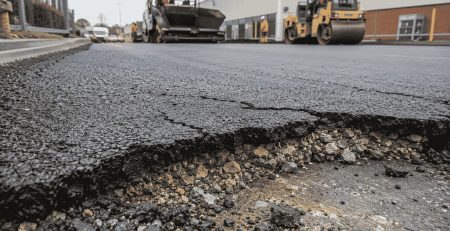
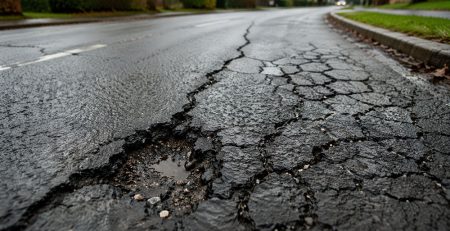
Cracking is one of the clearest signs that a driveway may be experiencing structural movement. Although cracks can develop for several reasons, an unstable base is a common underlying problem.
When the sub-base moves or settles unevenly, the surface above is forced to move with it. Flexible materials can tolerate a certain amount of movement, but they still have limits. Repeated movement eventually places stress on the surface until cracks begin to appear.
Once cracking develops, another problem can follow. Water can enter through the damaged area and reach the layers beneath the driveway. This can weaken already vulnerable ground and contribute to further movement.
The result can become a cycle in which ground movement creates cracking, cracking allows additional water penetration, and the increased moisture contributes to further deterioration.
Sinking and Uneven Areas
Poor compaction can lead to sections of a driveway sinking after installation. Loose sub-base material contains voids that can gradually close under repeated traffic, causing the material to settle.
If settlement occurs evenly across an entire area, it may be less obvious initially. More commonly, however, some sections compact more than others. This produces dips, depressions and uneven areas in the finished driveway.
These defects affect more than appearance. Low sections can hold rainwater, while uneven surfaces can make vehicle and pedestrian access less comfortable.
Repairing isolated depressions may improve the visible surface, but if the underlying base remains unstable, the same problem can return. Correcting the root cause may require removing the affected surface and rebuilding the foundation.
The Connection Between Ground Preparation and Drainage
Drainage should be considered from the beginning of a driveway project rather than treated as an issue to address after surfacing has been completed.
UK weather makes this especially important. Regular rainfall means a driveway needs to manage water effectively throughout its working life. The preparation stage provides the opportunity to establish suitable levels and falls so that surface water can move in the intended direction.
Poorly prepared ground can create low points where water collects. These areas may become more pronounced if the underlying material settles over time.
Standing water can accelerate deterioration, particularly where cracks or open joints already exist. Water entering the driveway construction can affect supporting layers and potentially weaken the formation below.
Good preparation therefore supports both structural stability and effective water management. These two factors are closely connected because controlling water helps protect the materials that provide the driveway with its strength.
Why the Sub-Base Is So Important
The sub-base performs much of the structural work beneath a driveway. Its purpose is to spread vehicle loads across the ground rather than allowing concentrated pressure to act directly on weaker soil.
A properly constructed sub-base also creates a consistent platform for subsequent layers. The depth and specification required will depend on factors such as ground conditions, anticipated vehicle use and the proposed surfacing system.
Problems occur when contractors reduce excavation or sub-base depth in an attempt to save time or cost. The finished surface may still look acceptable, but there is less structural material available to distribute loads.
A family driveway used by cars every day experiences thousands of vehicle movements over its lifetime. Each movement transfers weight through the surface into the supporting layers. If those layers are inadequate, gradual deformation becomes much more likely.
For larger areas where a consistent finish and efficient installation are required, machine-laid tarmac can provide excellent surface consistency. However, even precise machine laying cannot compensate for a weak foundation.
Compaction Is Just as Important as Material Choice
Using the correct material does not automatically create a strong driveway. That material must also be properly compacted.
Compaction reduces voids between aggregate particles and creates a denser, more stable structure. If material is left loose, vehicle loading can effectively continue the compaction process after construction has finished.
The difficulty is that this uncontrolled settlement rarely occurs uniformly. Areas subjected to greater loads may settle more quickly, while weaker sections of the underlying ground can move differently from stronger areas.
Professional preparation uses appropriate compaction equipment during construction so that the base achieves the required stability before the finished surface is applied.
This is one reason driveway quotations should not be assessed solely by the appearance or thickness of the final surface. What happens below ground level is equally important, even though much of that work becomes invisible once the project is complete.
Ground Conditions Can Vary Across the Same Driveway
It is easy to assume that the ground beneath a driveway will be consistent from one side to the other. In reality, conditions can change considerably across relatively small areas.
Previous building work may have disturbed sections of ground. Old driveways may contain different materials from earlier repairs or extensions. Some locations may contain softer soil, while others could include buried construction material or poorly compacted fill.
These variations need to be recognised during preparation.
If weak sections are simply covered by new material, differential movement can occur. One area may remain stable while another begins to settle, creating cracking or depressions at the surface.
An experienced surfacing contractor assesses these conditions before proceeding and adapts the preparation where necessary. Examples of completed surfacing work can also help property owners understand the difference between basic surface covering and properly planned construction, particularly when reviewing relevant surfacing case studies.
Why Adding a New Surface Over a Bad Base Can Be a False Economy
When an existing driveway becomes cracked or uneven, resurfacing can sometimes seem like the simplest solution. In suitable circumstances, resurfacing can be effective, but the condition of the existing foundation needs to be considered first.
Installing a fresh layer over an unstable base does not remove the underlying weakness. If the old driveway is moving because the ground or sub-base has failed, that movement can eventually affect the new surface as well.
Cracks may reappear, depressions can return and the expected lifespan of the new surface may be considerably reduced.
This is why professional assessment matters before deciding between local repair, resurfacing or complete reconstruction. Where deterioration is limited and the underlying construction remains sound, targeted pothole repairs or other remedial works may be appropriate. Where the foundation itself has failed, more substantial reconstruction can provide a better long-term result.
How Vehicle Use Influences Preparation Requirements
Not every driveway experiences the same loading. A small residential driveway used by lightweight cars has different requirements from an access area regularly used by delivery vehicles, vans or heavier commercial traffic.
Ground preparation should reflect this expected use.
Repeated heavier loads place greater stress on the driveway structure. If the foundation is too shallow or inadequately compacted, deformation can occur much sooner.
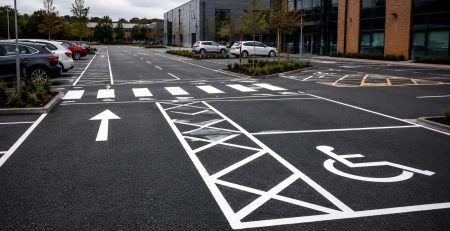
The same principle applies to commercial access roads, yards and car parks. These areas often require more robust construction because vehicle movements are more frequent and axle loads can be considerably greater. Experienced commercial surfacing contractors can assess the expected traffic and specify the supporting construction accordingly.
Designing the foundation around realistic future use helps prevent premature failure and reduces the likelihood of expensive corrective work.
Warning Signs of Poor Ground Preparation
Evidence of inadequate ground preparation often becomes clearer as a driveway ages.
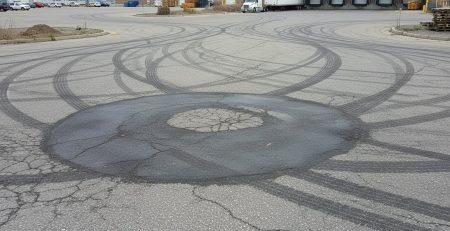
Cracks that repeatedly return after repair may indicate movement beneath the surface. Depressions that collect water can suggest settlement, while wheel-track deformation may show that the supporting construction is struggling under regular traffic.
Edges can also provide clues. If they begin breaking away or sinking, the driveway may lack adequate support at its boundaries. Similarly, a surface that develops significant unevenness relatively soon after installation deserves closer inspection.
These symptoms do not automatically prove that preparation was inadequate, because driveway deterioration can have several causes. However, when multiple defects appear together or return repeatedly after repairs, investigating the underlying construction is sensible.
The Long-Term Cost of Cutting Corners During Preparation
Reducing preparation work can lower the initial installation cost, but this saving needs to be considered against the expected lifespan of the driveway.
A surface that requires repeated patching, crack repairs or early resurfacing can become considerably more expensive over time. If major structural failure develops, sections may eventually need to be excavated and reconstructed anyway.
Correct preparation involves more work before the visible surfacing begins, but it gives the finished driveway a stable platform from which to perform.
This is particularly important when investing in a high-quality finish. Whether the chosen solution is tarmac, asphalt or a resin driveway, the finished material should be supported by a foundation appropriate for the site and intended use.
Why Professional Site Assessment Matters
There is no single preparation specification suitable for every driveway. Ground type, drainage, existing construction, driveway dimensions and vehicle loading can all influence the correct approach.
A professional site assessment allows these factors to be considered before work begins. It also provides an opportunity to identify potential problems that may otherwise only become apparent after excavation starts.
Property owners should therefore look beyond the visible finish when planning a new driveway. Questions about excavation, sub-base construction, compaction and drainage are just as important as discussions about surface appearance.
Working with an experienced surfacing contractor helps ensure that the project is considered as a complete construction rather than simply a new top layer.
Building a Driveway for Long-Term Performance
The lifespan of a driveway begins with the ground beneath it. A high-quality surface can provide durability, appearance and reliable access, but it needs a properly prepared foundation to deliver those benefits over the long term.
Adequate excavation removes unsuitable material, a correctly constructed sub-base distributes vehicle loads, proper compaction limits future settlement, and carefully planned levels help manage surface water. Together, these elements create the stable platform required for successful surfacing.
Poor driveway ground preparation UK property owners encounter may not reveal itself immediately. The consequences often develop gradually through cracking, sinking, standing water and recurring repairs. By the time these problems become obvious, correcting them can involve substantially more work than preparing the ground correctly in the first place.
For anyone considering a new driveway or dealing with persistent surface failure, examining the condition beneath the visible surfacing is therefore essential. A driveway should be designed from the ground upwards, with each layer contributing to the stability and performance of the finished construction.