What Are the Black Lines Between Sections of New Tarmac?
A newly surfaced road, car park, driveway or commercial access route will usually have a clean, uniform appearance. However, it is common to notice darker black lines running between different sections of the finished surface. These lines can be particularly noticeable immediately after the work has been completed, leading some property owners and site managers to wonder whether they indicate a problem.
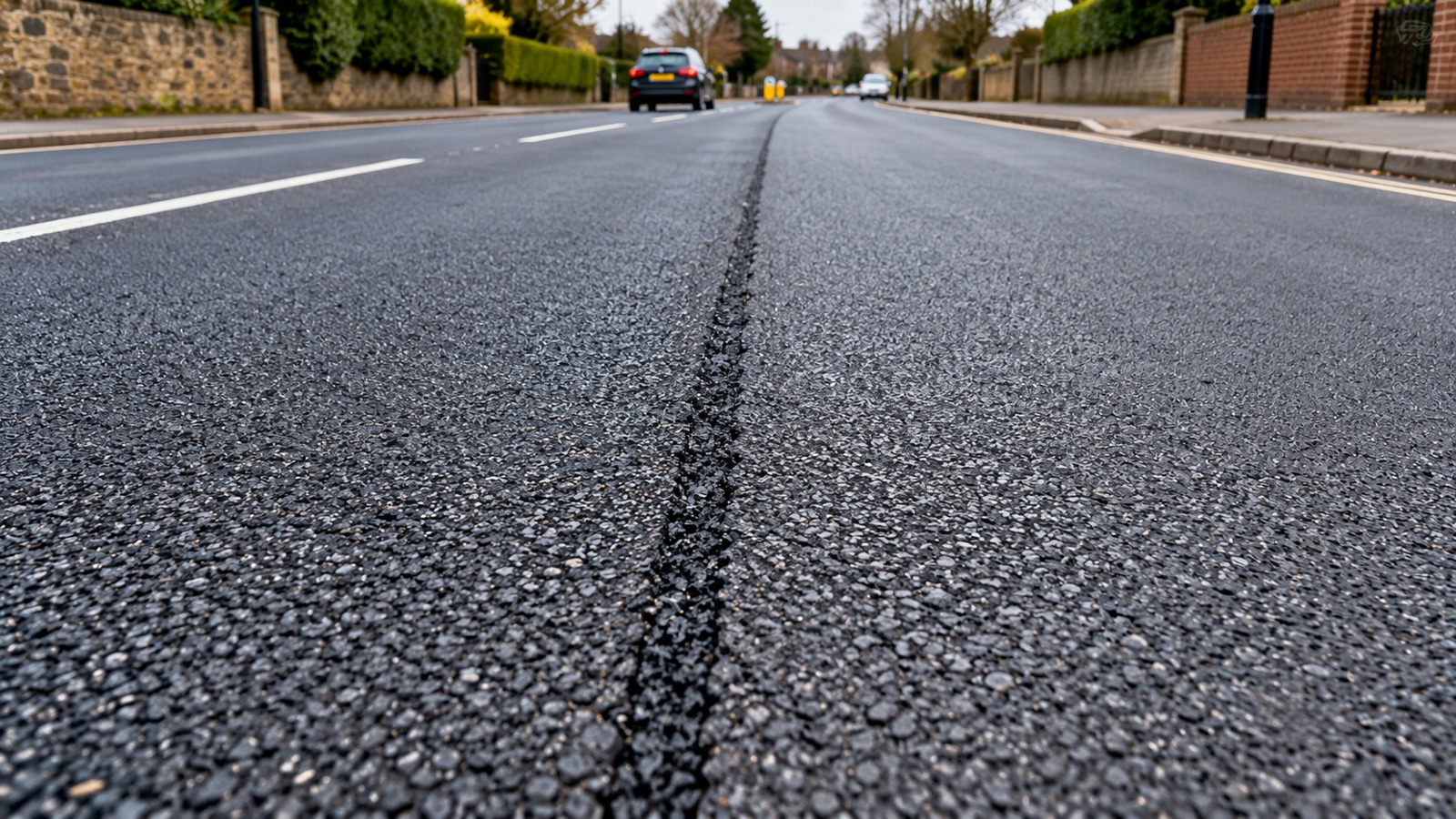
In most cases, the black lines between new tarmac sections are associated with construction joints. These joints occur where one section of tarmac meets another during the installation process. Depending on the size and layout of the site, it may not be possible or practical to install the entire surface as one continuous area.
The darker appearance often comes from the bituminous material used around the joint to help create a sealed connection between adjoining sections. Rather than automatically being a sign of poor workmanship, a properly constructed and sealed joint is an important part of professional tarmac installation and road surfacing.
Understanding why these joints exist makes it much easier to assess a newly laid surface and distinguish normal construction details from issues that may require attention.
What Is a Joint in Tarmac Surfacing?
A tarmac joint is the point where two separately laid sections of surfacing material meet. Tarmac and asphalt are installed while hot so that the material can be properly spread and compacted. On larger projects, the surface is normally installed in organised sections or passes.
When one pass meets another, a joint is created between them. The surfacing contractor must carefully manage this connection so that the adjoining areas work together as part of the finished surface.
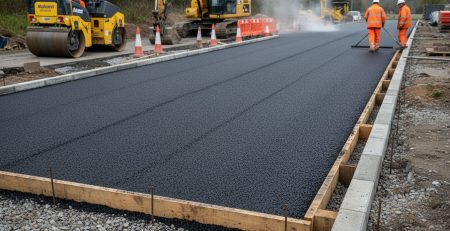
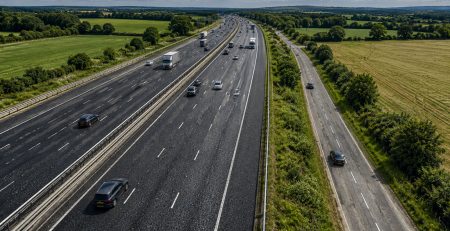
This is particularly relevant on large car parks, commercial yards, access roads and highways, where machine-laid tarmac may be installed across several passes. Each pass covers a particular width, meaning adjoining sections have to meet somewhere within the overall paved area.
The resulting joint can sometimes remain visible even when the surface has been installed correctly.
Why the Joint Looks Darker
Bituminous jointing or sealing products are naturally very dark. When these materials are applied to an edge before adjoining tarmac is installed, or used as part of the joint-sealing process, they can create a black line that contrasts with the surrounding aggregate.
Fresh tarmac itself is dark, but its appearance begins changing as the surface is exposed to traffic and weather. The material around a sealed joint may weather at a different rate, making the line temporarily more obvious.
The visual difference does not necessarily mean there is a physical gap between the sections. A properly completed joint should create a strong, compact and suitably sealed connection.
Why Tarmac Cannot Always Be Laid in One Continuous Section
For a small driveway or compact area, it may be possible to complete much of the surface continuously. Larger projects are different.
A commercial car park, industrial yard or long access road may require substantial quantities of surfacing material. Contractors must coordinate deliveries, laying equipment, rollers, site access and working areas so that the material can be installed and compacted correctly.
The dimensions of surfacing machinery also influence how a surface is constructed. A paving machine works at a particular operating width. If the road or car park is wider than that width, additional passes are required alongside the first.
That naturally produces longitudinal joints running in the same direction as the paving operation.
There may also be transverse joints across the direction of travel. These can occur where a section of surfacing ends and work subsequently continues from that point.
For commercial surfacing, careful planning of these joints forms part of the overall installation process. Their positioning and construction can influence both the appearance and long-term performance of the finished area.
Why Properly Sealed Tarmac Joints Matter
Although a joint may look like a relatively minor feature, it can be an important part of the surface.
One of the main concerns with any joint is water. If water is able to penetrate through weaknesses in the surface, it can reach the underlying pavement layers. Over time, repeated traffic loading combined with moisture can contribute to deterioration.
During colder weather, water penetration can become particularly problematic because repeated wet and cold conditions place additional stress on already vulnerable areas.
Correct joint preparation, compaction and sealing therefore help reduce the opportunity for water to enter the pavement structure.
The objective is not simply to hide the joint. The important factor is creating a durable connection between the two sections.
Compaction Around the Joint
Compaction is critical throughout a tarmac surface, but the edges of adjoining sections deserve particular attention.
Hot surfacing material needs to be compacted to achieve the required density and stability. If the material around a joint is insufficiently compacted, the area may be more vulnerable to water penetration and deterioration.
Professional contractors therefore consider the joint as part of the surfacing operation rather than treating it as a cosmetic finishing detail.
Good preparation beneath the surface is equally important. Even a carefully finished wearing course depends on stable underlying construction. This is one reason professional road surfacing involves considerably more than simply placing a layer of black material over the ground.
Are Black Lines in New Tarmac a Defect?
Not necessarily. A visible black line between sections of new tarmac can be completely normal.
The appearance alone does not provide enough information to determine the quality of the installation. It is more useful to consider the physical condition of the joint.
A properly formed joint should be compact, stable and well connected. There should not be a significant open gap separating the two sections, nor should the adjoining material be loose or visibly breaking away.
A dark line caused by jointing material is therefore very different from an open crack.
This distinction is important for property owners inspecting newly completed work. Fresh jointing material can sometimes appear prominent precisely because the surrounding surface is new and visually consistent.
Over time, normal trafficking and weathering may make the difference less noticeable.
What Is the Difference Between a Tarmac Joint and a Crack?
A construction joint is deliberately created as part of the installation process. A crack develops after construction because the surface or supporting pavement has experienced movement, deterioration or stress.
Visually, the two can occasionally be confused.
A construction joint will generally follow a logical route associated with the way the tarmac was installed. For example, it may run in a relatively straight line along the length of an access road or between paving passes in a car park.
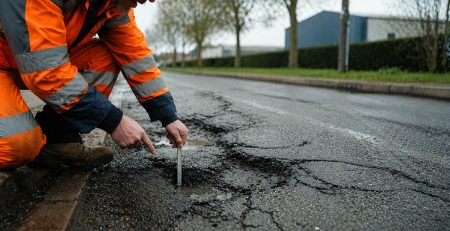
Cracking is often less predictable. It may branch, widen, spread or occur in areas where no paving joint would normally be expected.
Cracks can have many underlying causes, including movement, inadequate support, ageing materials and repeated loading. Where deterioration progresses to localised surface failure, professional pothole repairs may eventually become necessary.
A new, neatly sealed construction joint should therefore not be treated in the same way as progressive cracking in an older surface.
Why Joint Quality Is Important on Commercial Sites
Commercial surfaces frequently experience demanding conditions. Delivery vehicles, refuse vehicles, vans, cars and heavy goods vehicles can place repeated loads on the same areas every day.
Junctions, loading areas, turning points and entrances may experience particularly concentrated forces because vehicles are braking, turning or accelerating rather than simply travelling in a straight line.
If a surfacing joint is poorly formed, these conditions can expose weaknesses more quickly.
For site managers, the key consideration should therefore be how the joint performs rather than whether it is completely invisible.
A professionally planned surface will take account of site usage, expected traffic and practical installation requirements. Joint positions can then be considered alongside drainage, levels, access and other aspects of the surfacing design.
The same principle applies to highway surfacing, where consistent construction and durable connections between paving sections are important for surfaces exposed to regular traffic.
Do the Black Lines Fade Over Time?
The appearance of a newly surfaced area changes naturally after installation.
Fresh bituminous materials tend to have a particularly dark appearance. As the surface is exposed to sunlight, rainfall, traffic and general weathering, its colour gradually changes.
The joint material and surrounding tarmac may not change at exactly the same rate. This can mean a joint looks very noticeable immediately after installation but becomes less visually prominent later.
The rate of change depends on the surface, its location, the amount of traffic it receives and environmental exposure.
A visible line may therefore remain to some extent without affecting the practical performance of the surface.
For most property owners and commercial site managers, durability, drainage and surface integrity are more important indicators than slight variations in colour.
When Should a Tarmac Joint Be Inspected?
Although black lines between new tarmac sections are commonly associated with normal construction joints, there are circumstances where further inspection may be sensible.
The main concern would be a physical change in the joint rather than its colour. If the adjoining sections begin separating, the edge becomes loose, water appears to be entering a gap or deterioration develops around the joint, the condition deserves attention.
Changes in surface level can also be significant. The adjoining sections should provide a suitable transition rather than creating an unnecessary ridge or depression that affects vehicles or pedestrians.
Early assessment can be valuable because localised deterioration is generally easier to address before it spreads into the surrounding surface.
This is especially important on heavily trafficked commercial premises where relatively small weaknesses can be subjected to repeated vehicle loading.
The Importance of Professional Tarmac Installation
The visible finish of tarmac is only one part of a successful surfacing project.
Long-term performance depends on appropriate preparation, suitable materials, correct laying temperatures, effective compaction, sensible drainage and careful treatment of construction joints. Each stage contributes to how the completed pavement performs under traffic and changing UK weather conditions.
Professional surfacing contractors will consider how the entire site needs to function rather than focusing solely on its immediate appearance.
On larger sites, this includes planning paving passes and working around existing access requirements. Commercial premises may need vehicle movements maintained during construction, while residential locations may have restricted entrances or awkward site dimensions.
These practical constraints can affect where joints occur, which is another reason the presence of a black line should not automatically be interpreted as a defect.
What Should a Newly Laid Tarmac Surface Look Like?
A good new tarmac surface should generally appear consistent, well compacted and appropriate for the intended use of the site.
Some colour variation can be expected, particularly around joints and areas completed at different stages. The important consideration is whether the surface is structurally coherent and properly finished.
Levels should support effective drainage so that water is directed towards the intended drainage points rather than collecting unnecessarily across the paved area. Edges should also be properly finished and supported where required.
Where joints are present, they should form a controlled connection between surfacing sections rather than an uncontrolled opening.
These characteristics provide a much more meaningful indication of installation quality than expecting every part of a large paved area to appear visually identical.
Black Lines Are Often Part of Normal Tarmac Construction
The black lines between sections of new tarmac are commonly the visible result of construction joints and the bituminous materials used to help create a sealed connection between adjoining paving sections.
They are particularly common on larger surfaces where tarmac must be installed in multiple passes or stages.
While the lines can initially stand out against a freshly completed surface, their presence alone does not mean the tarmac is cracked or incorrectly installed. The condition of the joint, its compaction, sealing and stability are much more important.
For property owners and commercial site managers, understanding this distinction makes it easier to assess newly completed surfacing. A neat, stable and properly constructed joint is a normal part of many professional tarmac projects and plays an important role in maintaining the integrity of the finished surface.