Why the Edges of Rural Roads Break Away First
Rural roads often appear to fail in a very particular way. While the centre of the carriageway may remain reasonably solid, the edges begin to crack, crumble or gradually break away. For property owners, estate managers, farms and businesses responsible for private countryside access roads, this type of deterioration can quickly turn a manageable maintenance issue into a significant surfacing problem.
Understanding why road edges are vulnerable is an important part of maintaining rural access routes. Rural roads frequently operate under conditions that are very different from urban streets and purpose-built commercial roads. They may have limited drainage, soft verges, narrow carriageways and regular agricultural or heavy vehicle traffic. When these factors combine, the unsupported edge of the road can become one of the first areas to show signs of structural weakness.
Professional rural road surfacing UK projects therefore need to consider much more than the visible surface. The strength of the underlying construction, drainage arrangements, edge support and expected traffic all influence how well a rural road performs over the long term.
Why Rural Road Edges Are Particularly Vulnerable
A properly constructed road distributes vehicle loads through the surface and underlying layers. Towards the centre of the road, the surrounding material provides support in every direction. At the edge, however, there is naturally less lateral support.
This becomes particularly important on rural roads where the hard surface may finish directly alongside grass, soil or a loose verge. When a wheel travels close to that boundary, the road surface and supporting layers can be placed under considerable stress.
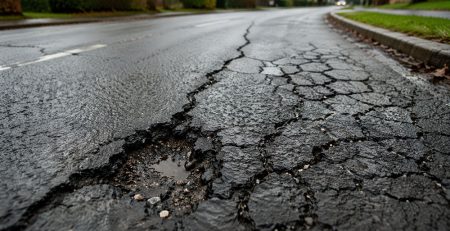
Repeated loading can eventually cause small cracks to form. Once deterioration begins, water and movement can accelerate the process. The edge may start breaking into smaller sections, gradually reducing the usable width of the road.
Good tarmac installation and road surfacing should therefore account for the conditions at the margins of the carriageway rather than concentrating solely on achieving a smooth central running surface.
Soft Verges Reduce Support at the Roadside
One of the most common challenges on countryside roads is the relationship between the surfaced carriageway and the surrounding verge.
A grass verge may look stable in dry conditions, but the soil beneath it can become considerably softer after sustained rainfall. Vehicles travelling close to the edge may compress or disturb this material. If the verge begins to sink or wash away, the road itself loses some of its lateral support.
The result can be a visible crack running parallel with the road edge. Over time, sections outside this crack may begin to move downwards or separate from the main carriageway.
This is particularly relevant on narrow roads because drivers have less opportunity to remain away from the edge. When two vehicles meet, one or both may need to move towards the verge. On private estate roads, farm tracks and commercial access routes, this repeated wheel loading can become significant.
Water Is a Major Cause of Edge Deterioration
Drainage is fundamental to long-term road performance. Rural locations can present particular drainage challenges because formal kerbs, gullies and underground drainage systems may be limited or completely absent.
Instead, surface water often needs to move naturally from the carriageway towards verges, ditches or other drainage features.
Problems arise when that movement is restricted. Vegetation, sediment and damaged verges can prevent water from leaving the road effectively. Water may then remain around the road edge or penetrate cracks within the surface.
Once water reaches the underlying layers, the supporting material can weaken. Traffic passing over the affected area creates further movement, potentially increasing cracking and surface failure.
For this reason, drainage should be considered as part of the overall road construction rather than treated as a separate issue after surfacing has been completed. Professional highway surfacing requires careful consideration of levels, falls, surrounding ground conditions and water movement.
Why Standing Water Near the Edge Matters
A small area of standing water may initially appear harmless. However, repeated saturation can affect the materials supporting the carriageway.
The road edge is especially vulnerable because water can enter from both the surface and the adjacent ground. During prolonged wet periods, the verge itself may become saturated. This can reduce the stability of the material supporting the outer portion of the road.
Once traffic begins flexing the weakened area, cracking may develop much more quickly.
The important point for property and site managers is that visible road damage may be the symptom rather than the original cause. Repairing the surface without addressing persistent drainage problems can result in deterioration returning.
Heavy Vehicles Put Additional Pressure on Rural Road Edges
Rural roads are not necessarily lightly trafficked roads. Many provide essential access for farms, industrial premises, warehouses, construction sites, estates and other commercial properties.
Agricultural machinery, delivery vehicles, refuse vehicles and HGVs can place substantial loads on a relatively narrow carriageway. These loads become especially problematic when vehicle wheels repeatedly travel close to an unsupported edge.
A passenger car moving near the verge may cause relatively limited stress. A much heavier commercial or agricultural vehicle can place significantly greater pressure on the same area.
This is why expected vehicle usage should form part of the planning process for rural road surfacing UK projects. A road designed primarily for cars may require a different construction specification from an access road expected to carry regular heavy commercial traffic.
Where access routes serve businesses or operational sites, experienced commercial surfacing contractors can assess the intended use of the road when considering the appropriate construction approach.
Narrow Roads Encourage Vehicles Towards the Edge
Road width is another major factor in rural edge failure.
On a wide road, vehicles generally travel well inside the outer boundary of the carriageway. On a narrow countryside access road, drivers may regularly place their nearside wheels close to the edge, particularly when passing approaching vehicles.
Over hundreds or thousands of vehicle movements, this repeated loading can expose weaknesses.
The situation can become worse once the first small section of edge damage appears. Drivers may adjust their position to avoid the damaged area, potentially concentrating traffic onto another part of the carriageway. Alternatively, vehicles may continue travelling over the weakened edge and increase the extent of the failure.
Early attention is therefore valuable. Small areas of damage are generally easier to manage before they develop into long sections of broken road edge.
Poor Base Preparation Can Lead to Early Edge Failure
The visible tarmac or asphalt is only part of a road construction. The layers beneath the finished surface are essential for distributing loads and maintaining stability.
If the supporting base does not extend adequately beneath the road edge, the outer section can be vulnerable from the beginning. Insufficient compaction can create similar problems.
The road may initially look satisfactory because the finished surface is smooth and continuous. Weaknesses below the surface can become apparent only after traffic, rainfall and seasonal conditions begin placing the construction under stress.
This is one reason proper preparation is critical when installing or resurfacing rural roads. The condition of the existing ground, required excavation, supporting materials, compaction and final surface all need to work together.
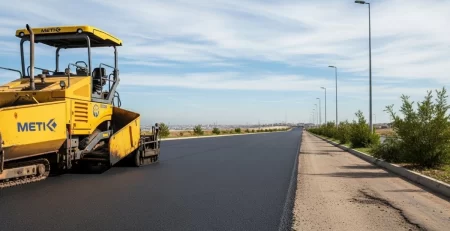
Where the project allows suitable machinery and access, machine-laid tarmac can help provide a consistent surfacing finish, but the performance of that surface will still depend heavily on appropriate preparation underneath it.
How Small Cracks Develop Into Broken Road Edges
Edge deterioration is often progressive rather than sudden.
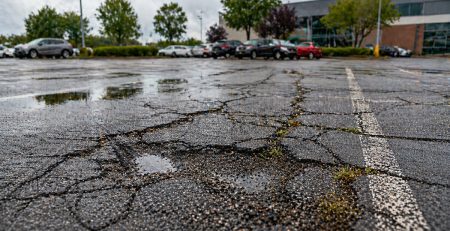
A fine crack may initially appear close to the verge. Water then enters the opening, while traffic continues loading the surrounding surface. Movement gradually enlarges the crack and may create additional fractures.
Eventually, the material between the crack and the verge becomes increasingly isolated from the stronger central portion of the road. Pieces can begin breaking away, leaving an irregular edge.
Once this happens, deterioration can accelerate because the newly exposed side of the road is more vulnerable to water and vehicle impact.
The carriageway can gradually become narrower, while the damaged edge creates a potential hazard for vehicles, cyclists and pedestrians using the route.
Potholes Can Begin Near Failed Road Edges
Edge failure and potholes are closely connected in many situations.
When cracking allows water into the construction, the material beneath the surface can lose strength. Traffic then causes movement, eventually allowing pieces of the surface to loosen and disappear.
The resulting defect may begin as a relatively small depression before becoming progressively deeper and wider.
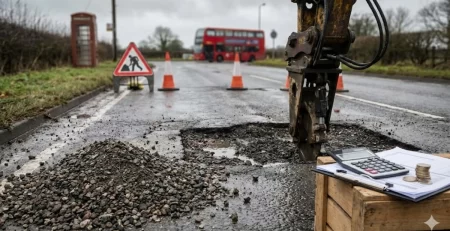
Professional pothole repairs can address localised defects, but the surrounding road condition should also be considered. If a pothole has formed because the entire road edge lacks support or suffers from persistent drainage problems, repairing only the visible hole may not resolve the underlying issue.
Why Repeated Patch Repairs Are Not Always Enough
Local repairs can be entirely appropriate when deterioration is isolated and the surrounding construction remains sound. However, repeated failures along the same road edge may indicate a broader structural issue.
For example, several patches along one side of a rural road could suggest inadequate drainage, weak verge support or problems within the underlying construction.
Continually repairing individual areas without investigating the wider cause can lead to an ongoing maintenance cycle.
A professional assessment can help establish whether targeted repairs remain appropriate or whether a larger section requires reconstruction or resurfacing. Reviewing previous surfacing case studies can also help property owners understand the different approaches used for varying site conditions.
The Importance of Drainage and Road Levels
Effective rural road construction should allow water to leave the surface rather than collecting along vulnerable areas.
The finished levels and falls influence where rainfall travels. The surrounding verge, ditch or drainage arrangement must then be capable of receiving and moving that water away.
Problems can occur when the verge becomes higher than the road surface. Soil, vegetation and debris can build up over time, effectively creating a barrier along the carriageway. Instead of flowing away, water becomes trapped against the edge.
Regular site maintenance can therefore contribute significantly to protecting a surfaced road. Keeping drainage routes functional and monitoring changes to surrounding ground levels can reduce unnecessary water exposure.
Recognising Early Signs of Rural Road Edge Failure
Road edge problems are much easier to manage when identified before large sections begin collapsing.
Property owners and site managers should pay attention to longitudinal cracking near the verge, small pieces of loose surfacing, sinking shoulders and areas where water regularly collects after rainfall. Changes in the verge can also provide useful warning signs.
A soft or heavily rutted verge next to an otherwise sound road can indicate that vehicle movements are placing pressure on the boundary.
Regular inspection does not need to be complicated. Simply observing the road during normal site management can make it easier to identify changes before they become significant defects.
Repairing Rural Road Edges Properly
The appropriate repair method depends on why the edge has failed.
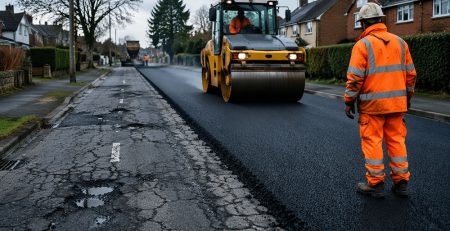
Where damage is minor and the surrounding construction remains stable, a localised repair may be sufficient. More extensive deterioration may require the weakened material to be removed before the supporting layers are reconstructed and a new surface is installed.
Drainage or verge problems may also need attention before resurfacing takes place.
The objective should be to restore structural support rather than simply cover the visible damage. Placing new material over a weak or moving foundation is unlikely to provide the same durability as properly preparing and rebuilding the affected section.
Professional road surfacing services can assess the complete condition of an access road and determine whether isolated repairs, edge reconstruction or wider resurfacing is appropriate.
Protecting Rural Roads Over the Long Term
Long-term performance begins with understanding how the road is actually used.
A private driveway serving a small number of properties has different requirements from a rural access road carrying regular delivery vehicles or agricultural machinery. Traffic loading, road width, drainage, ground conditions and verge stability should all influence the surfacing approach.
Maintenance remains important after installation. Drainage routes should be kept clear, damaged verges should not be allowed to deteriorate indefinitely and developing cracks should be monitored.
Early intervention can prevent water and traffic from turning a small defect into extensive structural damage.
For rural road surfacing UK projects, the strongest results come from treating the road as a complete construction. The visible surface, underlying base, edges, verges and drainage system all work together. When one element becomes weak, deterioration can spread into surrounding areas.
The edges of rural roads frequently break away first because they are where several pressures meet. They have less lateral support, greater exposure to water and soft ground, and often experience repeated wheel loading from vehicles moving aside on narrow routes.
Addressing those conditions during construction and maintenance can significantly improve the resilience of rural access roads and reduce the likelihood of recurring edge repairs.