How Long Does Resin Driveway Take To Dry?
How Long Does Resin Driveway Take To Dry? Most resin-bound driveway systems need approximately 12–24 hours before light pedestrian use and 24–72 hours before vehicle traffic, although some products cure faster or require longer. The exact waiting period depends on the resin formulation, temperature, humidity, and installation conditions. Walking or parking on a freshly laid surface too early can leave footprints, tyre marks, or permanent damage. Understanding the difference between initial setting, safe access, and full curing helps homeowners protect their investment.
Total Surfacing Solutions provides residential and commercial resin-bound driveway installation across Hertford, Hertfordshire, Bedfordshire, Oxford, Cambridgeshire, and Essex. The company focuses on preparing suitable bases, installing resin-bound surfaces, managing drainage, and planning work around the required curing conditions. Whether you need a new driveway, a replacement surface, or a low-maintenance entrance, Total Surfacing Solutions helps plan the installation and reopening process around the selected resin system.
Quick Check: If you are planning a new resin-bound driveway and need to understand installation and curing requirements, Total Surfacing Solutions can assess your existing surface and recommend resin driveway installation and access planning suited to your property, parking arrangements, and intended use.
How Long Does Resin Driveway Take To Dry?
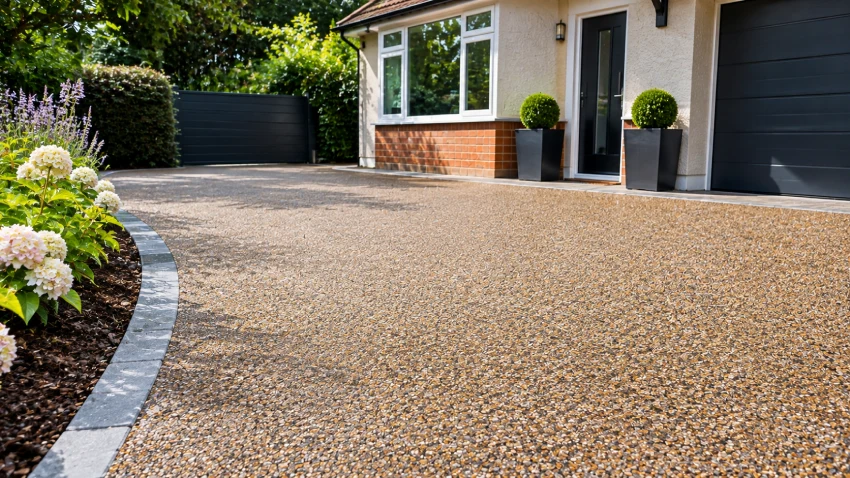
A resin-bound driveway begins to harden after the resin and aggregates are mixed and installed, but it does not become ready for normal use immediately. The binder must undergo a chemical curing process that develops the strength needed to hold the aggregate together and support pedestrians or vehicles.
Different resin systems have different curing requirements. For example, some UK manufacturers permit pedestrian access within approximately 10–12 hours, while others recommend waiting 24–48 hours. Vehicle access may be permitted after 24 hours for certain products, whereas other systems recommend waiting 48–72 hours, especially in cooler conditions.
These examples demonstrate why the installer should confirm the actual reopening time rather than rely on a single figure for every driveway.
| Curing stage | Typical guidance across resin systems | What homeowners should know |
| Immediately after laying | Surface is freshly installed | No pedestrian or vehicle access |
| Initial setting | Begins as the binder reacts | Surface may appear firm but remain vulnerable |
| Light pedestrian access | Often around 12–24 hours; some products differ | Follow the specific resin manufacturer’s instructions |
| Vehicle access | Often around 24–72 hours | Do not park until the installer authorises use |
| Further curing | May continue after initial reopening | Avoid unnecessary heavy loads and aggressive turning |
| Full chemical cure | Product-specific | Follow any additional aftercare restrictions |
Total Surfacing Solutions considers the selected resin system, substrate temperature, installation date, and intended traffic when explaining when the finished driveway can be used. A surface that looks dry is not necessarily ready for vehicle traffic, so visual appearance should never replace the manufacturer’s curing instructions.
Understanding Resin Driveway Drying And Curing
Resin-bound surfacing does not dry in exactly the same way as ordinary paint or water evaporating from a wet surface. The binder generally hardens through a chemical reaction between its components, gradually developing the properties required for a durable driveway.
This distinction matters because a newly installed driveway may become firm to the touch before it has sufficient strength for parking, turning, or regular pedestrian use. Curing also continues differently depending on the resin formulation and environmental conditions.
Initial Setting
Initial setting begins after the mixed resin-bound material has been spread and compacted. During this stage, the resin starts to harden and the aggregate structure becomes increasingly stable. However, the surface may still be sensitive to footsteps, falling objects, and unwanted moisture.
Total Surfacing Solutions plans this stage as part of the installation process, helping property owners understand why the driveway must remain protected immediately after laying.
Safe Pedestrian Access
Pedestrian access becomes possible once the resin has reached the required early strength. The waiting period depends on the specific product and conditions, so it may differ between a warm installation day and a cold or humid one.
Even when pedestrian access is allowed, dragging bins, furniture, or heavy equipment across the surface may remain unsuitable until further curing has occurred.
Safe Vehicle Access
Vehicle traffic places significantly greater loads on a resin-bound driveway than normal walking. Tyre pressure, steering movement, and braking can disturb an inadequately cured surface, particularly where vehicles turn while stationary.
For this reason, Total Surfacing Solutions advises homeowners to follow the confirmed vehicle reopening time for their installation rather than assuming the driveway is ready simply because it feels hard.
When Can You Walk On A New Resin Driveway?
Walking on a newly installed resin-bound driveway too early can create footprints or damage the aggregate finish. The risk is greatest while the binder is still developing its initial strength, as pressure from footwear can disturb material that appears visually complete.
Some resin systems permit light pedestrian use relatively quickly, while others require a longer protected period. Temperature, humidity, and the use of manufacturer-approved curing systems can influence these times. Homeowners should therefore obtain a specific access recommendation from the installer before work is completed.
For residential projects, Total Surfacing Solutions can help identify whether a separate route to the front door is needed while the driveway cures. Where the driveway also forms the main pedestrian entrance, access arrangements should be discussed before installation starts so the fresh surface is not disturbed unnecessarily.
When Can You Park A Car On A Resin Driveway?
A new resin-bound driveway should only be opened to vehicles when the selected system has developed sufficient strength. Although some products permit vehicle access after approximately 24 hours, other manufacturers recommend waiting 48–72 hours. Lower temperatures or unfavourable curing conditions may extend the required period.
Parking too early can cause tyre impressions, surface movement, or damage to the bond between aggregates. The risk may be greater when a driver turns the steering wheel while the vehicle is stationary, because concentrated tyre friction places additional stress on the surface.
Total Surfacing Solutions considers vehicle access during the planning stage of resin driveways in Hertford and surrounding Hertfordshire locations. Homeowners should arrange alternative parking until the installation is ready, especially where the driveway is the property’s only off-street parking space.
Parking Heavier Vehicles
Commercial vans, delivery vehicles, motorhomes, and other heavier vehicles may require additional consideration because their weight and turning movements place greater demands on the surface. The driveway specification must be appropriate for the expected loading, and the reopening time should reflect the resin manufacturer’s requirements.
A resin-bound surface intended for occasional domestic cars should not automatically be assumed suitable for frequent heavy commercial traffic. Total Surfacing Solutions can assess the proposed use before recommending materials and construction details.
What Affects Resin Driveway Curing Time?
The curing time of a resin-bound driveway depends on several factors working together. The resin formulation determines the chemical reaction, while temperature, moisture, and site conditions influence how the material performs after installation.
Understanding these factors helps homeowners recognise why a driveway installed in summer may become usable sooner than a similar surface laid during colder weather.
Air And Surface Temperature
Temperature has a significant influence on resin curing. Warmer conditions can accelerate the reaction within certain systems, while lower temperatures may slow the process and extend the waiting period before the driveway can be reopened.
The temperature of the driveway base is especially important because it may differ from the surrounding air. Shaded entrances and surfaces that have remained cold overnight may require additional assessment even when the daytime weather feels mild.
Humidity And Condensation
High humidity can increase the risk of moisture-related problems during resin-bound installation and curing. If the substrate temperature approaches the dew point, condensation may form on the surface even without rain.
Certain polyurethane binders are particularly sensitive to unwanted moisture before curing. The installer must therefore follow the selected manufacturer’s limits rather than assume that all resin products behave identically.
Rainfall And Surface Moisture
Fresh resin-bound surfacing should generally be protected from rainfall during installation and the vulnerable early curing period. Moisture may cause cloudiness, bubbling, or bonding defects depending on the binder chemistry and level of exposure.
The resin-bound performance under British weather conditions helps explain the difference between a freshly installed surface and a properly cured driveway exposed to normal UK rainfall.
Total Surfacing Solutions considers weather conditions when scheduling resin-bound installations, helping property owners avoid unnecessary curing problems caused by unsuitable laying conditions.
Does Resin Driveway Thickness Affect Curing?
The thickness of a resin-bound driveway is determined by the selected system, aggregate size, intended loading, and supporting construction. Residential driveways, pedestrian areas, and commercial surfaces may require different specifications.
Thickness should not be increased or reduced simply to change curing time. The manufacturer establishes the correct material proportions and installation requirements, and departing from that specification may affect surface performance.
The relationship between driveway thickness and curing is less straightforward than assuming a thinner layer will always become usable faster. Resin formulation, temperature, and material handling remain central factors.
Total Surfacing Solutions considers the intended vehicle use and existing base before recommending a suitable resin-bound specification. The objective is to provide a properly constructed driveway rather than compromise the surface to achieve an earlier reopening time.
How Professional Installation Supports Proper Curing
Professional resin-bound installation involves more than spreading decorative aggregate over a driveway. Accurate material mixing, suitable substrate preparation, appropriate laying thickness, and consistent finishing all influence how the resin develops its intended strength.
The resin-bound mixing and installation sequence explains the stages involved in preparing, placing, and finishing the material. Each stage must be coordinated because the resin mixture has a limited working time before it becomes increasingly difficult to handle.
Total Surfacing Solutions provides resin-bound driveway installation in Hertford for homeowners who want a continuous aggregate finish supported by appropriate groundwork and drainage planning.
For property owners researching resin-bound driveways in Hertford, the installation specification should include the selected resin system, preparation requirements, curing conditions, and expected reopening time. This creates a clearer understanding of the project than focusing on the finished appearance alone.
Why Driveway Preparation Matters Before Curing
The curing of the resin layer cannot compensate for an unstable or unsuitable foundation. Even when the binder hardens correctly, movement in the supporting base may lead to cracking, deformation, or other defects over time.
Before installing resin-bound surfacing, Total Surfacing Solutions can assess the existing driveway for cracks, settlement, contamination, drainage problems, and structural suitability. The condition of concrete, tarmac, or a newly constructed base determines what preparation is necessary before the resin layer can be laid.
The resin driveway foundation preparation requirements explain why groundwork, base stability, surface cleanliness, and edging are relevant to installation quality.
Existing Concrete Bases
Concrete may be suitable for certain resin-bound overlay systems if it is structurally sound, appropriately prepared, and compatible with the selected product. However, conventional concrete generally does not provide a permeable foundation, so drainage needs to be considered separately.
The concrete substrate suitability for resin overlays helps homeowners understand why the existing base should be assessed before installation.
Existing Tarmac Bases
A stable tarmac surface may also be suitable for a resin-bound overlay, depending on its condition and the selected system. Cracking, movement, loose material, or water damage may require repairs before resin can be applied.
Total Surfacing Solutions can consider whether an existing base can be retained or whether reconstruction would provide a more appropriate foundation for the finished driveway.
Can Resin Driveways Cure Faster In Summer?
Resin-bound driveways may cure faster in warm weather because temperature influences the chemical reaction within many resin formulations. However, higher temperatures are not automatically better for installation, as excessive heat can reduce working time and make mixing and trowelling more difficult.
A warm summer day may support a shorter curing period for one resin system, while another formulation may have different requirements. The actual reopening time should therefore come from the selected product and the conditions recorded during installation.
Total Surfacing Solutions considers these factors when arranging resin driveway work across Hertfordshire and surrounding counties. Homeowners should avoid assuming that a summer installation can be used immediately, even if the surface appears firm.
Do Resin Driveways Take Longer To Cure In Winter?
Cold weather can extend resin-bound driveway curing times, particularly when the substrate remains at a low temperature or overnight conditions fall outside the manufacturer’s preferred range. This may delay pedestrian access, vehicle parking, or both.
Some resin systems have formulations or approved curing adjustments designed for different temperatures. However, these should only be used according to the manufacturer’s instructions. Adding an unsuitable accelerator or changing the prescribed mixing proportions can affect consistency and performance.
The resin-bound workmanship and material handling checks explain the importance of following the intended installation method.
Total Surfacing Solutions can account for weather conditions during project planning so that curing requirements are considered alongside groundwork and site access. A later reopening time is preferable to placing vehicles on a surface that has not developed sufficient strength.
Fast Resin Driveway Installation And Safe Reopening
Homeowners often want a new driveway completed efficiently because installation can temporarily interrupt parking, pedestrian access, and daily routines. However, the time needed to carry out installation is different from the time the finished resin requires to cure.
A driveway with an existing sound base may need less groundwork than a property requiring excavation and a new supporting structure. The overall programme can therefore vary significantly even when both projects use the same resin-bound finish.
Total Surfacing Solutions can plan residential driveway preparation and installation around the work required, access restrictions, and appropriate installation conditions. Its driveway installation solutions in Hertfordshire should be considered in relation to the complete project rather than an assumed completion time.
For homeowners, the practical priority is understanding when the team expects to finish laying and when the driveway can safely reopen. These dates may differ because the surface must remain protected during curing.
Low-Maintenance Resin Driveways After Curing
Once resin-bound surfacing has cured correctly, regular maintenance helps preserve its appearance and drainage performance. The surface generally has fewer joints than block paving and avoids the movement of loose decorative gravel, but it still needs suitable care.
Leaves, mud, organic debris, and surface contamination should be removed periodically. Where the driveway is permeable, keeping the aggregate structure clean helps maintain water movement through the surface.
Total Surfacing Solutions can discuss low-maintenance resin driveway surfacing options for homeowners who want an entrance designed around regular vehicle use and manageable upkeep.
Property owners researching low-maintenance resin driveway solutions in Hertfordshire should also consider the base, drainage, and material specification. A correctly cured surface is only one part of a driveway that remains practical over time.
The resin-bound maintenance and service-life factors provide further guidance on caring for the finished driveway.
What Happens If You Use Resin Too Early?
Using a resin-bound driveway before it reaches the required strength can damage the finished aggregate layer. The consequences depend on the extent of curing, type of traffic, and force applied to the surface.
Foot traffic may leave impressions or disturb sections that remain soft. Vehicles can cause more significant problems because tyres apply concentrated pressure and friction, especially while steering or braking.
The resin-bound installation defects and early failure causes explain how inappropriate installation and use can contribute to deterioration.
If a new driveway develops marks, movement, loose stones, or an unexpectedly soft texture, homeowners should avoid further traffic and contact the installer. Applying a general-purpose sealer or attempting a DIY repair without identifying the cause may make the problem more difficult to correct.
Resin Driveway Curing For Commercial Surfacing
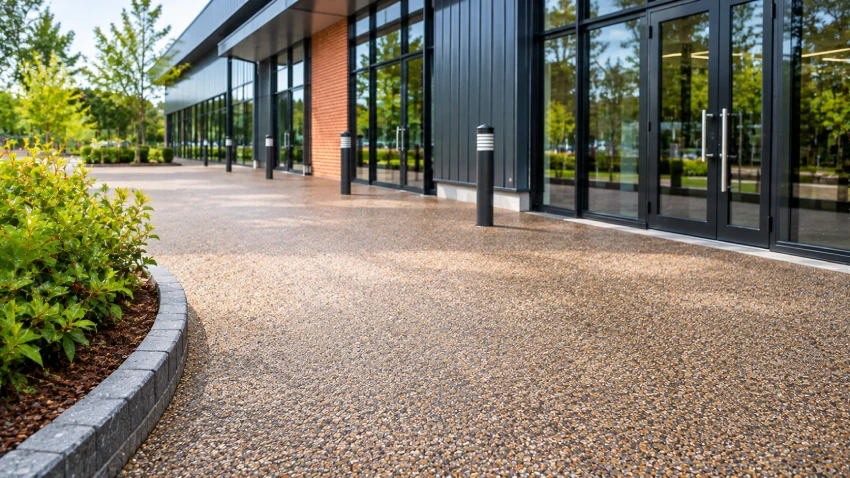
Commercial resin-bound installations require the same attention to curing as residential driveways, but the consequences of reopening too early can be greater. Shared parking areas, business entrances, pedestrian routes, and access surfaces may experience heavier or more frequent use.
Total Surfacing Solutions provides residential and commercial surfacing, making it important to consider vehicle loading and access arrangements when specifying resin-bound systems. A surface intended primarily for pedestrians should not automatically be treated as suitable for commercial vans or frequent vehicle turning.
Commercial projects may need temporary access routes or phased working areas while installation and curing take place. The appropriate approach depends on the area, traffic requirements, and chosen surfacing system.
Where heavier traffic is expected, the resin-bonded and high-traffic surfacing differences provide useful context. Resin-bound and resin-bonded systems have different construction methods and surface characteristics, so the correct specification should be established before installation.
Resin Driveway Drying And Rainwater Drainage
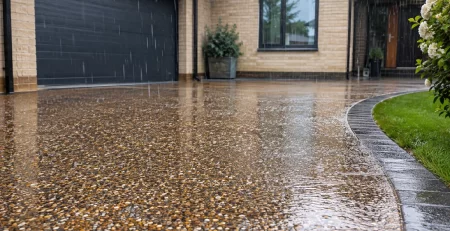
A freshly installed resin-bound driveway needs protection from unwanted moisture while curing, but a completed permeable system can allow rainwater to pass through the aggregate layer. These are separate stages of the material’s performance.
Permeability depends on how the resin-bound surface connects with the underlying base. A permeable aggregate finish installed over an unsuitable impermeable foundation may not provide the intended drainage performance.
The resin-bound drainage structure and permeability factors explain why the complete construction matters.
Total Surfacing Solutions can assess existing drainage conditions when planning new resin driveways, especially where a property experiences standing water or repeated surface deterioration. Good drainage design helps the finished driveway perform effectively, while appropriate curing conditions protect the resin during installation.
How Long Does Resin Driveway Take To Dry? Area Coverage
Resin-bound curing times can vary across Bedfordshire, Oxford, Cambridgeshire, Essex, and Hertfordshire because local site conditions, shading, substrate temperatures, and weather exposure differ. Total Surfacing Solutions provides resin-bound driveway services across these areas, considering preparation, drainage, and suitable reopening arrangements for each project.
How Long Does Resin Driveway Take To Dry In Bedfordshire?
Homeowners considering resin-bound driveways in Bedfordshire should allow for the curing requirements of their selected system rather than assume that every new surface will be ready for vehicles the following morning. Total Surfacing Solutions provides resin-bound installations across Bedfordshire, including Bedford, Luton, and Dunstable. Where driveways have shaded entrances or existing drainage problems, the company can assess preparation requirements before work begins and account for appropriate curing conditions.
Resin Driveway Curing Times In Oxford
For resin-bound driveways in Oxford, curing time depends on the resin product, substrate temperature, moisture exposure, and weather conditions during installation. Total Surfacing Solutions can assess whether an existing tarmac or concrete base is suitable and explain the access restrictions associated with the selected surfacing system. Homeowners should plan temporary parking arrangements where necessary, particularly if the driveway provides the property’s only vehicle access.
Resin-Bound Driveway Drying In Cambridgeshire
Cambridgeshire homeowners planning resin-bound driveways should consider the difference between completing the surface installation and reopening it for normal use. Total Surfacing Solutions serves Cambridge, Ely, Huntingdon, and surrounding areas, providing resin-bound surfacing and relevant preparation work. Temperature, humidity, and the condition of the existing base should be assessed so the finished driveway receives the curing time required by the manufacturer.
New Resin Driveway Curing In Essex
Homeowners arranging resin-bound driveways in Essex should discuss expected pedestrian and vehicle access before installation begins. Total Surfacing Solutions provides resin surfacing across Essex, including Chelmsford, Harlow, and Colchester. The team can consider existing driveway conditions, drainage requirements, and weather suitability when planning the work. A properly prepared and cured driveway is more important than reopening the surface before it has developed sufficient strength.
How Long Does Resin Driveway Take To Dry In Hertfordshire?
For homeowners considering resin-bound driveways in Hertfordshire, Total Surfacing Solutions provides installation services across Hertford, Watford, St Albans, Stevenage, and surrounding locations. The company can assess groundwork, resin suitability, installation conditions, and access requirements before the project begins. Homeowners should follow the confirmed curing instructions for their selected system, especially when planning vehicle parking after installation.
Why Choose Total Surfacing Solutions For Resin Driveways?
Total Surfacing Solutions provides resin-bound driveway installation with attention to the complete surfacing process. The condition of the existing driveway, suitability of the base, drainage design, aggregate finish, and installation weather all influence the project before curing even begins.
For residential properties, the company can consider parking space, access to the front door, edging, and the intended vehicle use. For commercial projects, the assessment may also need to account for heavier traffic, pedestrian movement, and restrictions during installation.
Homeowners searching for a driveway specialist in Hertford can discuss the existing surface and proposed resin-bound finish with Total Surfacing Solutions. Understanding preparation and curing requirements before installation helps avoid unrealistic expectations about how soon the finished driveway can be used.
Plan Your Resin Driveway Installation Properly
A resin-bound driveway may become suitable for pedestrians within approximately 12–24 hours and vehicles within 24–72 hours, but the exact time depends on the selected system and conditions. Homeowners should treat these figures as general examples rather than guaranteed reopening times.
Total Surfacing Solutions provides resin driveway installation for Hertford properties with consideration given to base suitability, drainage, installation planning, and the finished surface’s intended use. The team can help property owners understand what preparation is needed and how access should be managed while the resin cures. Allowing the required curing time protects the driveway from avoidable early damage.
FAQs About Resin Driveway Drying Time
How long does a resin driveway take to dry before walking?
The waiting period before walking on a resin-bound driveway depends on the selected resin formulation, temperature, and installation conditions. Many systems allow light pedestrian access after approximately 12–24 hours, although some products permit earlier access and others require longer. The installer should confirm the correct period using the manufacturer’s technical guidance rather than relying on a universal figure.
Homeowners should also avoid dragging bins, garden furniture, or heavy objects across the surface immediately after pedestrian access is permitted. Total Surfacing Solutions can explain how to protect the newly installed driveway during the initial curing period.
How long before you can drive on a new resin driveway?
Vehicle access is often permitted within approximately 24–72 hours, depending on the system and curing conditions. Some products allow earlier traffic, while colder weather or specific material requirements may extend the waiting period. The surface should not be reopened simply because it feels hard or looks dry.
Total Surfacing Solutions can consider the expected vehicle use when planning a residential driveway and advise homeowners to arrange alternative parking until the installed system is ready. Heavy vehicles and repeated stationary steering may require additional restrictions.
Does resin-bound surfacing cure faster in hot weather?
Many resin systems cure faster when temperatures are warmer, but the relationship depends on the binder formulation. Excessive heat can also shorten working time and complicate mixing or finishing. A faster chemical reaction does not automatically mean that the driveway can be used earlier than the manufacturer’s approved schedule.
The installer should consider both the air and surface temperatures. Total Surfacing Solutions can plan resin-bound installation around suitable weather conditions rather than assuming that every hot day will produce a better or faster result.
Does rain slow down resin driveway curing?
Rain can interfere with the curing of freshly installed resin-bound surfacing, particularly where the binder is sensitive to moisture. Depending on the system, unwanted water may cause bubbling, cloudiness, or weaker aggregate bonding rather than simply extending the drying time. This is why resin installation generally requires suitable dry conditions.
If unexpected rainfall affects a new driveway, homeowners should avoid using the surface until the installer has assessed it. Total Surfacing Solutions can consider weather conditions during installation planning to reduce the risk of moisture-related defects.
Can you walk on resin-bound surfacing after 12 hours?
Some resin-bound systems permit pedestrian access after approximately 12 hours, but this is not guaranteed for every product. Manufacturer guidance varies, and lower temperatures can extend curing. The actual installation conditions should determine whether pedestrian access is appropriate.
Even when the surface has reached the required early strength, heavier loads or dragging equipment may remain unsuitable. Always follow the installer’s instructions rather than treating 12 hours as a universal minimum.
How long does resin take to cure during winter?
Resin-bound surfacing may take longer to cure during colder weather because temperature affects the chemical reaction. Some manufacturers offer different resin formulations or approved curing adjustments for seasonal conditions, but these must be used according to the product specification.
Total Surfacing Solutions can consider temperature, moisture, and site access during winter installation planning. Homeowners should allow for possible delays and avoid parking on the surface until the appropriate vehicle reopening time has been confirmed.
Can a resin driveway be used after 24 hours?
Some resin systems permit vehicle use after 24 hours, but others require 48–72 hours or longer under particular conditions. Pedestrian access and vehicle access should not be treated as the same milestone. The required curing time depends on the formulation, temperature, and intended traffic.
Homeowners should obtain the specific reopening instructions for their installation. Total Surfacing Solutions can explain the expected access restrictions as part of planning a resin-bound driveway project.
What happens if you park on a resin driveway too early?
Parking on resin-bound surfacing before it has developed sufficient strength may create tyre impressions, surface movement, or damage to the aggregate bond. Turning the steering wheel while stationary can place additional stress on an inadequately cured surface.
If early use has caused visible defects, avoid further traffic and ask the installer to assess the damage. The appropriate repair depends on how much of the surface has been affected and whether the problem is cosmetic or structural.
Is resin driveway drying time different from sealer drying time?
Yes. Resin-bound driveway curing involves the binder hardening within a mixture of decorative aggregates, while driveway sealer drying or curing depends on the chemistry of the protective treatment applied to an existing surface. Their application methods, traffic restrictions, and curing requirements can differ significantly.
Homeowners should not use conventional driveway sealer drying times to determine when a newly installed resin-bound driveway can be reopened. The original resin system’s technical documentation is the appropriate reference.
Does a thicker resin driveway take longer to cure?
The installed thickness is determined by the resin system, aggregate, substrate, and intended loading. Although thickness can influence how a material behaves during installation, it does not provide a reliable universal rule for calculating curing time. Resin formulation and environmental conditions remain important.
Total Surfacing Solutions can assess the appropriate construction specification for residential or commercial use. The layer should never be made thinner simply to achieve a shorter curing period, as this could compromise the intended performance of the driveway.