Why Do Some Tarmac Roads Develop Cracks in a Grid Pattern?
Tarmac roads are designed to provide durable, flexible surfaces capable of withstanding regular traffic and changing weather conditions. However, even well-constructed roads can develop cracks as they age. One particularly noticeable form of deterioration occurs when cracks intersect to create a grid-like pattern across the surface.
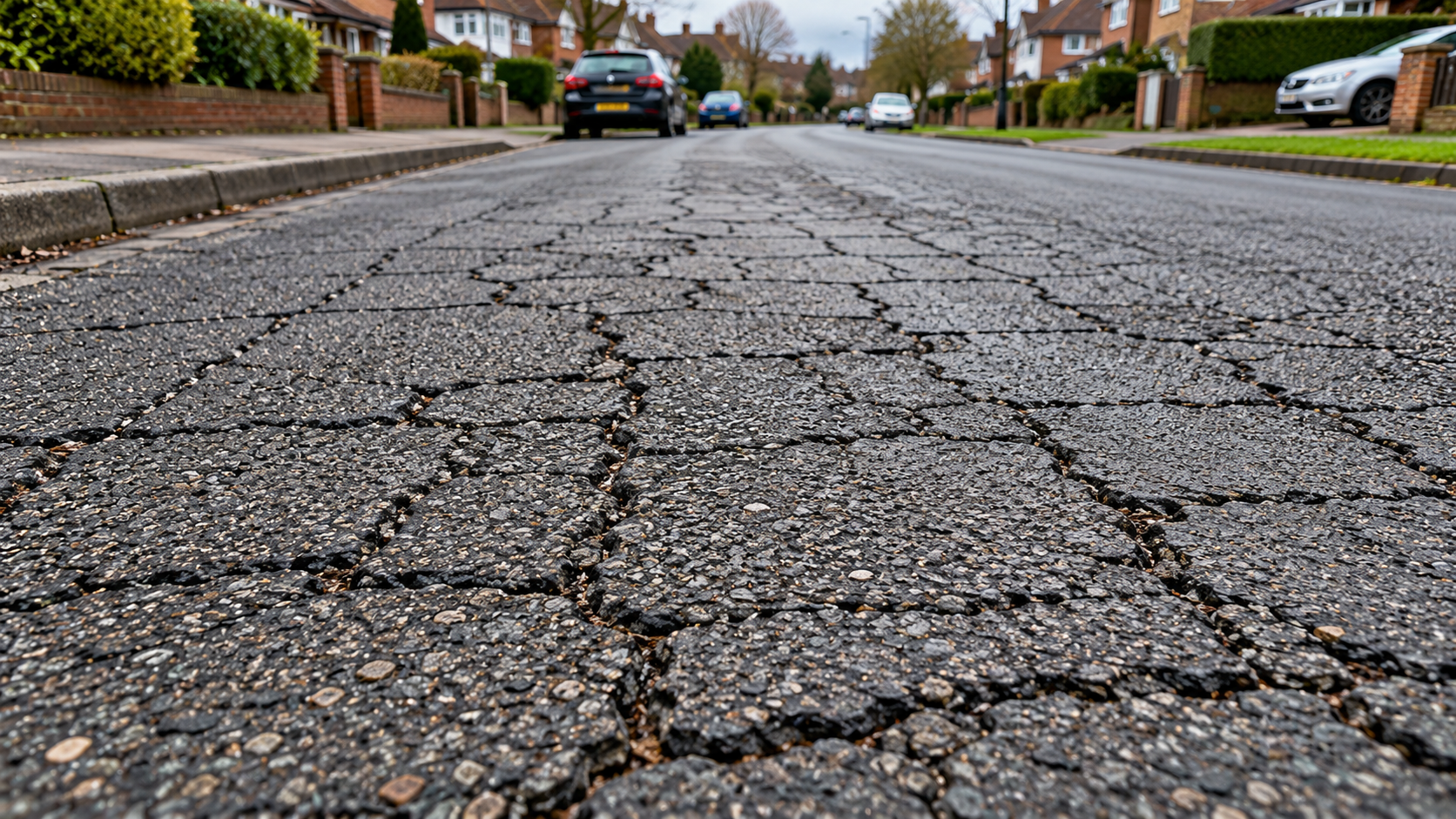
These cracks, commonly known as block cracking, divide the tarmac into roughly rectangular or square sections. Unlike isolated cracks caused by localised damage, grid pattern cracks often indicate changes within the asphalt material or underlying pavement structure.
For property owners, commercial site managers and those responsible for private roads, understanding why these cracks develop is important. Although they may initially appear to be cosmetic defects, untreated cracking can allow water to penetrate the surface and contribute to more extensive deterioration.
Identifying the underlying cause helps determine whether targeted repairs, preventative maintenance or complete resurfacing will provide the most reliable long-term solution.
What Are Grid Pattern Cracks in Tarmac Roads?
Grid pattern cracking describes a network of interconnected cracks that divide a road surface into distinct blocks.
The individual sections can vary considerably in size, depending on the condition of the surfacing material and the forces affecting it.
This type of deterioration is commonly associated with ageing asphalt, temperature fluctuations and the gradual loss of flexibility within the bituminous binder.
How Block Cracking Differs From Other Road Cracks
Not all cracking indicates the same problem.
Block cracking generally produces relatively large rectangular sections and can occur in areas that experience limited vehicle movement.
Fatigue cracking, sometimes called alligator cracking, produces smaller interconnected shapes resembling reptile skin. It is more commonly associated with repeated traffic loading and insufficient structural support.
Longitudinal cracks run approximately parallel to the direction of travel, while transverse cracks extend across the road.
Recognising these differences is important because each cracking pattern can require a different repair approach.
A professional assessment can establish whether the visible cracking is confined to the surface or reflects deeper structural deterioration.
What Causes Grid Pattern Cracks in Tarmac Roads?
Several factors can contribute to grid pattern cracks in tarmac roads. In many cases, deterioration develops gradually through a combination of material ageing, environmental exposure and construction conditions.
Ageing and Loss of Asphalt Flexibility
One of the most common causes of block cracking is the gradual ageing of the bituminous binder within asphalt.
Bitumen provides flexibility and helps hold the aggregate particles together. Over time, exposure to oxygen, sunlight and changing temperatures causes the binder to harden.
As the material becomes less flexible, it becomes increasingly difficult for the surface to accommodate normal expansion and contraction.
Internal stresses begin to develop, eventually resulting in cracks.
These cracks may initially appear as isolated lines before expanding into a recognisable grid pattern.
Older private roads, industrial access routes and lightly trafficked commercial areas can be particularly susceptible when maintenance has been limited.
Temperature Changes and Thermal Movement
British weather exposes road surfaces to regular temperature fluctuations.
During warmer conditions, asphalt expands slightly. When temperatures fall, the material contracts.
A relatively new and flexible surface can accommodate these movements without significant damage.
However, ageing asphalt becomes more brittle and less capable of responding to temperature changes.
Repeated contraction can generate tensile stresses that exceed the material’s ability to resist cracking.
Over time, intersecting cracks may form across larger sections of the road.
Cold winter conditions can make existing cracks more noticeable, particularly where the surface has already experienced substantial ageing.
Poor Asphalt Mix Design
The composition of the asphalt mixture also influences long-term cracking resistance.
A suitable mixture requires an appropriate balance of aggregate, bitumen and air voids.
If the binder content is insufficient, the material may lack the flexibility needed to accommodate normal movement.
Similarly, an unsuitable binder grade or poorly selected aggregate structure can affect durability.
The correct mixture depends on the intended use of the road, expected traffic loads and environmental conditions.
Professional tarmac installation and road surfacing services help ensure that suitable materials and installation methods are selected for the intended application.
Inadequate Compaction During Installation
Compaction is a critical stage of road construction.
During installation, the asphalt mixture must be compacted to achieve the required density and minimise excessive air voids.
Insufficient compaction can leave the surface more vulnerable to water penetration and accelerated binder ageing.
As moisture and oxygen enter the material, deterioration may occur more rapidly.
Over time, the weakened asphalt can become increasingly susceptible to cracking.
Consistent installation practices are therefore essential for achieving a durable finished surface.
For larger roads and commercial areas, machine-laid tarmac can help achieve consistent material distribution and controlled laying conditions when supported by appropriate compaction procedures.
How Does Water Contribute to Grid Pattern Cracking?
Water is one of the most significant factors influencing the progression of road surface deterioration.
Although block cracking often begins because of asphalt ageing and shrinkage, moisture can substantially worsen the condition.
Water Penetration Through Existing Cracks
Once cracks develop, rainwater can enter the pavement structure.
If the cracks remain untreated, moisture may reach the underlying layers.
Water can weaken certain foundation materials, reduce structural support and contribute to localised movement.
Repeated traffic loading over weakened areas can then accelerate deterioration.
What initially appeared to be relatively minor surface cracking may eventually develop into wider cracks, surface deformation or potholes.
Poor Drainage and Standing Water
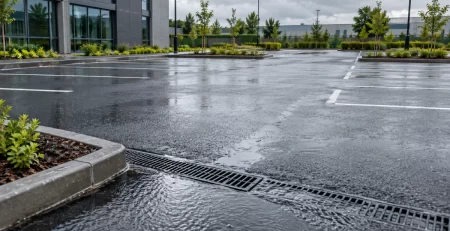
Roads with inadequate drainage are particularly vulnerable to moisture-related damage.
Standing water increases the time that moisture remains in contact with the surface.
Blocked gullies, insufficient gradients and poorly positioned drainage channels can all contribute to persistent water accumulation.
During colder weather, water trapped within cracks may freeze and expand.
Repeated freezing and thawing can widen existing openings and loosen surrounding material.
Effective drainage design is therefore an important consideration during both new road construction and resurfacing projects.
Why Surface Repairs Alone May Not Solve Drainage Problems
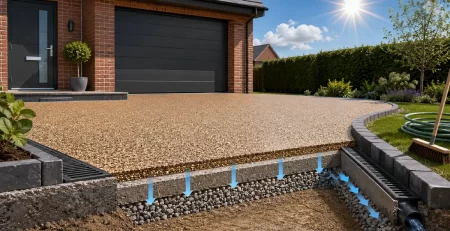
Sealing visible cracks can reduce water penetration, but it does not correct inadequate drainage.
If water continues to collect on the surface, deterioration may occur elsewhere.
Where drainage defects are identified, the repair strategy should address both the damaged asphalt and the underlying cause of water accumulation.
This may involve restoring surface falls, clearing drainage infrastructure or improving the pavement’s ability to direct water away from vulnerable areas.
Can Heavy Vehicles Cause Grid Pattern Cracks?
Heavy traffic can contribute to road deterioration, although it is important to distinguish block cracking from load-related fatigue cracking.
Traditional block cracking is primarily associated with asphalt ageing and thermal shrinkage rather than repeated vehicle loading.
However, commercial roads and industrial access routes frequently experience several interacting forms of stress.
Repeated Loading on Weakened Surfaces
Heavy goods vehicles place substantial loads on road surfaces.
Where asphalt has already become brittle or cracked, repeated loading can cause existing defects to expand.
If the underlying construction is insufficient for the expected traffic, additional structural cracking may develop.
Over time, different cracking patterns can overlap, making the original cause more difficult to identify.
Turning Areas and Loading Bays
Commercial loading areas often experience concentrated stresses.
Vehicles turning slowly, braking or manoeuvring in confined spaces can place significant forces on the asphalt.
These movements may accelerate deterioration where the surface is already weakened.
For industrial premises, selecting a suitable pavement design is essential.
Experienced commercial surfacing contractors can assess traffic requirements and recommend construction methods appropriate for the site’s operational demands.
Are Grid Pattern Cracks a Sign of Structural Failure?
Grid pattern cracks do not automatically indicate that a road has suffered structural failure.
In some cases, the cracking is primarily confined to an ageing surface course.
The underlying pavement layers may remain stable and capable of supporting traffic.
However, the appearance of cracks should not be ignored.
Signs That Cracking May Be More Serious
The severity of cracking depends on several factors, including crack width, depth, extent and the condition of the surrounding surface.
Cracks accompanied by rutting, depressions, loose aggregate or potholes may indicate more extensive deterioration.
Visible movement under vehicle loading can also suggest problems within the underlying pavement structure.
Similarly, recurring cracks following previous repairs may indicate that the original cause has not been addressed.
A professional inspection can help determine whether the damage is superficial or structural.
Why Early Assessment Matters
Early assessment allows property owners and site managers to make informed maintenance decisions.
Where cracking remains relatively minor, preventative treatment may help preserve the existing surface.
If deterioration progresses unchecked, more substantial repairs may become necessary.
Understanding the extent of the damage before selecting a repair method helps avoid unnecessary expenditure and ineffective treatments.
How Can Grid Pattern Cracks in Tarmac Roads Be Repaired?
The most appropriate repair method depends on the condition of the asphalt, the extent of cracking and the stability of the underlying pavement.
There is no single treatment suitable for every road.
Crack Sealing for Early-Stage Damage
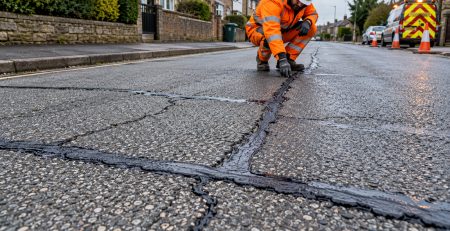
Where cracks are relatively narrow and the surrounding asphalt remains structurally sound, crack sealing may provide an effective preventative treatment.
Suitable sealing materials help reduce water penetration and protect the underlying pavement layers.
However, crack sealing does not restore the original flexibility of severely aged asphalt.
It is generally more appropriate where the existing surface remains in otherwise serviceable condition.
The cracks must also be properly prepared to ensure effective adhesion.
Localised Surface Repairs
Where cracking is concentrated within a limited area, localised repairs may be appropriate.
Damaged asphalt can be removed and replaced with a suitable new material.
The repair should extend far enough to remove deteriorated material and establish a stable connection with the surrounding pavement.
If defects are present within the underlying layers, these should be corrected before the replacement asphalt is installed.
For areas where cracking has progressed into pothole formation, professional pothole repairs can help restore a safe and serviceable surface.
Resurfacing Larger Areas
Where block cracking affects substantial sections of a road, resurfacing may provide a more practical long-term solution.
This generally involves removing or preparing the deteriorated surface and installing a new asphalt layer.
However, resurfacing should only proceed once the underlying pavement condition has been assessed.
If the existing construction contains significant defects, simply covering the cracks may allow them to reappear.
This process is known as reflective cracking.
Appropriate preparation and treatment of existing defects are therefore essential.
Full-Depth Reconstruction
Where investigations identify widespread structural weakness, full-depth reconstruction may be necessary.
This involves removing the defective pavement materials and rebuilding the affected layers to an appropriate specification.
Although more extensive than surface repairs, reconstruction addresses underlying problems that cannot be resolved through sealing or resurfacing alone.
The decision should be based on pavement condition, expected traffic loads, drainage performance and the required service life.
How Can Grid Pattern Cracking Be Prevented?
Preventing premature cracking begins with suitable road design, appropriate materials and consistent construction practices.
Long-term maintenance also plays an important role.
Selecting Suitable Asphalt Materials
The asphalt mixture should be selected according to the road’s intended use and expected operating conditions.
Residential access roads, commercial service yards and heavily trafficked routes may require different pavement specifications.
The chosen materials must provide adequate durability while retaining sufficient flexibility to accommodate normal environmental movement.
Correct binder selection and mixture design can reduce the likelihood of premature cracking.
Ensuring Proper Ground Preparation
A durable asphalt surface depends on the stability of the layers beneath it.
Poorly prepared ground can contribute to movement, settlement and uneven loading.
Before surfacing begins, the existing ground conditions should be assessed and unsuitable materials addressed.
The pavement foundation should be constructed and compacted to provide consistent support.
Appropriate highway surfacing practices are particularly important where roads must accommodate regular vehicle movements and demanding operating conditions.
Maintaining Effective Drainage
Drainage systems should be inspected and maintained throughout the road’s service life.
Blocked gullies and drainage channels should be cleared before standing water becomes a persistent problem.
Surface falls should also be monitored, particularly where settlement has occurred.
Preventing prolonged water accumulation helps protect both the asphalt and the underlying pavement structure.
Regular Road Surface Inspections
Routine inspections help identify deterioration before it becomes extensive.
Property owners and site managers should monitor changes in crack width, surface texture, drainage performance and localised deformation.
Particular attention should be given to areas where heavy vehicles turn, park or regularly apply braking forces.
Recording the development of defects over time can help establish whether deterioration is progressing.
This information supports more effective maintenance planning and budgeting.
When Should a Tarmac Road Be Resurfaced?
Not every road displaying grid pattern cracking requires immediate resurfacing.
The decision depends on the extent of damage, the road’s operational importance and the condition of the underlying construction.
When Repairs May Be Sufficient
Localised repairs may be suitable where cracking affects a limited area and the surrounding pavement remains sound.
Early-stage cracks may also be treated to reduce moisture penetration.
However, these approaches are most effective when the underlying cause has been identified and the existing asphalt retains adequate structural integrity.
When Resurfacing Becomes More Practical
Resurfacing may become more economical when cracking is widespread, repeated repairs are required or the existing surface has deteriorated significantly.
For commercial sites, operational disruption should also be considered.
Repeated temporary repairs may interfere with deliveries, vehicle access and daily activities.
A planned resurfacing programme can sometimes provide a more predictable solution than continuing reactive maintenance.
Considering Whole-Life Costs
The lowest initial repair cost does not always represent the best long-term value.
A small repair may be appropriate for an isolated defect, but repeated repairs across an extensively cracked surface can become expensive.
Assessing expected service life, future maintenance requirements and operational disruption provides a more complete basis for decision-making.
For larger sites, professional assessment can help establish whether continued maintenance, partial resurfacing or reconstruction offers the most suitable approach.
Why Professional Assessment Is Important
Grid pattern cracking can develop for several reasons, and the visible surface does not always reveal the full extent of the problem.
An effective assessment considers the cracking pattern, asphalt condition, drainage performance, traffic requirements and underlying pavement structure.
Where necessary, further investigation may be required to determine the depth and severity of deterioration.
This is particularly important for commercial access roads, industrial yards and private estates where unexpected surface failure can affect safety and operations.
Professional road surfacing specialists can help identify suitable repair and resurfacing options based on the condition and intended use of the pavement.
Understanding the Long-Term Impact of Grid Pattern Cracking
Grid pattern cracks in tarmac roads are commonly associated with the gradual ageing and hardening of asphalt.
As the material loses flexibility, temperature-related contraction can produce intersecting cracks that divide the surface into rectangular sections.
Although this form of cracking does not necessarily indicate immediate structural failure, it creates pathways for water and can accelerate further deterioration.
For property owners and commercial site managers, the most important consideration is whether the cracking is confined to the surface or has begun to affect the underlying pavement.
Early identification, appropriate drainage maintenance and correctly specified repairs can help prevent relatively manageable defects from developing into more extensive problems.
Where cracking becomes widespread, a detailed assessment of the existing road construction provides the most reliable basis for determining whether repairs, resurfacing or reconstruction will deliver the required long-term performance.