Why Heavy Vehicles Cause Road Damage Even When the Surface Looks Strong
A road can look perfectly solid from the surface while significant deterioration is already developing underneath. This is particularly common on commercial sites, industrial estates, loading areas and access roads used regularly by heavy goods vehicles. Lorries, delivery vehicles, refuse vehicles, plant and other heavy traffic place very different demands on a road compared with ordinary cars.
The visible tarmac or asphalt is only one part of a road construction. Its ability to withstand repeated heavy loads depends on the complete structure beneath it, including the foundation, sub-base, drainage and the quality of the surfacing installation. When one part of that structure is unsuitable for the traffic using it, damage can develop long before the surface appears seriously worn.
Understanding why this happens helps property owners and site managers recognise potential problems earlier and make better decisions about maintenance, repairs and future surfacing work.
A Strong-Looking Surface Does Not Always Mean a Strong Road
One of the most important things to understand about road construction is that surface appearance does not necessarily indicate structural condition. A newly laid or well-maintained road may have a smooth, dense finish without obvious cracks or potholes, yet the layers underneath may not be capable of supporting repeated heavy vehicle movements.
Roads distribute vehicle loads through several layers. The surface provides a durable running course, but the lower layers spread those loads across the ground beneath. If the underlying construction has insufficient depth, poor compaction or weak ground conditions, repeated loading can gradually cause movement.
This is why appropriate tarmac installation and road surfacing needs to consider how the road will actually be used rather than concentrating solely on the finished appearance.
A private access road used mainly by cars has very different structural requirements from an industrial route carrying loaded HGVs throughout the working day. Using a surface specification that is suitable for lighter traffic in a heavy-use environment can result in premature deterioration.
Heavy Vehicles Apply Much Greater Loads to the Road Structure
The difference between a passenger vehicle and a loaded commercial vehicle is not simply the overall weight. Heavy vehicles transfer substantial concentrated loads through their wheels and axles.
As a vehicle passes over the road, the pavement structure must distribute those forces into the layers underneath. A properly designed road handles this loading without excessive deformation. Problems develop when the loads repeatedly exceed what the pavement structure was designed to accommodate.
The effects are cumulative. A road may withstand occasional heavy vehicle movements without visible problems, while hundreds or thousands of repeated movements across the same areas can gradually weaken the structure.
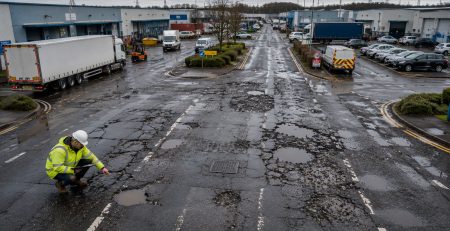
This is particularly relevant for commercial premises where vehicles repeatedly follow identical routes. Entrances, loading bays, turning areas, warehouse approaches and narrow access roads often receive much greater concentrated loading than other parts of the site.
For these environments, experienced commercial surfacing contractors can take expected traffic conditions into account when planning the construction and surfacing specification.
Repeated Loading Causes Gradual Structural Fatigue
Road damage is not always caused by one exceptionally heavy vehicle. More commonly, deterioration results from repeated loading over time.
Each vehicle movement creates temporary stresses within the pavement. When the construction is appropriate and remains in good condition, the road recovers from these stresses effectively. When the pavement is weak, poorly supported or repeatedly overloaded, small amounts of permanent deformation can begin to accumulate.
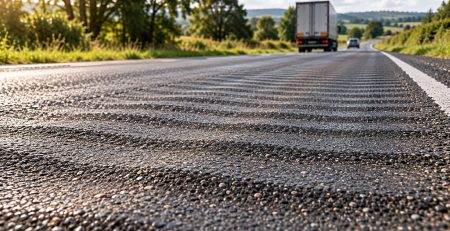
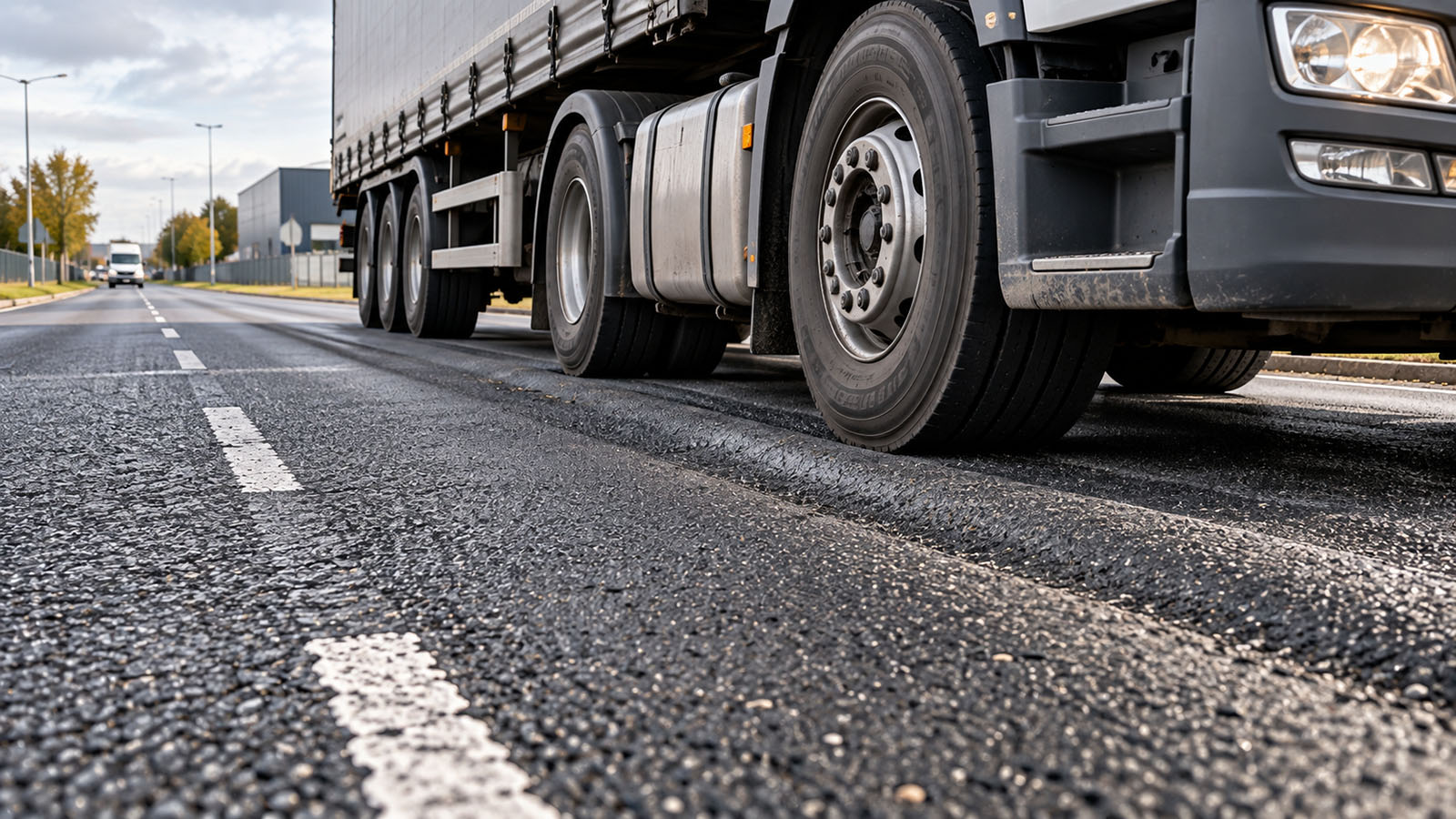
Initially, these changes may be almost impossible to see. Eventually, shallow depressions or wheel-track deformation may appear. Cracking can then develop as the surface loses support or is repeatedly flexed.
Once cracks form, the road becomes more vulnerable to water penetration, which can accelerate deterioration beneath the surface.
Turning and Braking Increase the Stress on Surfaced Areas
Straight-line traffic is only part of the problem on sites used by heavy vehicles. Turning, braking and accelerating can place additional forces on the surface.
A loaded vehicle manoeuvring into a yard or loading area creates lateral and twisting forces as its tyres change direction. These stresses are especially concentrated when vehicles make tight turns at low speed.
The same applies where HGVs brake repeatedly before barriers, gates, junctions or loading points. Rather than simply passing over the surface, the tyres exert forces that can contribute to displacement and deformation.
This explains why damage on commercial sites is often concentrated around entrances, corners and loading areas even when adjoining stretches of road remain in reasonable condition.
Where consistent construction and controlled material placement are important, machine-laid tarmac can provide an appropriate method for achieving an even, professionally installed surface across suitable areas.
The Sub-Base Plays a Critical Role
The strength of a road begins below the visible surface. A suitable sub-base provides support and helps distribute vehicle loads into the ground.
If this layer is too shallow, poorly compacted or constructed from unsuitable material, the finished road may initially look perfectly acceptable. Heavy traffic can then expose the weakness over time.
Small amounts of movement beneath the asphalt or tarmac can eventually result in depressions, cracking and surface deformation. Simply replacing the uppermost material without addressing an inadequate foundation may therefore provide only a temporary improvement.
This is why investigating the cause of road deterioration matters. A damaged surface does not automatically mean the surface material itself was the original problem.
Water Can Turn Minor Weaknesses Into Major Damage
Drainage is another important factor in heavy traffic road performance. Water that reaches the supporting layers can reduce their ability to carry vehicle loads effectively.
Cracks, damaged edges and poorly drained areas provide opportunities for water to enter the pavement structure. Once the underlying materials become saturated or weakened, heavy vehicles can accelerate movement and deformation.
The combination of water and repeated loading is particularly damaging because each vehicle movement places additional stress on already compromised material.
Surface water should therefore be directed away efficiently rather than being allowed to remain in depressions or collect along road edges. Drainage arrangements also need to remain clear and functional throughout the life of the road.
A road may appear strong during dry conditions while weaknesses become increasingly apparent after prolonged wet weather and continued heavy vehicle use.
Road Edges Are Particularly Vulnerable
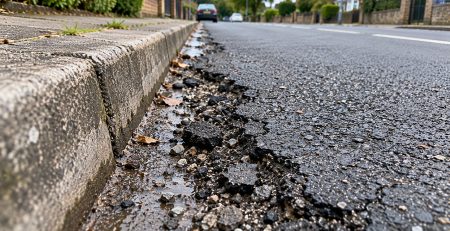
Heavy vehicles travelling close to the edge of a surfaced road can create another form of structural stress. Road edges generally have less lateral support than the central area, making them more susceptible to movement when repeatedly loaded.
This can be especially problematic on narrow access roads where large vehicles have limited space to pass. Tyres may repeatedly travel close to the same edge, gradually causing cracking, crumbling or deformation.
Once edge deterioration begins, water can enter the exposed construction more easily. The damaged area may then expand progressively towards the centre of the road.
Providing sufficient road width, appropriate edge support and suitable construction for expected vehicle movements can help reduce this type of deterioration.
Small Defects Can Develop Quickly Under Heavy Traffic
Minor road defects should not automatically be dismissed because they appear insignificant. A small crack or shallow depression can indicate movement below the surface.
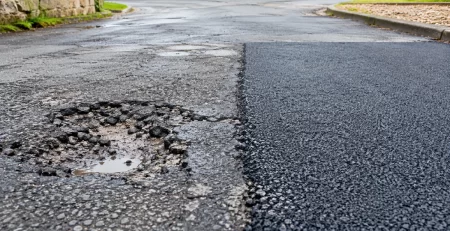
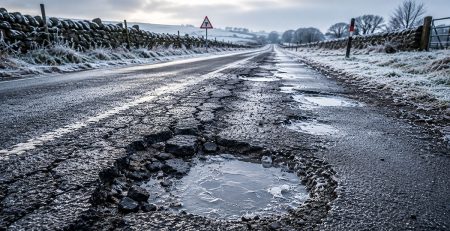
Heavy traffic can accelerate the progression of these defects. Cracks widen, loose material becomes displaced and water gains greater access to the road structure. Eventually, a relatively small problem may develop into a pothole or larger failed area.
Timely pothole repairs can restore damaged sections, although the appropriate repair method should reflect the underlying cause. Where widespread structural deterioration exists, isolated repairs may not address the broader problem.
Monitoring heavily trafficked roads therefore has practical value. Changes in wheel tracks, surface levels, drainage behaviour and cracking patterns can provide early indications that the pavement is beginning to struggle under its operating conditions.
Heavy Traffic Roads Need to Be Designed Around Actual Site Use
Effective heavy traffic road surfacing UK projects should begin with a realistic understanding of how the site operates.
The number and type of vehicles matter, but so do their movements. A road carrying occasional delivery lorries experiences different stresses from an access route serving a distribution facility throughout the day. A yard where articulated vehicles repeatedly turn and reverse also has different requirements from a straight access road.
Future use should be considered as well. If a site is expected to expand, vehicle numbers may increase significantly. Designing only around present-day traffic can leave the road under-specified later.
Professional highway surfacing and commercial surfacing work therefore requires more than choosing a suitable-looking material. Construction depth, preparation, compaction, drainage and expected loading all contribute to long-term performance.
Surface Thickness Alone Does Not Solve Every Problem
It can be tempting to assume that simply laying a thicker surface will make a road suitable for heavier vehicles. While material thickness forms part of the specification, the complete pavement structure must work together.
A strong surface laid over an unstable foundation remains vulnerable. Similarly, good foundation construction can be undermined by poor drainage or inadequate installation.
The correct approach depends on the existing site conditions and expected use. This is one reason road surfacing should be assessed as a complete construction system rather than as a cosmetic layer applied to the ground.
Good preparation may not be visible once the project is complete, but it has a major influence on how the road performs years later.
Why Early Assessment Can Reduce Larger Repairs
Visible road damage often represents the later stages of a process that started beneath the surface. Waiting until large potholes, severe rutting or widespread cracking appears can allow deterioration to become more extensive.
Regular observation is particularly worthwhile on commercial and industrial sites because heavy vehicles can accelerate existing weaknesses. Areas experiencing repeated braking, turning or stationary loading deserve particular attention.
When deterioration appears, the objective should be to determine why it is happening. Repairing only the visible symptom without considering drainage, foundation movement or traffic loading can allow the same problem to return.
Examples of completed surfacing projects and case studies can also help property owners and site managers understand how different commercial environments require different approaches to preparation and construction.
Long-Term Performance Depends on the Whole Road Structure
Heavy vehicles do not necessarily damage roads because the visible surface is poor quality. They cause problems when repeated vehicle loads, turning forces and braking stresses exceed what the complete pavement structure can reliably support.
The most durable results come from treating the road as a complete system. Ground conditions, sub-base construction, compaction, surfacing materials, drainage, road edges and traffic movements all influence performance.
For property owners and commercial site managers, this explains why a road that still looks reasonably strong can nevertheless begin to develop depressions, cracks or localised failures. What happens beneath the surface is often just as important as what can be seen above it.
Where heavy vehicles form part of everyday site operations, road construction and maintenance should reflect those demands from the outset. A properly prepared and appropriately specified surface is better positioned to distribute repeated loads, resist deformation and provide dependable access over the long term.