How Does Summer Heat Affect Asphalt Road Lifespan?
Summer heat affects asphalt road lifespan by increasing surface temperature, softening bitumen, accelerating ageing, and making weak areas more vulnerable to rutting, cracking, potholes, and deformation. If you are asking How Does Summer Heat Affect Asphalt Road Lifespan?, the practical issue is not only the air temperature on a hot day. It is how heat interacts with traffic, surface thickness, binder choice, drainage, base strength, and maintenance timing.
Total Surfacing Solutions helps residential and commercial clients across Hertford, Hertfordshire, Bedfordshire, Oxford, Cambridgeshire, and Essex protect asphalt and tarmac surfaces through correct specification, repair, resurfacing, machine-laid installation, and planned maintenance.
Quick Check: If summer heat is exposing soft patches, rutting, cracking, or surface movement, Total Surfacing Solutions can assess the road build-up through road surfacing contractors in Hertfordshire before small defects shorten the surface lifespan.
How Does Summer Heat Affect Asphalt Road Lifespan?
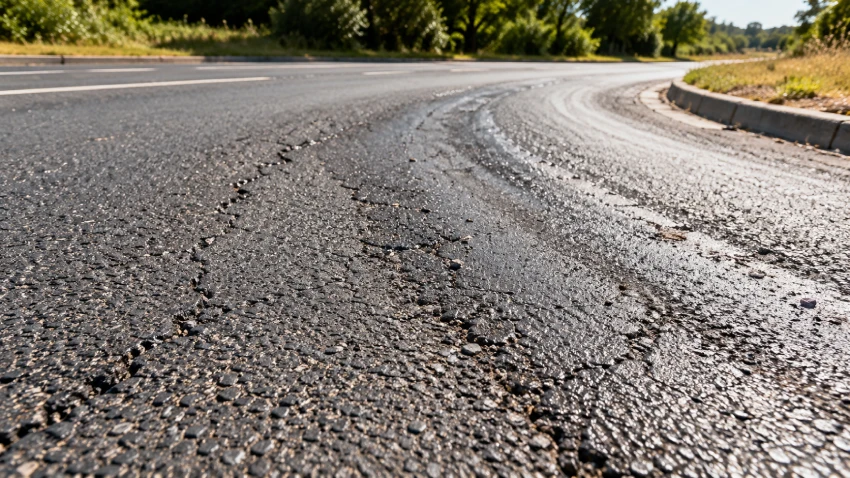
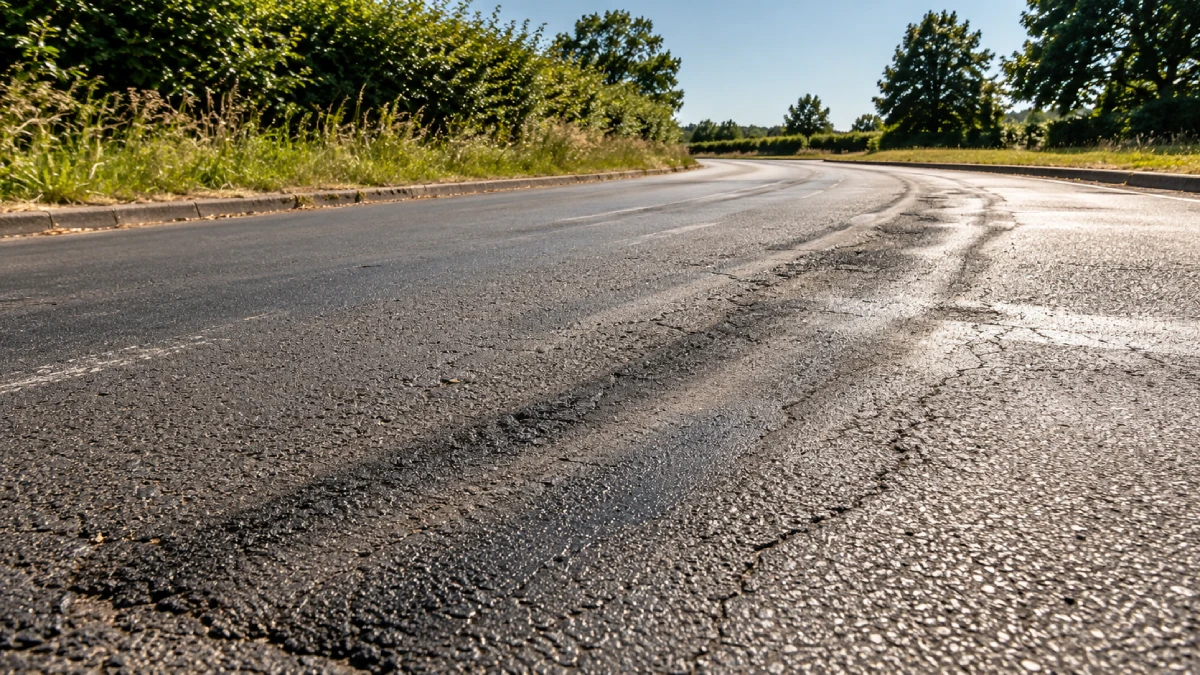
Summer heat affects asphalt road lifespan by stressing both the surface binder and the layers below it. During extreme hot weather, UK road surface temperatures can exceed 60°C, and some bituminous surfaces can soften as the binder rises toward the surface. Suffolk Highways has warned that this can happen during extended warm spells, especially on vulnerable road surfaces.
Heat also speeds up binder ageing. Research on asphalt ageing explains that heat, ultraviolet light, oxygen, and moisture can reduce pavement performance and shorten service life by changing the binder’s physical and chemical behaviour. Total Surfacing Solutions treats summer heat damage as a whole-surface issue because visible asphalt wear is often the final sign of a deeper construction or maintenance problem.
Summer Heat Effects On Asphalt Lifespan
| Heat effect | What happens on the surface | Why it reduces lifespan |
| Binder softening | Surface looks shiny, sticky, or tender | Tyres can deform the wearing course |
| Rutting | Wheel paths sink or track | Repeated traffic pushes softened asphalt sideways |
| Oxidation | Asphalt becomes brittle over time | Cracks form and let water into lower layers |
| UV exposure | Surface binder ages faster | Top layer loses flexibility and cohesion |
| Thermal movement | Expansion and contraction stress joints | Cracks widen during repeated cycles |
| Heavy traffic in heat | Turning and braking scuff the surface | Localised damage develops into potholes |
Why Asphalt Gets Vulnerable In Hot Weather?
Asphalt is designed to carry traffic, but it remains temperature-sensitive because bitumen is a viscoelastic binder. In hot weather, the surface can become softer and more vulnerable to deformation under repeated wheel loads, especially where heavy vehicles brake, turn, queue, or climb gradients.
The UK Parliament’s Environmental Audit Committee previously reported that the 2006 heatwave caused road surface damage across the country and that some road surfaces are more vulnerable to melting. It also highlighted rutting problems linked to concentrated vehicle loads on strategic roads.
For commercial estates, business parks, and private roads, this is why Total Surfacing Solutions looks at traffic movement before recommending repairs. A car park turning aisle, loading bay, access road, and residential driveway do not place the same heat-and-load stress on asphalt.
Heat, Rutting, And Surface Deformation
Rutting is one of the clearest ways summer heat shortens asphalt road lifespan. When the binder softens, tyres can push the surface down in wheel paths or sideways at turning points. Once a rut forms, it can hold water, collect grit, and create extra stress during every vehicle pass.
For heavily used roads, the surface needs materials and layer thicknesses matched to traffic load. The heavy-load surfacing material framework is a useful supporting read because summer heat becomes more damaging when the road was not built for the vehicles using it.
Total Surfacing Solutions can advise on road surfacing in Hertfordshire for roads, access routes, commercial car parks, and yards where rutting has become a repeated summer issue.
Heat Speeds Up Asphalt Binder Ageing
Summer heat does not only soften asphalt in the moment. It also contributes to long-term ageing. Studies on asphalt binder ageing show that environmental exposure, including solar radiation, moisture, and temperature fluctuations, changes binder behaviour over time and affects pavement performance.
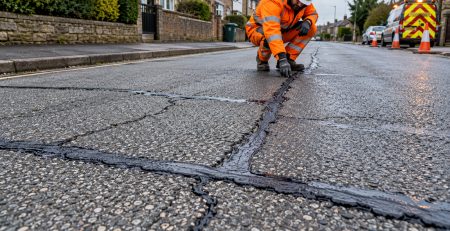
Aged asphalt can become less flexible, which increases cracking risk. Those cracks then allow water into the binder course, base course, or sub-base, making future potholes more likely. That is why heat damage often becomes visible later as cracking, fretting, edge failure, or pothole formation.
The asphalt fatigue pattern guide explains how repeated loading and weakened layers can create cracking patterns that should not be ignored.
Road Layers Matter More During Heatwaves
A strong asphalt road is more than the black surface you see. The wearing course, binder course, base course, and sub-base all support the lifespan of the surface. When heat softens the upper layer, weak lower layers make deformation and cracking more likely.
The asphalt construction layer map is directly relevant because heat stress exposes poor construction faster. If the base cannot support the surface, the asphalt may deform under traffic even when the visible layer looks recently installed.
Total Surfacing Solutions checks the full road build-up before deciding whether a defect needs patching, resurfacing, machine-laid tarmac, or deeper correction.
Base Course Preparation And Heat Resistance
Base course preparation is one of the most important factors in asphalt road lifespan. A hot surface over a weak base behaves badly because traffic pressure is not distributed properly. This can lead to rutting, cracking, and repeated potholes in the same locations.
The base-course stability checklist is a useful reference for understanding why compaction, thickness, drainage, and material choice affect surface durability.
For Total Surfacing Solutions, heat resistance is not treated as a single product feature. It comes from correct site preparation, layer design, installation method, and maintenance planning.
Tarmacadam Driveways In Summer Heat
Tarmacadam driveways can show heat-related wear where cars park in the same position, turn sharply, or sit on a surface that has not fully settled. During warm conditions, a new or vulnerable surface may scuff, indent, or mark more easily.
For domestic projects, tarmac surfacing in Hertfordshire can be specified with the right base, thickness, finish, and drainage so the surface performs better through seasonal temperature changes.
For homeowners comparing expected surface life, the tarmac driveway service-life factors help explain why installation quality and maintenance matter as much as the material itself.
Machine Laid Tarmac For Heat-Stressed Roads
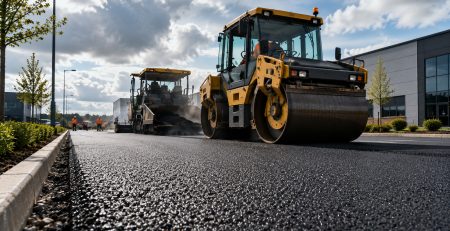
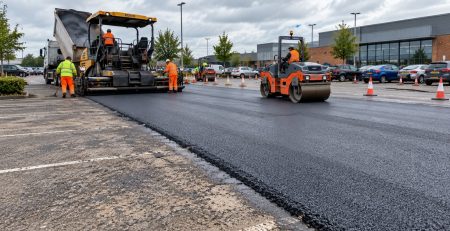
Machine-laid tarmac is often the better choice for larger roads, commercial entrances, private estates, access routes, and car parks because it can deliver a more consistent finish than small, uneven hand-laid areas. That consistency matters when heat and traffic combine.
Total Surfacing Solutions provides tarmac installation in Hertfordshire where the surface needs reliable levels, proper compaction, and a practical finish for repeated vehicle movement.
For larger commercial areas, the machine-laid tarmac durability factors are useful because summer heat is only one part of a wider UK weather cycle.
Summer Heat And Commercial Car Parks
Commercial car parks suffer heat damage differently from ordinary driveways. Cars turn repeatedly in the same bays, delivery vehicles use the same routes, and braking loads concentrate at entrances, exits, ramps, and pedestrian crossings.
Total Surfacing Solutions works on commercial surfacing where the repair plan must consider traffic flow, bay layout, drainage, line marking, and surface strength. The business-park surface upkeep process is a useful supporting guide for planned maintenance before summer wear becomes structural damage.
For car park planning, the Hertfordshire car park surfacing factors also helps connect asphalt performance with day-to-day business use.
Potholes After Summer Heat
Potholes are often associated with winter, but summer heat can help start the failure process. Heat can soften the surface, traffic can deform it, and later rain or cold weather can exploit the cracks and low spots that were created during warmer months.
The Department for Transport’s climate adaptation strategy recognises that transport systems face disruption from climate impacts, including roads being washed out by heavy rainfall, while future adaptation planning is expected to play a stronger role in infrastructure decisions. For asphalt lifespan, this means heat should be considered alongside rainfall, drainage, and winter conditions.
Where potholes appear after hot-weather surface movement, Total Surfacing Solutions can provide surface repair in Hertfordshire before the damaged area spreads.
Freeze-Thaw Damage After Heat Cracking
Summer cracking often becomes more serious in winter. Once heat, UV exposure, or traffic stress opens cracks in asphalt, water can enter. When temperatures fall, freeze-thaw cycles can widen those cracks and break material away.
The freeze-thaw road damage sequence is relevant because it shows why summer heat damage should be repaired before colder weather turns cracks into potholes.
This is one reason Total Surfacing Solutions recommends planned inspections after hot periods, not just emergency repairs after winter failure.
Line Marking And Heat-Affected Asphalt
Line marking depends on the condition of the surface below it. If asphalt is soft, oily, cracked, or fretting, markings may wear quickly or fail to bond properly. Heat-stressed surfaces can also deform in turning zones, making bay lines and safety markings look poor sooner.
Total Surfacing Solutions can provide commercial surfacing solutions in Hertfordshire after repair or resurfacing so markings sit on a more stable base.
On commercial sites, line marking is not just cosmetic. It helps guide drivers away from weak edges, tight turns, pedestrian conflict zones, and high-wear areas.
Resin Bound Surfacing As A Heat-Use Alternative
Resin bound surfacing is not a direct replacement for every asphalt road, but it can be a useful option for residential driveways, paths, entrances, and some commercial pedestrian or light-vehicle areas where appearance, permeability, and easier maintenance matter.
For suitable projects, Total Surfacing Solutions offers durable resin surfacing in Hertfordshire where a driveway or pathway needs a cleaner finish and better day-to-day manageability than a worn surface.
The resin weather-resistance notes provide helpful context on how UK weather affects resin surfaces compared with more conventional driveway materials.
Block Paving, Brickwork, And Heat Movement
Block paving, brick edging, and hard landscaping can all influence how asphalt and tarmac surfaces perform in summer. Weak edges allow movement, and poorly supported boundaries can let a surface spread under traffic.
Total Surfacing Solutions can install a block paving driveway in Hertfordshire where a hard-wearing domestic driveway needs defined edges, falls, and a suitable finish.
Where kerbs, walls, steps, or boundaries are damaged beside an asphalt or tarmac surface, hard surface repair in Hertfordshire can help stabilise the surrounding structure.
Outdoor Steps And Safe Access In Hot Weather
Hot weather can expose uneven levels, loose edges, and access problems around roads, driveways, and car parks. Where asphalt deforms near a threshold, step, or pathway, pedestrians may face trip risks as well as surface staining or cracking.
Total Surfacing Solutions can provide complete driveway solutions in Hertfordshire where road surfacing, driveway layout, edging, and steps need to work as one safe access route.
This is especially important for residential entrances, commercial premises, rental properties, and sites where vehicle and pedestrian routes meet.
Low Maintenance Surfacing And Heat Lifespan
Low maintenance surfacing helps extend lifespan by reducing avoidable stress. That can mean better drainage, stronger edges, more suitable materials, a cleaner surface, fewer weak patches, and a maintenance schedule that catches defects early.
Total Surfacing Solutions offers low maintenance driveway in Hertfordshire options where clients want practical surfaces that are easier to manage through hot summers, wet autumns, and winter freeze-thaw cycles.
For road and commercial sites, the maintenance-cost reduction framework helps show why stronger surfacing decisions can reduce repeated repair pressure.
SUDS Compliant Surfacing And Heat
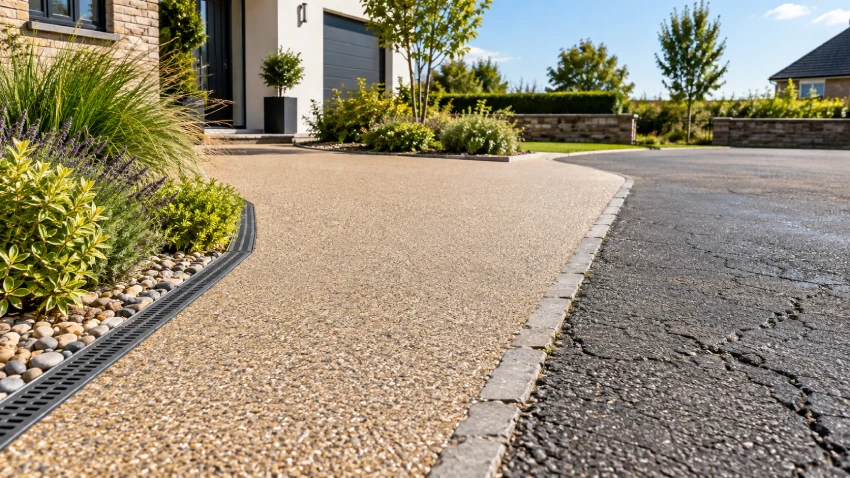
SUDS compliant surfacing is usually discussed in relation to drainage, but it also affects road and driveway lifespan because standing water can make heat-related cracking and later winter damage worse. A surface that manages rainfall properly is less likely to hold water in heat-weakened cracks.
UK government guidance explains that front garden hard surfacing does not usually need planning permission where permeable or porous surfacing is used, or where rainwater is directed to a lawn or border to drain naturally. It lists examples including gravel, permeable concrete block paving, and porous asphalt.
Total Surfacing Solutions can consider SUDS expectations alongside asphalt, tarmac, resin bound surfacing, and block paving decisions, especially where summer heat and drainage problems are both shortening surface lifespan.
Heat-Resistant Surfacing Decisions
| Site type | Heat risk | Better specification focus |
| Residential driveway | Parking dents, tyre scuffing, surface softening | Correct base, curing, drainage, and suitable finish |
| Private estate road | Rutting, cracking, water collection | Layer design, material selection, and planned maintenance |
| Commercial car park | Turning stress, bay wear, line marking loss | Strong surface, traffic layout, and repair schedule |
| Industrial yard | Heavy load deformation | Heavy-use materials and deeper structural design |
| Tarmac access road | Edge movement and softening | Machine-laid finish and stable restraints |
| Resin driveway | UV, cleaning, surface contamination | Suitable aggregate, base, permeability, and maintenance |
Fast Resurfacing After Heat Damage
Fast resurfacing can be useful when heat damage has made an access road, driveway, or car park unsafe or unattractive. The key is to avoid a rushed surface-only repair where the base, drainage, and traffic loads are not checked.
Total Surfacing Solutions provides complete resurfacing solutions in Hertfordshire where clients need efficient work that still respects preparation, curing, material suitability, and long-term performance.
A fast repair should still answer the main lifespan questions: why did the asphalt fail, where is water moving, how heavy is the traffic, and what will stop the same heat damage returning?
How Does Summer Heat Affect Asphalt Road Lifespan? Area Coverage
Local road lifespan depends on surface age, drainage, property type, traffic pattern, and whether the site is a residential driveway, commercial car park, estate road, or industrial access area. Total Surfacing Solutions serves Bedfordshire, Oxford, Cambridgeshire, Essex, and Hertfordshire with asphalt surfacing, tarmacadam, pothole repair, machine-laid tarmac, resin bound surfacing, block paving, and hard landscaping support.
Bedfordshire
In Bedfordshire, summer heat can expose weak driveway edges, worn access routes, and older surfacing that has already lost flexibility. Total Surfacing Solutions can assess whether resin bound surfacing, tarmac, asphalt repair, or resurfacing is the best route for a surface that needs better long-term performance.
Oxford
Oxford properties can include compact entrances, older boundaries, and mixed driveway layouts where heat damage may appear around turning points and thresholds. Total Surfacing Solutions can advise on resin bound driveways and surfacing repairs where asphalt or tarmac is no longer performing well through warmer months.
Cambridgeshire
In Cambridgeshire, surface lifespan often depends on water movement, base strength, and vehicle use. Total Surfacing Solutions can inspect heat-stressed driveways, private roads, and commercial areas to decide whether repair, resurfacing, or a different surface finish is more practical.
Essex Resin Bound Driveways
For Essex resin bound driveways, Total Surfacing Solutions can help clients choose a finish that suits daily parking, appearance, permeability, and maintenance. Where asphalt or tarmac has suffered heat-related scuffing or cracking, resin may be considered for suitable residential or light-use areas.
Essex Driveways
Essex driveway projects may involve replacing heat-worn tarmac, repairing asphalt defects, or installing a cleaner surface with better drainage. Total Surfacing Solutions can match the driveway specification to vehicle movement, surface condition, and long-term maintenance needs.
Essex Pothole Repairs
Heat-damaged asphalt can later form potholes when cracks let in water and traffic breaks down the weakened surface. Total Surfacing Solutions can carry out pothole repairs in Essex for driveways, access roads, car parks, and commercial spaces where defects need proper preparation and compaction.
Essex Machine Lay Tarmac
Machine lay tarmac in Essex can suit larger areas where heat, traffic, and turning movement demand a consistent finish. Total Surfacing Solutions can use machine-laid methods for private roads, access routes, and car parks where patchy repairs are no longer enough.
Hertfordshire Resin Bound Driveways
For Hertfordshire resin bound driveways, Total Surfacing Solutions can assess base condition, drainage, layout, and maintenance needs before recommending a finish. This is useful where a property owner wants an alternative to worn asphalt or tarmac in a residential setting.
Hertfordshire Driveways
Hertfordshire driveways affected by summer heat may show scuffing, cracks, soft patches, or repeated surface wear. Total Surfacing Solutions can inspect whether the issue is material age, base weakness, drainage, vehicle movement, or installation quality.
Hertfordshire Pothole Repairs
Hertfordshire pothole repairs can help stop heat-weakened cracks from becoming larger surface failures. Total Surfacing Solutions can repair potholes in driveways, access roads, commercial areas, and car parks with methods matched to the traffic and surface condition.
Hertfordshire Machine Lay Tarmac
Machine lay tarmac in Hertfordshire can provide a smoother, more consistent surface for heat-stressed access roads, private roads, and car parks. Total Surfacing Solutions can recommend this approach when isolated patching cannot restore level, strength, or finish.
Final Advice From Total Surfacing Solutions
Summer heat affects asphalt road lifespan by softening the surface, increasing rutting risk, accelerating binder ageing, and exposing weak construction layers. The right response depends on traffic load, drainage, base strength, surface age, and whether the damage is isolated or spreading. Total Surfacing Solutions can help homeowners and commercial clients needing road surfacing contractors in Hertfordshire choose between repair, resurfacing, tarmac installation, machine-laid surfacing, pothole repair, resin bound surfacing, and long-term maintenance. Acting before heat damage turns into winter potholes is usually the more practical route.
FAQs
Can summer heat really shorten asphalt road lifespan?
Yes, summer heat can shorten asphalt road lifespan when it softens the surface, increases rutting, accelerates binder ageing, or exposes weak base layers. The risk is higher where heavy vehicles brake, turn, park, or queue on the same surface repeatedly. Heat alone may not destroy a well-built road, but heat combined with traffic load, poor drainage, ageing binder, and weak construction can reduce performance and bring forward repair or resurfacing needs.
Why does asphalt look like it is melting in hot weather?
Asphalt can look like it is melting in hot weather when the bitumen binder softens and rises toward the surface. UK highways guidance has noted that road surface temperatures can exceed 60°C during exceptionally warm weather, causing binder in some road surfaces to soften. The surface may then look shiny, sticky, or tender. This is more likely on vulnerable surfaces, older roads, or areas under concentrated traffic stress.
Does summer heat cause potholes?
Summer heat can contribute to potholes, but potholes often form through a sequence of damage rather than one hot day. Heat may soften asphalt, increase rutting, and create cracks. Rainwater can then enter those cracks, weaken lower layers, and later freeze-thaw movement can widen the damage. By the time the pothole appears, the summer heat may have been an early part of the failure chain rather than the only cause.
What is rutting in asphalt roads?
Rutting is permanent deformation in the wheel paths of an asphalt road. It often appears as sunken tracks where vehicles repeatedly pass over the same area. High temperatures can make rutting worse because softened asphalt is easier for traffic to push and compress. Rutting also collects water, which can increase future cracking and pothole risk. Commercial car parks, estate roads, and access routes with repeated heavy use are especially vulnerable.
Is machine-laid tarmac better in hot weather?
Machine-laid tarmac can perform better on larger or high-use areas because it can provide more consistent levels, compaction, and finish than irregular hand-laid patches. Hot weather performance still depends on the full specification, including base strength, material choice, thickness, drainage, and traffic load. For access roads, commercial entrances, and car parks, machine-laid surfacing is often more suitable than repeated small repairs because it creates a more uniform surface.
Should asphalt be repaired before or after summer?
Asphalt should be inspected before summer where possible, especially if cracks, potholes, rutting, edge failure, or drainage problems are already visible. Repairing weak areas before hot weather can reduce the chance of heat-related deformation. After summer, another inspection can catch cracking or surface movement before winter rain and freeze-thaw cycles worsen the damage. The best timing depends on surface condition, use, weather, and whether the repair is urgent.
Does UV exposure damage asphalt?
UV exposure can contribute to asphalt ageing because sunlight affects the binder at the surface. Research on asphalt ageing notes that heat, ultraviolet light, oxygen, and moisture can alter asphalt properties and reduce pavement performance over time. The practical result can be a surface that becomes more brittle, loses flexibility, and cracks more easily. UV damage is usually part of a wider ageing process rather than a separate defect.
How can commercial sites reduce heat damage on asphalt?
Commercial sites can reduce heat damage by specifying surfacing for real traffic loads, maintaining drainage, repairing cracks early, managing heavy turning areas, and planning resurfacing before widespread failure. Car parks, delivery yards, and access roads should be assessed differently from domestic driveways because the loads and movement patterns are heavier. Clear line marking can also guide traffic flow, reducing concentrated stress in weak areas once the surface is repaired.