Professional Road Surface Repair Vs DIY Patching
Road surface damage rarely stays small. A shallow pothole, cracked asphalt edge, loose tarmac patch, or failed driveway section can let water into the base, weaken surrounding material, and create a repeat repair cycle. Professional Road Surface Repair Vs DIY Patching comes down to one question: are you filling a visible hole, or fixing the cause of the failure? DIY patching can work as a short-term holding measure for minor private defects, but professional repair is usually safer and more durable where traffic, drainage, depth, base failure, commercial access, or liability matters.
Total Surfacing Solutions helps homeowners, landlords, businesses, estates, and commercial sites choose the right repair method across Hertford, Hertfordshire, Bedfordshire, Oxford, Cambridgeshire, and Essex.
Quick Check: If a pothole, crack, or failed surface keeps opening up, Total Surfacing Solutions can assess the cause through driveway services in Hertford before a temporary patch becomes a repeat problem.
Professional Road Surface Repair Vs DIY Patching: The Real Difference
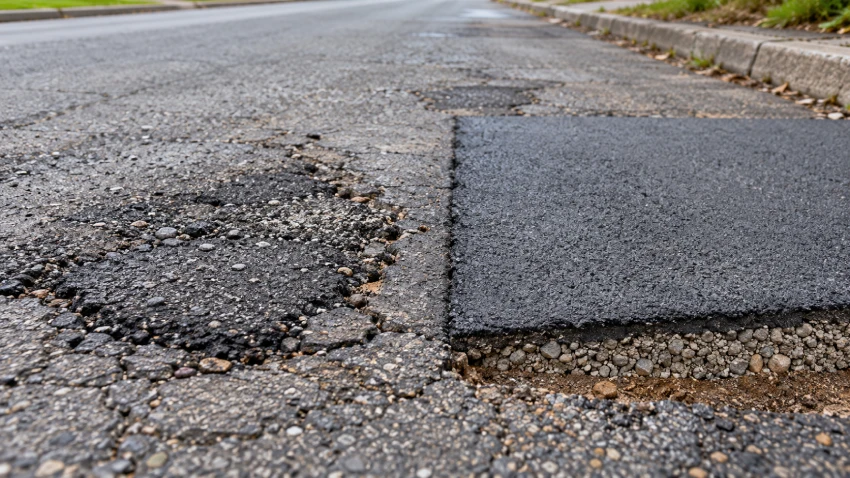
The real difference between professional road surface repair and DIY patching is diagnosis. DIY patching normally treats the visible defect. Professional repair checks the surrounding surface, depth, drainage, edge stability, traffic load, base condition, and whether the defect is part of wider asphalt fatigue or structural failure.
UK road maintenance data shows why surface repair cannot be treated casually. The Asphalt Industry Alliance’s ALARM 2025 reporting said 1.9 million potholes were filled at a cost of £137.4 million, while the wider carriageway repair backlog reached £16.81 billion. That scale points to a bigger truth: reactive patching has a role, but long-term surface performance depends on planned repair, correct materials, and base condition.
Professional Repair Vs DIY Patching Comparison
| Repair factor | DIY patching | Professional road surface repair |
| Main purpose | Temporary filling of a visible defect | Cause-led repair of surface and base failure |
| Surface diagnosis | Usually limited to what is visible | Checks depth, edges, drainage, traffic, and base |
| Material choice | Usually bagged cold patch or basic filler | Cold lay, hot mix, tarmac, asphalt, machine lay, or resurfacing |
| Compaction | Often hand tamped | Mechanically compacted where needed |
| Durability | Depends heavily on defect size and preparation | Designed around traffic load and failure cause |
| Best use | Small private, low-risk defects | Roads, car parks, commercial yards, access routes, and repeat failures |
| Risk | Water ingress, loose edges, repeat failure | Higher upfront planning, stronger long-term control |
When DIY Patching Makes Sense?
DIY patching can make sense for a small, shallow, low-risk defect on a private surface where there is no heavy traffic, no standing water, and no evidence of surrounding failure. It can also be useful as a temporary measure before proper repair work is arranged.
The problem starts when DIY patching is treated as a permanent fix for a defect caused by base movement, freeze-thaw damage, poor drainage, or repeated vehicle loading. A filled hole can look acceptable for a short period while the surrounding asphalt or tarmac continues to fail.
For homeowners comparing repair approaches, the driveway crack spread timeline is a useful supporting read because cracks are often the first warning sign before a surface breaks into larger patches.
Where DIY Road Patches Usually Fail?
DIY patches usually fail at the edges. If the damaged area is not squared off, cleaned, dried where required, filled at the right depth, and compacted correctly, water can get into the joint between the old surface and the new patch. Once that happens, traffic movement can break the patch loose.
Cold patching also struggles when the base below the pothole is unstable. The surface may be filled, but the underlying void, soft sub-base, or failed binder layer remains. That is why a pothole can reappear in the same place after several DIY attempts.
For pothole-specific comparisons, the cold patch and hot tarmac differences help explain why material choice matters when deciding between temporary patching and longer-term repair.
Why Professional Road Surface Repair Lasts Longer?
Professional road surface repair lasts longer because the repair method is matched to the defect. A small pothole, surface fretting, asphalt fatigue crack, failed utility reinstatement, sinking edge, and damaged car park bay do not all need the same response.
Total Surfacing Solutions can assess whether the right answer is patch repair, cut-out repair, resurfacing, tarmacadam renewal, asphalt surfacing, machine laid tarmac, drainage correction, or line marking after surface restoration. For highways-style defects, commercial access routes, estates, and car parks, road surfacing contractors in Hertfordshire can treat the repair as a surface system rather than a loose patch.
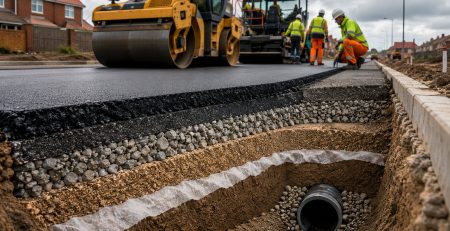
For deeper background on the build-up below the surface, the road surface layer sequence gives useful context on why the visible wearing course is only one part of the repair.
Pothole Repairs: Temporary Fill Or Proper Fix?
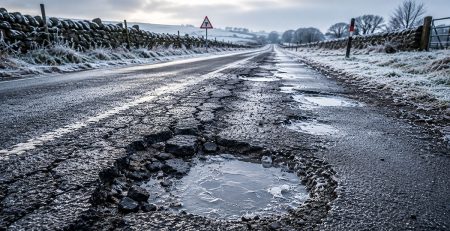
Potholes form when the surface loses support, breaks apart, and allows traffic to loosen the surrounding material. Filling the hole can help in the short term, but the repair must deal with loose edges, standing water, depth, compaction, and traffic use.
Total Surfacing Solutions provides surface repair in Hertfordshire for private roads, driveways, car parks, access routes, and commercial sites where repeat defects need more than a quick fill.
For method selection, the UK pothole repair method overview is a strong next step because it separates reactive filling from more controlled repair techniques.
Cost, Disruption, And Long-Term Value
DIY patching looks cheaper at first because the material cost is visible and the labour is your own. The hidden cost is repetition. If the same patch fails several times, the surface can become more uneven, water can spread under the edges, and the eventual repair can become larger.
Professional repair costs more upfront because it includes preparation, equipment, material selection, compaction, disposal where needed, traffic control where relevant, and workmanship. On commercial sites, the value is often in reducing repeat disruption, protecting vehicles, and keeping access routes usable.
The pothole repair budget factors can help readers understand which repair variables change the scope without turning the decision into guesswork.
Repair Decision Matrix
| Surface condition | Better short-term choice | Better long-term choice |
| Small shallow defect on private driveway | DIY patch may hold temporarily | Professional check if it returns |
| Pothole with loose edges | Temporary fill only if urgent | Cut-out and compacted repair |
| Cracks across asphalt | Crack treatment may slow spread | Investigate fatigue and base failure |
| Commercial car park pothole | Temporary make-safe patch | Professional repair and layout review |
| Road surface ponding | DIY fill will not solve it | Drainage-led repair or resurfacing |
| Repeated same-location failure | DIY patch is poor value | Diagnose base, load, and water cause |
Asphalt Surfacing And Fatigue Cracking
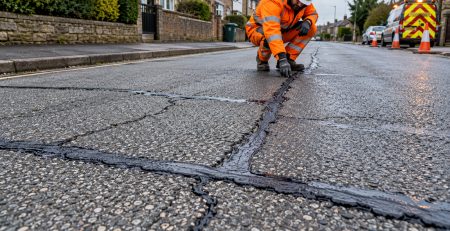
Asphalt damage is often deeper than it looks. Fatigue cracking, alligator cracking, edge break, and rutting can indicate that the surface is flexing under traffic or losing support below. A DIY patch over fatigue cracking may only hide the issue.
Total Surfacing Solutions can assess whether asphalt surfacing needs localised repair, partial resurfacing, or a more complete build-up correction. For readers comparing visible cracking with structural failure, the asphalt fatigue cracking causes provide useful supporting context.
Where the defect affects a business park, car park, or industrial yard, professional repair is usually the safer route because vehicle loading, pedestrian movement, and liability need to be considered alongside appearance.
Tarmacadam Driveways And Access Roads
Tarmacadam driveways and access roads often fail at turning areas, edges, and drainage points. DIY patching can fill a small defect, but it rarely restores the finish, level, or compaction needed for a tidy long-term result.
Total Surfacing Solutions installs and repairs tarmac driveways in Hertfordshire where a worn or failing surface needs a more consistent finish. For a road surface repair vs DIY patching decision, tarmac condition matters because thin, brittle, or cracked areas may not bond well with a basic patch.
For driveway owners planning beyond a single defect, the tarmac driveway thickness guide explains why depth and construction affect long-term performance.
Machine Laid Tarmac For Larger Repairs
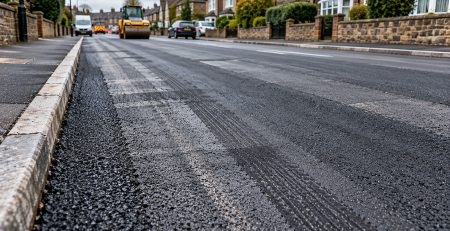
Machine laid tarmac is usually relevant when the repair area is too large, too important, or too heavily used for hand patching to give a consistent finish. It can create better levels, compaction, and surface uniformity on access roads, commercial entrances, car parks, and longer driveways.
Total Surfacing Solutions provides tarmac installation in Hertfordshire where the repair requires a durable and even surface rather than isolated patches.
For readers comparing installation approaches, the machine and hand lay tarmac comparison is directly relevant because it explains when scale and finish quality change the repair method.
Base Course Preparation Decides The Result
The base course is often the difference between a repair that lasts and a patch that breaks up. If the base is wet, weak, contaminated, too thin, or poorly compacted, surface repair will keep failing.
Professional repair work checks what sits below the surface, especially when defects repeat in the same place. The base course preparation principles are useful because they show why durable road surfaces depend on what cannot be seen after the job is finished.
This is where DIY patching is weakest. It usually cannot investigate or rebuild the layers below the visible defect, so it may only delay the failure.
Commercial Surfacing And Car Park Repairs
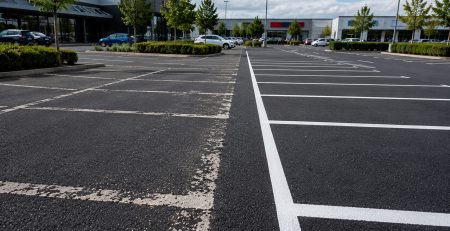
Commercial surfacing defects carry extra risk because they affect customers, staff, deliveries, parking, drainage, and vehicle movement. A DIY patch in a car park can become loose, uneven, or visually poor, especially where vans and repeated turning stress the same area.
Total Surfacing Solutions supports commercial surfaces, private roads, yards, and car parks with repair methods that consider access, traffic flow, surface strength, and safety. For business premises, the business park surfacing maintenance framework helps show why planned maintenance is usually better than waiting for defects to spread.
For dedicated parking areas, the Hertfordshire car park surface planning is also relevant where surface repair needs to protect the customer route as well as the parking bay.
Line Marking After Road Surface Repair
Line marking should normally follow surface repair, not precede it. If bays, arrows, disabled spaces, hazard areas, or pedestrian routes are marked over a failing surface, the markings may wear quickly or sit across uneven patches.
Total Surfacing Solutions can provide coloured surfacing in Hertfordshire after the road surface has been repaired or resurfaced. On commercial sites, clear markings help guide drivers away from weak edges, pothole-prone corners, and unsafe circulation routes.
This is especially useful where a car park has had repeated patching and now needs both surface correction and a clearer traffic layout.
Resin Bound Driveways And Surface Repairs
Resin bound driveways are different from tarmac and asphalt because the surface system, base, permeability, edge restraint, and resin condition all affect repair options. A DIY patch is rarely appropriate for a visible resin surface because colour, texture, permeability, and finish consistency matter.
Total Surfacing Solutions can advise on resin bound surfacing contractors in Hertfordshire where the existing surface has failed, cracked, faded, or needs replacement with a more suitable finish.
For resin-specific issues, the resin surface defect patterns explain how installation, base condition, and maintenance can affect performance.
Block Paving, Brickwork, And Edges
Block paving and brickwork defects often start at the edge. Movement, poor restraint, drainage issues, or weak boundaries can make the surface sink or spread. DIY patching rarely solves this because the failure is structural rather than just visual.
Total Surfacing Solutions can install a block paving driveway in Hertfordshire where the surface needs proper restraints, falls, jointing, and practical long-term maintenance.
Where walls, kerbs, edging, or hard landscaping are damaged, hard surface repair in Hertfordshire can help stabilise the surrounding structure so the repaired road or driveway surface is not undermined again.
Outdoor Steps And Safe Access
Road surface repair often connects to wider access problems. A driveway, car park, or private road may also meet paths, steps, entrance thresholds, and pedestrian areas. If these transitions are cracked, uneven, or poorly drained, patching the vehicle surface alone may not remove the hazard.
Total Surfacing Solutions can provide complete driveway solutions in Hertfordshire where steps, paths, driveway edges, and surface levels need to work together.
This is especially relevant for homes, rental properties, commercial entrances, and sites where pedestrians cross vehicle routes.
Low Maintenance Surfacing Reduces Repeat Patching
Low maintenance surfacing reduces repeat patching by matching the surface to the traffic, drainage, and usage. It does not mean no maintenance. It means the driveway, road, car park, or yard is less likely to trap water, break at weak edges, or need constant spot repairs.
Total Surfacing Solutions offers low maintenance driveway in Hertfordshire options where clients want a more practical surface after repeated patch failures.
For road and commercial settings, the heavy-use surfacing material factors help connect material choice with vehicle load, wear, and long-term repair planning.
SUDS Compliant Surfacing And Drainage
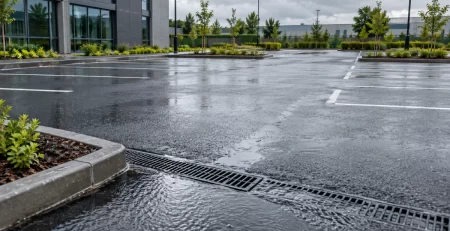
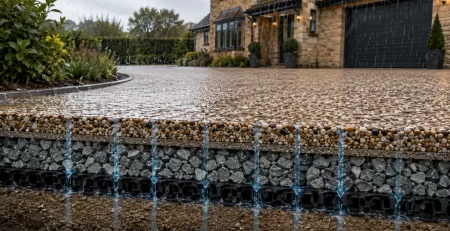
Drainage is a major reason professional road surface repair beats DIY patching. If water cannot drain away, even a tidy patch can fail. Water gets into joints, freezes, expands, softens layers, and weakens the bond between old and new material.
UK government guidance says a new or replacement driveway does not need planning permission if it uses permeable or porous surfacing, such as gravel, permeable concrete block paving or porous asphalt, or directs rainwater to a lawn or border to drain naturally. Traditional impermeable surfacing may need planning permission where no permeability is provided.
For driveways and private surfaces, Total Surfacing Solutions can consider SUDS compliant surfacing alongside repair, resurfacing, and replacement choices so water is not left to damage the same area again.
Fast Surfacing Installation Without Cutting Corners
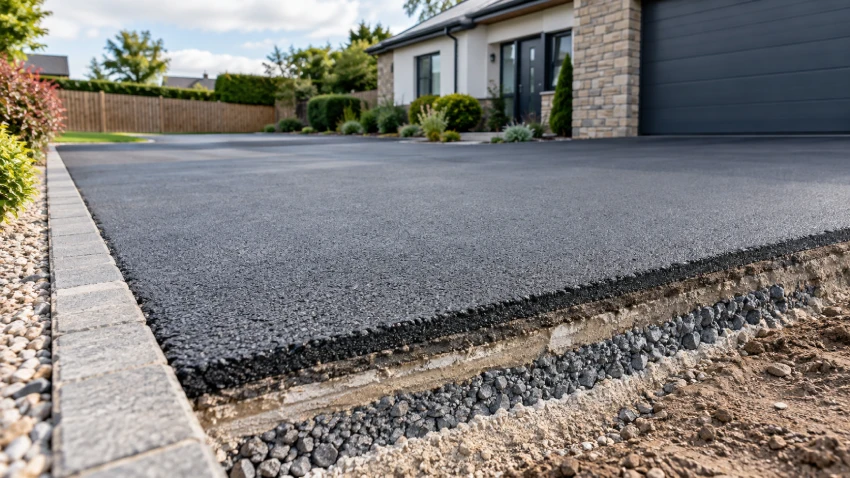
Fast surfacing installation is valuable when a driveway, car park, access road, or commercial route needs to return to use quickly. It should not mean skipping preparation, compaction, edge cutting, base assessment, or drainage checks.
Total Surfacing Solutions provides driveway installation in Hertford where clients need efficient work without treating speed as the only priority.
The repair still has to match the surface. A quick but well-planned professional repair is different from a DIY patch placed into a dirty, wet, or unstable hole.
Professional Road Surface Repair Vs DIY Patching: Area Coverage
Local surface repair decisions depend on traffic, property type, drainage, access layout, and the level of finish expected. Total Surfacing Solutions serves Hertfordshire, Bedfordshire, Oxford, Cambridgeshire, and Essex with road surfacing, driveway repair, pothole repair, tarmacadam, asphalt, resin bound surfacing, block paving, machine lay tarmac, and commercial car park work.
Bedfordshire
In Bedfordshire, professional road surface repair can help homeowners and businesses move beyond repeat DIY patching where driveway edges, access roads, or car park areas keep breaking down. Total Surfacing Solutions can assess whether resin bound surfacing, tarmac, asphalt repair, or resurfacing is the better long-term route.
Oxford
Oxford properties can include tight entrances, older boundaries, and driveway layouts where drainage and levels need careful attention. Total Surfacing Solutions can advise on resin bound driveways and surfacing repairs where temporary patching does not solve the underlying defect.
Cambridgeshire
In Cambridgeshire, repeat surface defects may be linked to traffic use, edge movement, water retention, or worn driveway construction. Total Surfacing Solutions can assess whether a targeted professional repair or a wider resurfacing plan is more practical than repeated DIY patching.
Essex Resin Bound Driveways
For Essex resin bound driveways, repair decisions need to consider surface finish, colour match, permeability, and base condition. Total Surfacing Solutions can advise whether a resin surface can be repaired locally or whether a more complete resurfacing approach is needed.
Essex Driveways
Essex driveway repairs often involve choosing between a quick patch and a longer-term surface correction. Total Surfacing Solutions can inspect cracked tarmac, failed asphalt, loose block paving, and worn driveway areas before recommending the most practical repair method.
Essex Pothole Repairs
For pothole repairs in Essex, professional work can reduce repeat failures by cutting back weak material, preparing the area correctly, and compacting the repair. This is especially important for access roads, commercial yards, and car parks where a loose DIY patch can become a hazard.
Essex Machine Lay Tarmac
Machine lay tarmac in Essex is useful for larger repair areas, private roads, and commercial surfaces that need consistency. Total Surfacing Solutions can use machine-laid methods where hand patching would leave uneven levels or poor long-term performance.
Hertfordshire Resin Bound Driveways
For Hertfordshire resin bound driveways, Total Surfacing Solutions can assess cracking, fading, surface movement, drainage, and base suitability before recommending repair or replacement. This helps avoid patching a decorative surface in a way that leaves visible inconsistency.
Hertfordshire Driveways
Hertfordshire driveway repairs should consider surface type, daily vehicle use, drainage, and whether the defect is isolated or spreading. Total Surfacing Solutions can help homeowners decide when DIY patching is only a temporary measure and when professional repair is the better long-term option.
Hertfordshire Pothole Repairs
Hertfordshire pothole repairs often need more than a surface fill, especially where the same defect keeps returning. Total Surfacing Solutions can repair potholes in driveways, car parks, access roads, and commercial areas with methods matched to traffic and surface condition.
Hertfordshire Machine Lay Tarmac
Machine lay tarmac in Hertfordshire can suit larger driveways, private roads, and commercial areas where a smooth, compacted, consistent repair is required. Total Surfacing Solutions can use this approach when isolated DIY patching would leave a weak or uneven finish.
Final Advice From Total Surfacing Solutions
Professional road surface repair vs DIY patching is not just a budget comparison. It is a risk, durability, safety, and surface-condition decision. DIY patching can be useful for very small, low-risk temporary repairs, but repeated potholes, commercial surfaces, asphalt fatigue, failed tarmac, poor drainage, and base movement need proper inspection. Total Surfacing Solutions can help clients needing driveway services in Hertford choose the repair method that fits the defect, the surface, and the way the area is used.
FAQs About Professional Road Surface Repair Vs DIY Patching
Is DIY patching ever suitable for road surface repair?
DIY patching can be suitable for a very small, shallow defect on a private, low-traffic surface where there is no standing water, no loose surrounding material, and no visible base failure. It should be treated as a temporary or limited repair, not a full replacement for professional road surface repair. If the same defect returns, spreads, crumbles at the edge, or sits in a traffic route, the cause is likely deeper than the visible hole.
Why does a DIY pothole patch fail so quickly?
A DIY pothole patch often fails because the hole was not prepared correctly, the edges were weak, the material was not compacted enough, or water remained below the patch. The patch may sit in the hole for a short time, but traffic movement and water ingress can break the bond around the edge. If the base below the pothole is soft or voided, the surface patch has very little chance of lasting.
Is cold patch or hot tarmac better for potholes?
Cold patch can be useful for urgent temporary pothole filling, especially where a make-safe repair is needed quickly. Hot tarmac or professionally specified asphalt repair is usually better for longer-term performance because it can be installed, levelled, and compacted more effectively in suitable conditions. The right choice depends on pothole size, traffic level, weather, surface condition, and whether the repair is temporary or permanent.
When should a road surface be resurfaced instead of patched?
A road surface should be considered for resurfacing when defects are widespread, potholes keep returning, cracks connect across large areas, water ponds on the surface, or the wearing course has become brittle and loose. Patching individual holes may no longer be efficient when the surrounding surface has lost strength. Professional assessment can identify whether localised repair, overlay, plane-and-lay, or deeper reconstruction is the right option.
Are potholes dangerous for commercial sites?
Potholes can be dangerous on commercial sites because they affect vehicles, pedestrians, delivery routes, parking areas, and customer access. They can damage tyres, create trip risks, hold water, and make the business premises look poorly maintained. The Highway Code notes that diesel spillage can significantly reduce tyre grip on road surfaces, which is a reminder that surface condition and contamination both matter for safety. Commercial potholes should usually be repaired professionally rather than repeatedly filled with temporary material.
Does drainage affect road surface repair?
Drainage affects almost every road surface repair. If water sits on the surface or enters cracks and joints, it can weaken the layers below, loosen patch edges, and make potholes return. Freeze-thaw movement can make this worse in cold weather. Professional repair should check surface falls, outlets, surrounding levels, and whether the repair area is collecting water. DIY patching rarely deals with drainage, which is one reason repeat failure is common.
Is professional repair always more expensive than DIY patching?
Professional repair is usually more expensive at the start, but it may be better value when the defect is serious, repeated, or used by vehicles every day. DIY patching can become expensive when it fails several times, spreads the damaged area, or delays the proper repair until more material must be removed. The right comparison is not only material cost; it is disruption, durability, safety, finish, and whether the underlying cause has been fixed.
How long should a professional road surface repair last?
The lifespan of professional road surface repair depends on the defect, repair method, materials, traffic load, drainage, base condition, and workmanship. A properly prepared and compacted repair on a stable base should last longer than a loose DIY patch, but no repair can overcome ongoing water ingress, excessive loading, or structural base failure indefinitely. Where the surrounding surface is already worn out, resurfacing may be more realistic than expecting a patch to perform like a new road.