What Is a Driveway Apron?
A driveway apron looks like a small entrance section, but it often carries the highest stress of the entire driveway. The first step is to understand Structural Architecture and Dimensions, Strict Municipal Regulations & Permits, drainage, slope, public access rules, and the Estimated Cost Breakdown before changing it. The experienced solution is to treat the apron as a structural transition zone, not a decorative patch, especially where the driveway meets a pavement, kerb, road, or resin-bound surface.
What Is a Driveway Apron?
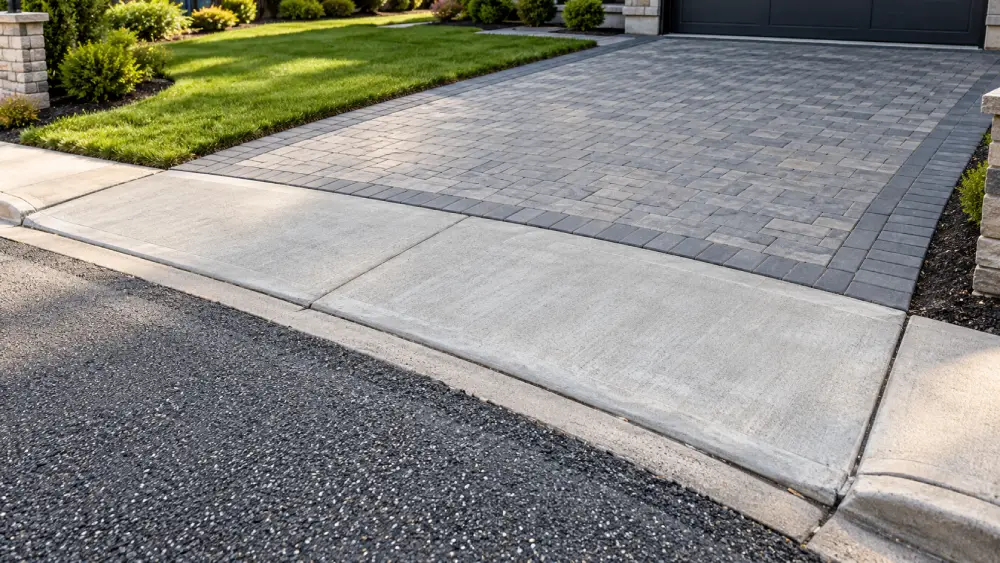
A driveway apron connects the road edge to the private driveway. This section explains what it is, its purpose, where it’s located, and why it affects access, drainage, and surface durability.
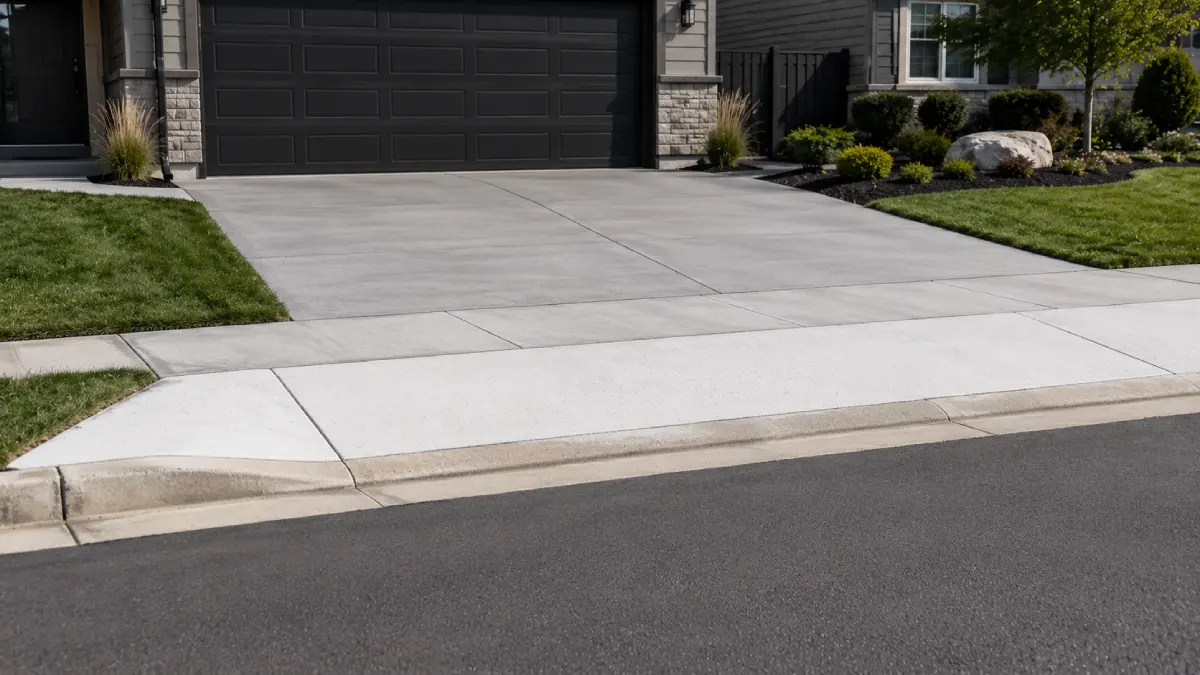
What Is a Driveway Apron? A driveway apron is the section where your driveway meets the road, pavement, kerb, or public access edge. It is sometimes called a driveway approach, skirt, crossover, or entrance apron.
For anyone checking the meaning of a driveway apron, the simplest explanation is a reinforced entrance connection between a private parking space and the street. A driveway approach vs apron comparison is useful because local terminology may refer to the whole access crossing or only its surfaced entrance. In practical terms, the purpose of a driveway apron comes down to supporting vehicle movement and protecting the connection from wear.
This area usually takes more stress than the rest of the driveway. Cars slow down, turn in, brake, and accelerate across the apron. Delivery vans, bins, trailers, and repeated tyre movement also concentrate pressure here.
A driveway apron helps with:
- Smooth vehicle access
- Kerb transition
- Drainage control
- Edge protection
- Pavement connection
- Driveway entrance strength
- Reduced erosion
- Better driveway appearance
A specialist such as Total Surfacing Solutions can assess whether the apron needs resurfacing, widening, drainage correction, or a resin-bound finish that connects neatly with the main driveway.
| Apron Feature | Why It Matters |
| Road transition | Helps vehicles enter smoothly |
| Strong base | Resists rutting and cracking |
| Correct slope | Prevents pooling near the entrance |
| Edge detail | Protects driveway borders |
| Legal access | Avoids council or highway issues |
| Surface match | Improves kerb appeal |
A driveway apron is small in size but big in function. If it fails, the rest of the driveway can start breaking at the entrance.
Structural Architecture and Dimensions: Apron Build
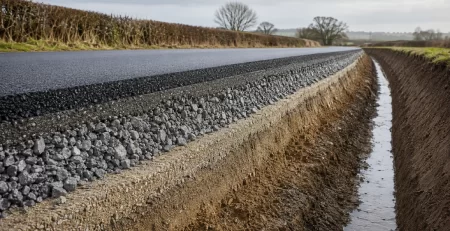
Structural Architecture and Dimensions decide whether an apron can handle turning tyres, vehicle weight, drainage, and edge stress. This section explains typical width, depth, flares, and base strength.
Structural Architecture and Dimensions are important because the apron sits where public access meets private surfacing. It must be strong enough for regular vehicle movement and shaped correctly for safe entry.
The apron often covers the first section of the driveway near the street. It may include a throat, which is the narrower entry width, and flares, which are widened side sections that help vehicles turn in smoothly.
Typical design details may include:
- Apron length around 8–15 feet
- Single-car throat width around 10–12 feet
- Double-car throat width around 18–24 feet
- Wider flares toward the road
- Stronger sub-base than normal paths
- Correct edge restraint
- Smooth transition to the main drive
- Suitable fall toward drainage
The exact dimensions depend on local rules, access width, pavement position, kerb shape, vehicle type, and driveway layout.
The correct driveway apron dimensions should reflect the vehicle turning path rather than a standard measurement alone. At the narrow entry point, driveway throat width affects how comfortably a car passes through, while the driveway flare provides extra space where turning wheels meet the road. These details create a smoother driveway-to-road transition.
People planning access changes should also check the driveway width guide before approving the apron shape. A narrow apron can make turning awkward and increase edge damage.
| Apron Part | Practical Role |
| Throat | Main vehicle entry width |
| Flares | Helps turning into the driveway |
| Sub-base | Carries a vehicle load |
| Surface layer | Handles tyre movement |
| Expansion joint | Reduces cracking stress |
| Drainage fall | Moves water away |
A good apron should feel smooth under tyres, not sharp, sunken, raised, or broken at the edges. Poor geometry often creates tyre scuffing and early cracking.
Strict Municipal Regulations & Permits: Approval First
Strict Municipal Regulations & Permits can decide what you are allowed to build near the road. This section explains dropped kerbs, public highway areas, pavements, and local approval checks.
Strict Municipal Regulations & Permits matter because the apron often touches or crosses land controlled by the local authority. In the UK, vehicle access over a public pavement normally needs a proper dropped kerb or vehicle crossover.
You usually cannot simply remove kerbs, alter the pavement, or create a new access point without approval. Local councils control these areas to protect pedestrians, drainage, utilities, road safety, and public assets.
If you are asking who is responsible for driveway apron upkeep, first establish where the private boundary ends and the highway authority’s responsibility begins. Any work crossing a public pavement may require specific permission. Likewise, the question can you change your driveway entrance should be checked with the relevant council before any kerb or crossover is altered.
Before changing an apron, check:
- Dropped kerb approval
- Highway boundary
- Public pavement rules
- Conservation area limits
- Listed building restrictions
- Visibility at the road
- Nearby trees
- Drainage direction
- Utility covers
- Neighbouring access points
People researching widen driveway permission UK should check the apron rules early. A widened driveway still needs lawful access if vehicles cross the pavement.
| Permit Issue | Why It Matters |
| Dropped kerb | Allows legal vehicle access |
| Pavement crossing | Public safety concern |
| Kerb alteration | Council-controlled work |
| Tree protection | Root damage risk |
| Drainage | Prevents highway runoff |
| Conservation rules | May restrict frontage changes |
The safest order is simple: check access permission first, design the apron second, and install the surface last. Building before approval can create expensive rework.
Estimated Cost Breakdown: Real Pricing
The estimated cost breakdown depends on material, size, demolition, permits, drainage, and apron strength. This section explains why apron costs vary more than homeowners expect.
When estimating driveway apron cost, separate construction and material requirements from any council-controlled crossover fees. The condition of the existing base and the amount of excavation needed can change the scope significantly.
The estimated cost breakdown is not just the surface price. A driveway apron may need excavation, old apron removal, waste disposal, sub-base rebuild, kerb detail, drainage correction, surface finishing, and permit costs.
Costs usually rise when the apron needs heavier construction, wider access, stronger surfacing, or council-controlled kerb work. Decorative materials such as pavers, cobbles, or exposed aggregate can also cost more than plain asphalt or concrete.
Common cost factors include:
- Apron width
- Apron depth
- Surface material
- Existing apron removal
- Sub-base preparation
- Drainage work
- Kerb or crossover work
- Permit or application fees
- Labour access
- Surface matching
For broader project budgeting, driveway widening cost helps explain how excavation, drainage, and access details affect the final quote.
| Material Choice | Cost Direction | Main Watch Point |
| Gravel | Lower | Movement and edge control |
| Asphalt | Mid | Heat, curing, and seams |
| Concrete | Mid to high | Cracking and joints |
| Pavers | Higher | Labour and edge restraint |
| Resin bound | Mid to high | Base and permeability |
People comparing paver driveway cost should remember that pavers can look strong at the entrance, but need a well-built base and edge restraint.
A low apron quote may not include council approval, old material removal, drainage, or kerb work. Always ask what is included before comparing prices.
Drainage and Expansion: Crack Control
Drainage and expansion details prevent apron failure. This section explains water movement, expansion joints, slope, erosion, and why the entrance can crack without flexible separation.
A driveway apron sits between moving surfaces. The road, kerb, pavement, apron, and private driveway may all expand, settle, and drain differently.
That is why expansion joints are important in concrete apron work. They create a controlled separation between sections, helping reduce cracking when temperatures change.
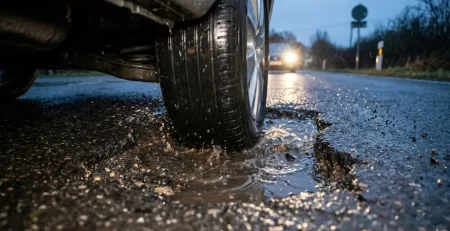
Drainage also matters. If water sits where the apron meets the road or driveway, it can soften the base, freeze, erode edges, and create potholes or cracks.
Effective driveway apron drainage depends on surface falls, suitable outlets, and the way the apron joins surrounding hardstanding. Where damage is already visible, concrete driveway apron repair may involve correcting the underlying drainage or base rather than simply patching cracks.
Apron drainage should be checked:
- Slope away from the house
- No water flowing onto neighbours
- No water pooling at the kerb
- No erosion at driveway edges
- Clear channel or roadside drainage
- Correct connection to the main driveway
- Stable base below the apron
- No trapped water under surfacing
For water movement at entrances, driveway culvert may be useful. Some properties need more than surface slope to manage runoff.
| Drainage Problem | Likely Result | Better Detail |
| Water at the kerb | Potholes and erosion | Correct fall |
| Water to the house | Damp or flooding risk | Channel drainage |
| Water to the neighbour | Disputes | On-site drainage |
| No expansion joint | Cracking | Flexible separation |
| Weak apron edge | Crumbling | Strong edge restraint |
For sloping entrances, driveway on slope should be reviewed before the apron is designed. Slope changes grip, drainage, and surface stress.
A strong apron is not only thick. It is shaped, drained, jointed, and supported correctly.
Materials and Surface Choice: Match Driveway

The apron material should match the driveway’s structure, use, and appearance. This section compares resin, asphalt, concrete, pavers, and gravel for apron work.
The best driveway apron material depends on traffic, road edge, council rules, property style, and the main driveway surface. A neat apron should look connected, not patched.
A concrete driveway apron can provide a rigid entrance where jointing and sub-base preparation are appropriate. An asphalt driveway apron may suit a flexible paved approach, while a gravel driveway apron generally needs careful containment at the road edge. A paver driveway apron offers a segmented finish but relies on well-supported edges to resist turning forces.
Asphalt is practical and common but can soften in heat and needs curing care. Concrete is strong but needs joints and can crack if poorly detailed. Pavers look attractive but need strong edge restraints. Gravel may move unless contained properly.
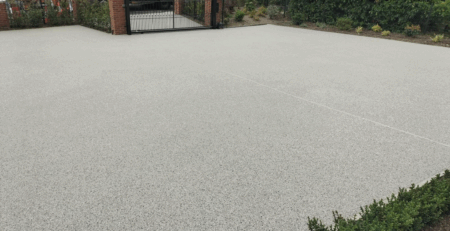
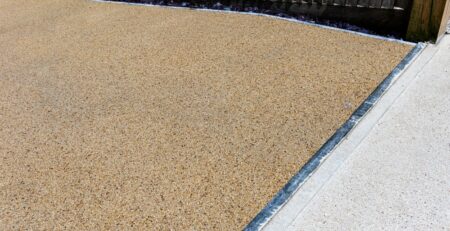
Resin-bound surfacing can work well where a smooth, permeable, modern finish is desired. It needs the right base, correct drainage, and professional installation to perform properly.
For resin comparisons, resin driveway advantages and disadvantages help explain the strengths and limits before choosing it near the entrance.
| Surface | Main Advantage | Main Watch Point |
| Resin bound | Clean, permeable finish | Needs a correct base |
| Asphalt | Practical and familiar | Curing and edge support |
| Concrete | Strong structure | Joint and crack control |
| Pavers | Decorative and repairable | Edge restraint |
| Gravel | Lower-cost option | Movement under tyres |
If the apron connects to new asphalt, new asphalt parking time matters. Early vehicle use can mark or stress the surface before it hardens.
Material choice should match the entrance load. The apron must handle turning, braking, and repeated use better than a quiet decorative path.
Area Coverage for What Is a Driveway Apron
Local apron design depends on property frontage, council rules, drainage, access width, and driveway material. These area sections explain how Bedfordshire, Cambridgeshire, Essex, Hertfordshire, and Oxford homeowners should plan apron work.
Smooth Resin Driveways In Bedfordshire
For resin bound driveways in Bedfordshire, apron planning often starts with access width. Many homes need a smooth entrance for one or two vehicles, and the apron must support repeated turning without edge breakdown.
A resin-bound driveway can look clean when it connects neatly to the entrance, but the apron still needs a stable base and correct boundary detail. If the access is too narrow, tyres may cut across grass, edging, or the weakest apron corner.
Bedfordshire homeowners should check the parking layout before resurfacing. A well-sized apron reduces daily steering stress and keeps the entrance safer for visitors, deliveries, and family vehicles.
Smooth Resin Driveways In Cambridge
For resin bound driveways in Cambridgeshire, apron design should focus strongly on drainage. Flat frontage areas can allow water to sit near the road edge or driveway entrance if the fall is poorly planned.
A resin-bound surface can support water movement when it is installed over a suitable permeable base. But if the apron meets dense concrete, blocked drains, or road-edge pooling, drainage correction may be needed before the final surface is laid.
Cambridgeshire homeowners should ask where water will go during heavy rain. If the apron becomes a low point, it may collect water, freeze in winter, or start breaking at the edge.
Smooth Resin Driveways In Essex
For resin bound driveways in Essex, the apron is often the first visible part of the driveway. A clean entrance can improve kerb appeal and make the property frontage look more organised.
The apron should match the main driveway surface, not look like an afterthought. If the old entrance is cracked or stained, resurfacing only the middle of the drive may leave the frontage looking unfinished.
Homeowners thinking about sale appeal can also review driveway increase home value. Extra parking and a neat entrance can help presentation when the access is legal and well-built.
Smooth Resin Driveways In Hertfordshire
For resin bound driveways in Hertfordshire, sloped apron areas need extra care. A driveway entrance on a gradient takes braking force, turning pressure, and rainwater movement at the same time.
If resin-bound surfacing is used, anti-slip texture and drainage should be discussed early. A shaded or sloped apron can become harder to manage in winter if moss, algae, or standing water develops.
For cold-weather safety, resin driveways slippery. Winter grip depends on surface texture, water movement, cleaning, and de-icing habits.
Smooth Resin Driveways In Oxfordshire
For resin bound driveways in Oxford, apron design may need more sensitivity because of traditional frontages, older streets, conservation context, and pavement access details.
A driveway apron should suit the property’s character while still handling vehicle stress. Resin-bound surfacing can provide a neat, controlled finish, but colour, edging, and drainage must fit the setting.
Oxford homeowners should confirm whether the apron affects the pavement, dropped kerb, boundary wall, or public access edge. A small entrance change can involve more rules than a private driveway resurfacing project.
Final Apron Checklist: Build Correctly
A driveway apron should be planned before the surface is chosen. This section gives a practical checklist to avoid cracking, drainage problems, permit issues, and poor entrance design.
Before driveway apron installation, confirm that the proposed geometry, surface material, drainage, and any required approvals have been considered together. Treating the apron in road construction as a load-bearing transition helps explain why its foundations and edge details are important. For driveway apron parking, check whether the entrance allows safe access without obstructing the footway or road.
Before approving apron work, check:
- Is the apron on private land or public access?
- Is a dropped kerb involved?
- Does the council need to approve changes?
- What surface material is allowed?
- Is the sub-base strong enough?
- Does the apron need expansion joints?
- Where will rainwater drain?
- Is the width practical for vehicles?
- Will the apron match the driveway?
- Will winter grip be safe?
A contractor such as Total Surfacing Solutions can inspect the entrance, review the current driveway surface, and recommend a finish that suits the property.
| Checklist Item | Best Outcome |
| Approval checked | No council conflict |
| Base specified | Less settlement |
| Width planned | Easier vehicle access |
| Drainage designed | Less erosion |
| Surface matched | Better appearance |
| Edges reinforced | Less cracking |
For unstable ground, guides on muddy driveway fix and driveway erosion fix can help before apron resurfacing begins.
A good apron is not just the first part of the driveway. It is the part that protects the entrance, supports vehicles, and connects private surfacing with public access safely.
Frequently Asked Questions: Driveway Apron
1. Is a driveway apron the same as a dropped kerb?
No. A driveway apron is the entrance section of the driveway. A dropped kerb is the lowered kerb or pavement crossing that allows legal vehicle access from the road to the property.
2. Who usually owns the driveway apron?
Ownership depends on location and highway boundaries. Some apron or crossover areas may be controlled by the local authority, especially where they meet the pavement or public road.
3. How wide should a driveway apron be?
The width depends on driveway type, vehicle use, council rules, and whether it serves one or two cars. A single-car entrance is often narrower than a double-car entrance with wider turning flares.
4. Can resin-bound be used on a driveway apron?
Yes, resin-bound can be suitable when installed over the right base with proper drainage and edge restraint. Council rules, access type, and public highway restrictions should be checked first.
5. Why do driveway aprons crack?
Aprons crack because of weak sub-base, poor drainage, vehicle stress, missing expansion joints, frost movement, bad edge support, or poor connection between the road and private driveway.