How Line Marking Helps Prevent Warehouse Accidents
Warehouse accidents often happen when people, forklifts, pallets, loading areas, and restricted zones share the same space without clear visual control. The serious action is to mark movement paths, danger points, crossing areas, and storage zones before confusion causes injury. The experienced solution is a planned line marking system that separates pedestrians and vehicles, identifies hazards, reduces congestion, and keeps safety instructions visible during daily operations. A professional surfacing and marking partner, such as Total Surfacing Solutions can help create a layout that fits the real movement of your warehouse.
How Line Marking Helps Prevent Warehouse Accidents
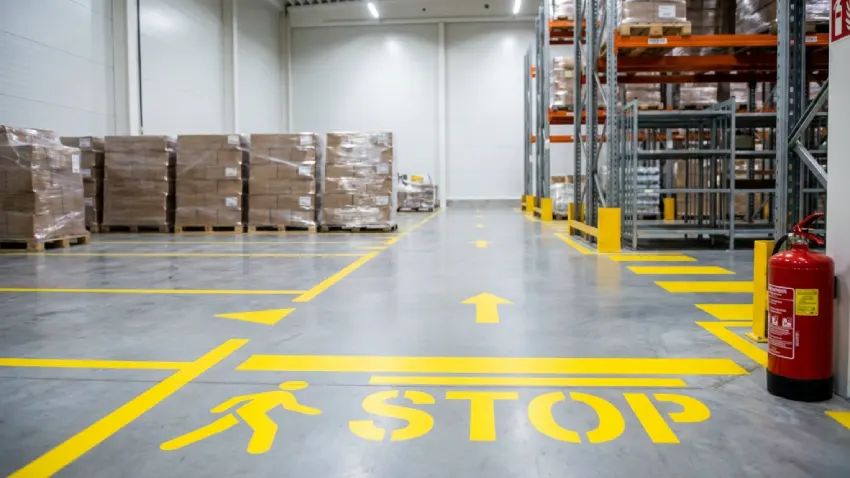
How Line Marking Helps Prevent Warehouse Accidents starts with one simple idea: people make faster and safer decisions when the floor clearly shows where they should move, stop, load, store, or avoid.
In a busy warehouse, verbal instructions are not enough. Workers may be focused on picking, loading, scanning, driving, or moving goods. Clear floor markings give instant visual guidance, even when the space is noisy.
A good warehouse line marking system can show:
- Pedestrian walkways
- Forklift lanes
- Loading bays
- Hazard zones
- Restricted areas
- Crossing points
- Storage zones
- Emergency access routes
- No-parking areas
- Keep-clear zones
Line marking reduces uncertainty. A worker does not need to guess where a forklift may turn. A driver does not need to guess where pedestrians are expected to cross. The best markings are not random lines. They are built around traffic behaviour, site risks, floor condition, and daily workflow.
| Warehouse Risk | Line Marking Role | Accident Reduced |
| Mixed foot and forklift traffic | Separates routes | Collision risk |
| Blind corners | Adds warning zones | Impact risk |
| Loading areas | Defines safe limits | Crush risk |
| Blocked aisles | Shows keep-clear zones | Trip and delay risk |
| Restricted areas | Stops unauthorised access | Exposure risk |
Good line marking is practical, not decorative. It turns safety planning into something workers can see every shift.
Separation of Pedestrians and Vehicles: Safer Routes
Separation of Pedestrians and Vehicles is one of the strongest ways line marking helps prevent warehouse accidents. This section explains how marked routes reduce collision risk between people and moving equipment.
Warehouses often have forklifts, pallet trucks, delivery vehicles, staff, visitors, and contractors moving in the same building. Without a clear separation, people can drift into vehicle routes or cross at unsafe points.
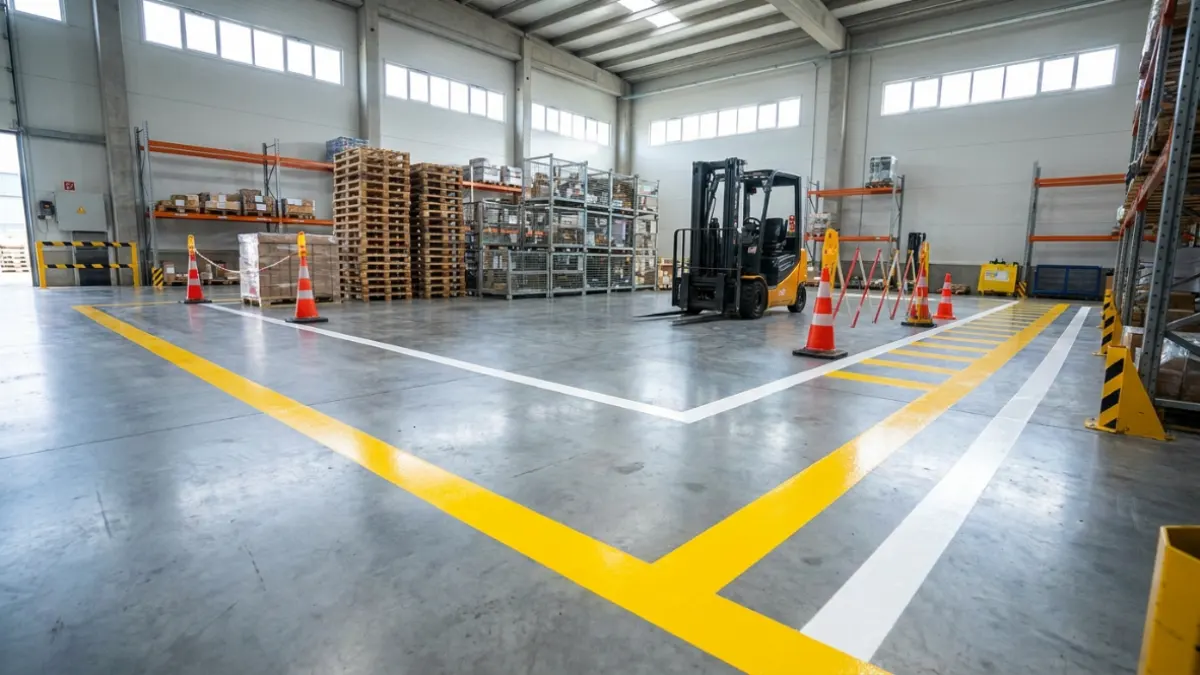
Marked pedestrian walkways give workers a clear route. Forklift lanes show drivers where to travel. Crossing points show where pedestrians are expected to move between aisles, doors, or work areas.
Effective separation may include:
- Solid pedestrian walkways
- Forklift-only lanes
- Marked crossing points
- Stop lines
- Give-way zones
- Doorway warnings
- Barriers with floor markings
- No-walk zones near loading areas
This is where forklift lane markings become especially important. Forklift routes should be predictable, visible, and separated from walking routes where possible.
A safe route plan may look like this:
| Area | Marking Needed | Purpose |
| Main aisle | Forklift lane | Vehicle control |
| Staff route | Pedestrian walkway | Safer walking |
| Junction | Stop line | Collision reduction |
| Door exit | Warning box | Slows movement |
| Loading bay | Exclusion zone | Crush risk control |
When workers understand the layout, they make fewer risky decisions. Drivers also gain clearer expectations. That matters in high-pressure warehouses where time, noise, and deadlines can distract people.
Line marking should also work with signage, barriers, lighting, training, and supervision. Floor markings give a daily visual reminder that keeps those rules active.
Hazard and Restricted Area Identification: Risk Control
Hazard and Restricted Area Identification helps workers notice danger before they step into it. This section explains how markings warn people about loading bays, machinery, chemicals, storage risks, and restricted zones.
Not every warehouse risk is obvious. A floor area may look open but still contain forklift movement, battery charging, spill risk, machine access, or falling-object danger. Markings make those boundaries clear.
Common hazard markings include:
- Yellow hazard borders
- Red restricted zones
- Black-and-yellow danger markings
- Keep-clear boxes
- Loading dock edges
- Machine exclusion areas
- Battery charging zones
- Fire equipment access zones
- Emergency exit routes
Clear hazard zone markings in industrial facilities help workers identify where extra caution is needed. They also help supervisors enforce site safety rules consistently.
A restricted area should not rely only on memory. New staff, agency workers, delivery drivers, and visitors may not know the layout. Floor markings give them immediate direction.
| Hazard Area | Marking Purpose | Safety Outcome |
| Loading dock | Shows edge and exclusion area | Reduces falls and crush risk |
| Machinery | Keeps people outside the danger zone | Reduces contact risk |
| Fire exit | Keeps access clear | Supports emergency escape |
| Chemical area | Controls access | Reduces exposure |
| Pallet storage | Defines stacking limits | Reduces obstruction |
Warehouse markings are also useful for audits and daily checks. If a restricted zone is blocked, the issue is visible immediately. If a line fades, it signals that maintenance is needed.
Strong hazard marking does not slow work down. It keeps workers alert where the risk is highest.
Traffic Flow and Congestion Reduction: Faster Movement
Traffic Flow and Congestion Reduction helps prevent accidents by reducing confusion, reversing, sudden stopping, and blocked routes. This section explains how line marking improves warehouse movement.
Congestion is a safety risk. When forklifts queue, pallets block aisles, or pedestrians cut through vehicle routes, accident risk increases. Marked traffic flow keeps movement predictable.
Line marking can support:
- One-way forklift routes
- Clear loading paths
- Defined pallet drop zones
- No-storage aisles
- Turning zones
- Waiting bays
- Vehicle parking spaces
- Dispatch and receiving lanes
A warehouse with clear movement lanes works faster because workers spend less time guessing where to place goods or which route to take. This supports line marking for efficient operations as well as safety.
Traffic flow markings also reduce bottlenecks. Forklift drivers can follow planned lanes instead of weaving around pallets or pedestrians. Pickers can move through safe walkways without stepping into vehicle paths.
| Flow Problem | Line Marking Fix | Result |
| Pallets left in aisles | Marked storage bays | Clearer routes |
| Forklift conflict | One-way lanes | Fewer close calls |
| Pedestrian shortcuts | Clear walkways | Safer movement |
| Loading confusion | Bay numbers and lines | Faster dispatch |
| Blocked exits | Keep-clear zones | Safer emergency access |
Traffic control is especially important at junctions, doors, loading bays, and blind corners. These are points where people and equipment often meet unexpectedly.
A good layout should match real operations. If markings fight the natural workflow, people will ignore them. If they support the workflow, safety becomes easier to follow.
Forklift Lane Planning: Collision Prevention
Forklift Lane Planning reduces collision risk by giving drivers and pedestrians a predictable warehouse map. This section explains how forklift lanes should connect with crossings, speed control, and visibility.
Forklifts are useful, but they create serious risk because they are heavy, sometimes quiet, and often operate near people. Clear lane marking helps drivers stay on route and helps pedestrians recognise vehicle zones quickly.
Useful forklift marking features include:
- Dedicated forklift lanes
- Directional arrows
- Stop bars
- Pedestrian crossings
- Slow zones
- Blind-corner warnings
- Loading bay approach lines
- Forklift parking bays
Good forklift markings should be supported by clear workplace rules. Drivers should know where to travel, where to stop, where to reverse, and where pedestrians may cross.
Warehouse managers should also check whether the floor itself supports safe movement. Uneven surfacing, potholes, worn tarmac, or damaged yard areas can affect vehicles before they even enter the warehouse.
Where outdoor yard routes connect with warehouse traffic, tarmac installation services may support safer access roads and loading areas. For larger commercial yards, machine lay tarmac services can help create a smoother, more durable surface for frequent vehicle use.
| Forklift Risk | Marking Control | Support Needed |
| Blind junction | Stop line and warning zone | Mirrors and lighting |
| Pedestrian crossing | Zebra-style route | Driver training |
| Reversing area | Exclusion box | Banksman if needed |
| Loading bay | Boundary lines | Edge protection |
| Parking area | Marked bays | Clear access rules |
Line marking works best when the floor is safe, level, and visible. A clean, durable surface helps markings last longer and keeps forklift movement more stable.
Surface Condition Matters: Markings Must Last
Surface Condition Matters because even the best line marking fails if the floor, yard, or access route is damaged. This section explains why surfacing quality affects safety visibility.
Warehouse safety does not stop at indoor lines. Many accidents begin in yards, loading zones, access roads, service areas, and vehicle approach routes. If those surfaces are cracked, uneven, or full of potholes, vehicle control becomes harder.
Poor surfaces can cause:
- Forklift instability
- Trip hazards
- Water pooling
- Faded markings
- Poor tyre contact
- Slower loading movement
- Higher maintenance demands
This is where pothole repair services can support warehouse safety. A pothole near a loading bay or access road can affect delivery vehicles, forklifts, pallet movement, and pedestrian safety.
Local projects may need area-specific surfacing support. Businesses can use machine lay tarmac for Essex-based commercial surfacing and pothole repairs in essex where yard damage affects daily vehicle movement.
For Hertfordshire sites, machine lay tarmac in hertfordshire can support larger surfacing areas, whilepothole repairs in hertfordshire can help address localised safety issues.
| Surface Issue | Warehouse Risk | Practical Fix |
| Potholes | Vehicle instability | Repair damaged area |
| Faded lines | Poor route control | Refresh markings |
| Uneven yard | Trip and load movement risk | Resurface |
| Water pooling | Slip risk | Improve drainage |
| Dirty floor | Low marking visibility | Clean before marking |
A safe warehouse layout needs more than paint. It needs a surface that supports movement, visibility, and long-term marking durability.
Line Marking Maintenance: Keep Safety Visible
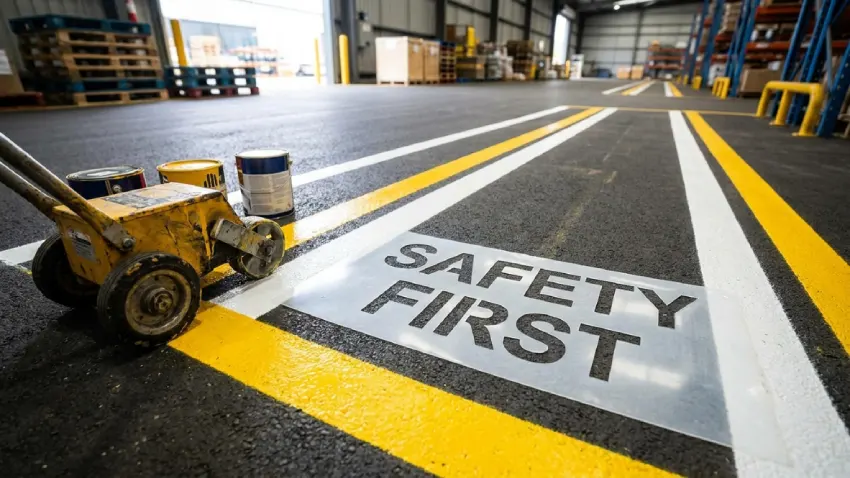
Line Marking Maintenance keeps safety rules clear after the first installation. This section explains how warehouses should inspect, refresh, and improve markings as operations change.
Warehouse layouts do not stay the same forever. Stock levels change, picking routes change, loading zones expand, and new equipment may arrive. Line markings should be reviewed when the operation changes.
A maintenance plan should check:
- Faded pedestrian routes
- Worn forklift lanes
- Blocked keep-clear zones
- Damaged hazard markings
- New congestion points
- Changed storage layouts
- Crossing points with near misses
- Lines hidden by dirt or pallets
Health and safety teams can connect line marking checks with health & safety line marking requirements. This helps markings stay practical, visible, and relevant to the site.
For sites needing a full system review, industrial floor marking guidance can help define colour use, route design, zone control, and marking priorities.
A practical inspection schedule:
| Frequency | Check |
| Weekly | Blocked walkways and hazard zones |
| Monthly | Faded lines and damaged markings |
| Quarterly | Traffic flow and near-miss points |
| After the layout change | Route and storage updates |
| After resurfacing | Full remarking plan |
A reliable contractor such as Total Surfacing Solutions can help warehouses maintain markings as part of a wider safety and surfacing plan.
The final goal is simple. Markings should be clear enough that a new worker, visitor, driver, or contractor can understand the safe route quickly.
For long-term site safety, Total Surfacing Solutions can support both visible line marking and the surface condition needed to keep those markings effective.
Frequently Asked Questions: Warehouse Line Marking
1. How does line marking reduce warehouse accidents?
Line marking reduces accidents by separating pedestrians and vehicles, identifying hazards, controlling traffic flow, and keeping restricted areas visible. It gives workers and drivers clear instructions without relying only on verbal reminders.
2. What warehouse areas need line marking the most?
The most important areas are pedestrian walkways, forklift lanes, loading bays, crossing points, fire exits, restricted zones, storage areas, machinery zones, and blind corners where people and vehicles may meet.
3. What colour should warehouse safety lines be?
Colour choices depend on the site’s safety system, but yellow is commonly used for walkways or traffic routes, red for restricted or danger areas, and black-yellow patterns for hazard warnings. Consistency matters most.
4. How often should warehouse line markings be refreshed?
Line markings should be refreshed when they fade, become dirty, are damaged, or no longer match the warehouse layout. Busy forklift routes and loading areas usually need inspection more often.
5. Can line marking improve warehouse productivity, too?
Yes. Clear markings reduce confusion, blocked aisles, misplaced pallets, and unnecessary vehicle movement. Better traffic flow can help staff move goods faster while reducing collision and congestion risks.