Advantages and Disadvantages of Resin Driveways
Resin driveways look clean, modern, and low-maintenance, but they are not the right choice for every property or budget. The serious step is to compare drainage, safety, installation speed, base condition, repair limits, and long-term cost before choosing the finish. The experienced solution is to use a proper resin-bound specification, check the sub-base, confirm permeability, and work with a specialist installer who understands local driveway conditions.
Advantages and Disadvantages of Resin Driveways
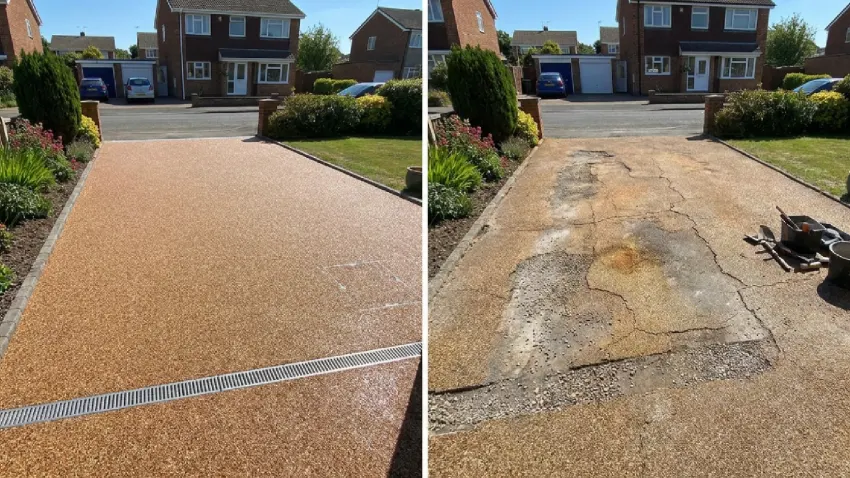
A resin driveway can be a smart upgrade, but only when the full system is specified correctly. This section gives the direct pros and cons before going into the technical details.
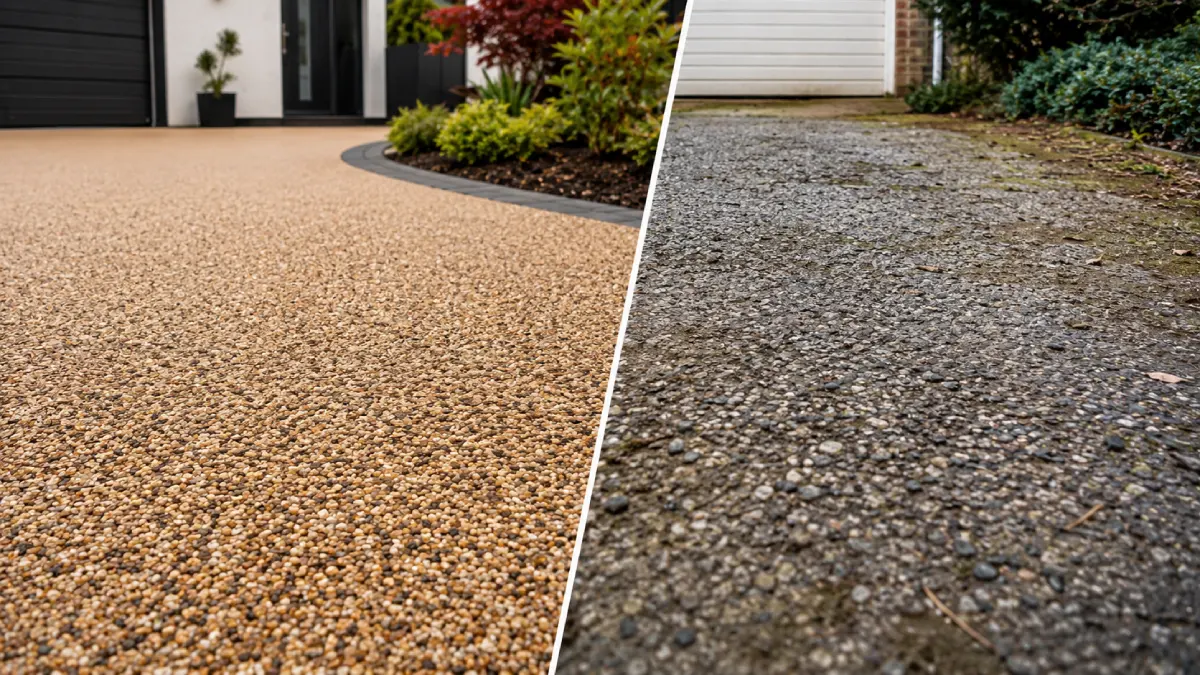
Advantages and Disadvantages of Resin Driveways should be judged as a full driveway system, not only a surface colour choice. Resin-bound surfacing can offer strong kerb appeal, good drainage, quick installation, and a smooth finish.
The main mistake is comparing resin only against gravel, tarmac, block paving, or concrete by price. Resin can cost more upfront, but it may reduce weeds, puddles, and regular maintenance when installed correctly.
The strongest advantages include:
- Permeable & Sustainable surface design
- Durable & Safe daily use
- Quick Installation on suitable bases
- Smooth modern appearance
- Large colour and aggregate choice
- Lower weed growth than block paving
- Better water control than non-permeable surfaces
- Good kerb appeal for modern homes
The main disadvantages include:
- Higher initial cost
- Professional installation needed
- Weather-sensitive installation
- Repair colour mismatch risk
- Base failure can crack the surface
- Not ideal for heavy tracked vehicles
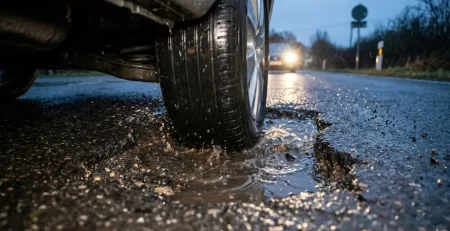
- Poor installation can cause sinking or drainage issues
A contractor such as Total Surfacing Solutions can help check whether resin is suitable for the property, the base, and the expected traffic level.
| Factor | Advantage | Disadvantage |
| Drainage | Permeable system | Fails if base is wrong |
| Appearance | Clean seamless finish | Repairs can show |
| Maintenance | Low weed growth | Still needs cleaning |
| Installation | Fast over good base | Weather-sensitive |
| Cost | Strong long-term value | Higher upfront price |
A resin driveway is worth considering when you want a smart surface that drains well and stays easy to maintain. It becomes risky when the quote skips base preparation, drainage, or anti-slip finishing.
Permeable & Sustainable: Drainage Win
Permeability is one of the biggest reasons homeowners choose resin-bound surfacing. This section explains how water movement, SuDS-friendly design, and base preparation affect real performance.
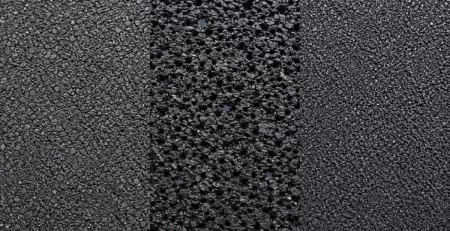
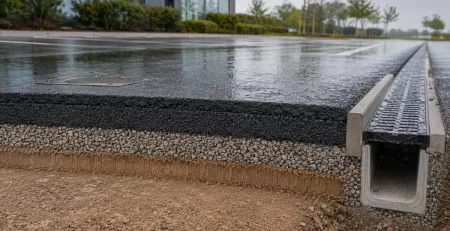
A resin-bound driveway is usually Permeable & Sustainable because the aggregate is mixed with resin and laid as a porous surface. Rainwater can drain through the small voids between stones when the base is also suitable.
This helps reduce puddles, standing water, and surface runoff. It can also support UK drainage expectations for front driveways where water should not simply flow into roads or drains.
The key detail is the full build-up. A permeable top layer laid over the wrong base may still trap water. Resin-bound surfacing needs a free-draining structure below it to perform properly.
Permeability helps with:
- Rainwater control
- Reduced puddling
- Lower surface runoff
- Better winter drainage
- SuDS-friendly design
- Cleaner driveway edges
- Reduced water pooling near walls
People comparing resin driveways slippery should understand that drainage and surface texture work together. A permeable driveway can reduce standing water, while anti-slip finishing improves grip.
| Drainage Detail | Good Result | Risk if Ignored |
| Permeable resin surface | Water passes through | Surface water sits |
| Open-graded base | Water moves down | Water traps underneath |
| Correct fall | Less pooling | Frost patches |
| Clear edges | Better runoff control | Blocked drainage |
| Clean surface | Better flow | Moss and grime |
Permeability is a major advantage, but it is not automatic. The surface, base, fall, and maintenance all need to work together.
Durable & Safe: Long-Term Use
A good resin driveway should handle everyday foot traffic, cars, weather, and regular cleaning. This section explains durability, safety, UV stability, slip resistance, and long-term use.
Resin-bound driveways can be Durable & Safe when installed over a sound base with the correct resin and aggregate mix. The surface is smooth enough for walking but textured enough for practical grip.
UV-stable resin helps protect colour and reduce yellowing. This matters most for light aggregates, grey blends, and driveways exposed to strong sunlight.
Safety also depends on anti-slip detail. Installers may add crushed glass or fine aggregate to improve traction, especially for sloped areas, shaded driveways, and homes with frequent foot traffic.
A safe, durable resin surface should include:
- UV-stable resin
- Correct aggregate size
- Strong edge restraint
- Anti-slip finishing
- Suitable base layer
- Proper curing time
- Drainage that prevents standing water
- Maintenance guidance after installation
People comparing driveway gravel size may already understand that stone size affects performance. Resin-bound aggregate sizing also matters because the final texture affects grip, appearance, and durability.
| Durability Feature | Why It Matters |
| UV-stable resin | Reduces colour change |
| Correct mix ratio | Prevents loose stones |
| Strong base | Prevents cracking |
| Edge restraint | Stops border failure |
| Anti-slip finish | Improves walking safety |
| Good curing | Protects strength |
Resin is not indestructible. Heavy tracked vehicles, poor base work, aggressive pressure washing, and bad installation can still damage it.
Quick Installation: Faster Upgrade
One reason resin is popular is the speed of installation. This section explains when a resin driveway can be completed quickly and when groundwork makes the project longer.
Quick Installation is possible when the existing base is already suitable. A stable tarmac or concrete base may allow a resin overlay after proper cleaning, preparation, and priming where needed.
Many resin projects can be completed within a few days, depending on size, access, weather, and base condition. Larger driveways or full excavations take longer because the sub-base, edging, and drainage must be built correctly.
Fast installation does not mean rushed installation. Resin needs the right weather, clean materials, correct mixing, and proper curing time.
Quick installation works best when:
- Existing base is stable
- Surface is clean and crack-free
- Drainage is already correct
- Weather is dry and suitable
- Access is clear
- Edging is already sound
- The project has simple shape and layout
People comparing surfacing timelines may also review new asphalt parking time. Different driveway materials have different curing and usage rules.
| Site Condition | Installation Speed |
| Good existing tarmac | Fastest |
| Minor prep needed | Moderate |
| Full excavation | Longer |
| Drainage upgrades | Longer |
| Complex edging | Longer |
| Bad weather | Delayed |
Quick installation is a real advantage only when the installer refuses to cut corners. A driveway finished quickly but laid over a weak base can fail quickly too.
Cost and Repairs: Real Limits
Resin driveways can offer long-term value, but cost and repair limits need clear understanding. This section explains upfront pricing, visible repairs, and comparison points.
The biggest disadvantage of resin is usually the higher initial cost. Resin-bound surfacing often costs more than gravel or basic tarmac, especially when full groundwork is required.
Current UK cost guides vary because every driveway is different. Overlay jobs on a sound base are cheaper than full excavation, new sub-base, drainage correction, edging, and premium aggregate finishes.
Repair is another limit. If a resin surface cracks, stains, or needs patching, colour matching can be difficult. The repaired area may look slightly different because aggregate batches, weathering, and resin age change the final appearance.
Cost and repair factors include:
- Driveway size
- Existing base condition
- Full dig-out or overlay
- Aggregate choice
- UV-stable resin
- Drainage upgrades
- Edging detail
- Manhole cover work
- Access difficulty
- Repair visibility
People comparing other materials may check paver driveway cost before deciding. Block paving, tarmac, concrete, gravel, and resin all have different cost and maintenance profiles.
| Cost Factor | Lower Cost | Higher Cost |
| Base condition | Sound existing base | Full excavation |
| Drainage | Already correct | Needs redesign |
| Shape | Simple rectangle | Curves and details |
| Finish | Standard aggregate | Premium blend |
| Access | Easy access | Tight site |
Resin can still be a good value, but the quote must include the work needed under the surface. A cheap resin quote often becomes expensive when the base is not properly prepared.
Base and Installation: Failure Point
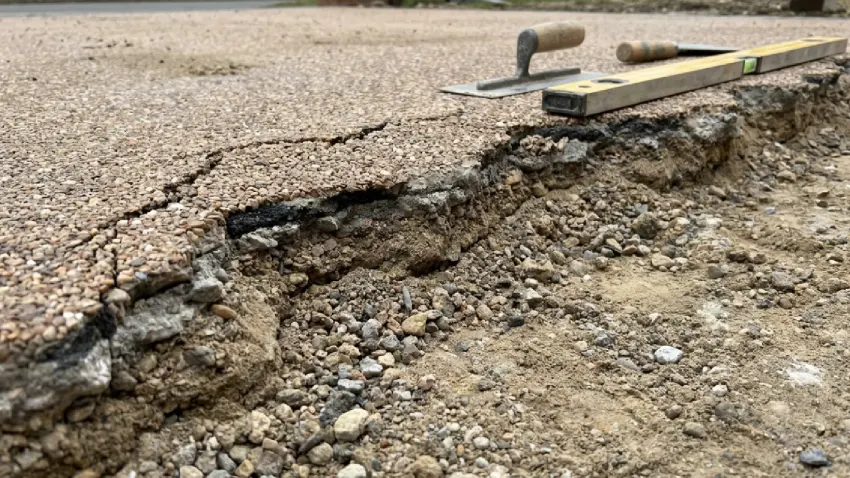
Most resin driveway failures start below the surface. This section explains base preparation, weather sensitivity, drainage problems, and professional installation risks.
Professional installation is not optional for a reliable resin driveway. The material is sensitive to mixing ratio, temperature, moisture, curing, base quality, and timing.
A poor installation can cause:
- Cracking
- Sinking
- Loose stones
- Cloudy patches
- Poor drainage
- Slippery smooth areas
- Edge breakdown
- Colour inconsistency
- Surface lifting after frost
The base is the structural part of the driveway. Resin is the wearing surface. If the base moves, the resin can crack or dip with it.
Resin should not be laid over loose gravel, unstable block paving, muddy ground, cracked concrete, or weak tarmac without proper correction. It also should not be laid in unsuitable wet or cold conditions.
People planning layout changes should review driveway width guide and widen driveway permission UK before expanding the parking space.
| Failure Cause | Result |
| Weak sub-base | Sinking or cracking |
| Wet installation | Cloudy or weak surface |
| Poor resin mix | Loose aggregate |
| Bad drainage | Water pooling |
| No edge restraint | Crumbling edges |
| Wrong base | Frost movement |
The right installer should talk about base condition before colour. If the quote focuses only on the surface finish, important risks may be missing.
Area Coverage for Advantages and Disadvantages of Resin Driveways
Local driveway performance depends on soil, drainage, property type, parking load, and winter exposure. These area sections explain how the pros and cons should be judged across Bedfordshire, Cambridgeshire, Essex, Hertfordshire, and Oxfordshire.
Bedfordshire Resin Driveway Installers
For resin bound driveways in Bedfordshire, the main advantage is a clean, low-maintenance frontage that suits modern homes, family driveways, and compact parking layouts. Many Bedfordshire homes benefit from a resin-bound finish because it reduces loose gravel movement and creates a smart, seamless entrance.
The main disadvantage is that smaller front drives can show mistakes quickly. Poor edging, tight turning areas, and weak bases can cause visible wear. Bedfordshire homeowners should ask about anti-slip finish, drainage route, UV-stable resin, and whether the existing base is suitable for overlay.
Where space is being changed, driveway widening cost may matter before choosing the final resin surface. Cost depends heavily on ground preparation, not only the resin finish.
Cambridgeshire Resin Driveway Installers
For resin bound driveways in Cambridgeshire, permeability is often a major advantage. Flat plots and front gardens need proper surface water control, so a permeable resin-bound system can be a practical choice.
The disadvantage appears when resin is laid over the wrong base. If water cannot move through the system, the driveway may hold moisture, freeze in winter, or develop drainage defects. Cambridgeshire homeowners should ask how the sub-base supports permeability and where water will go during heavy rain.
If the property has drainage structures or roadside flow issues, driveway culvert information may be useful before installation. Resin performs best when the drainage plan is solved first.
Essex Resin Driveway Installers
For resin bound driveways in Essex, kerb appeal is a strong advantage. Resin offers smooth colour blends, crisp borders, and a premium finish that suits both modern estates and updated family homes.
The main disadvantage is daily wear in tight parking areas. Short Essex driveways with frequent turning can show tyre marks on very light aggregate. A mid-tone blend, strong edge restraint, and proper anti-slip finish can make the surface easier to live with.
Homeowners thinking about property value can also review driveway increase home value. Resin can improve presentation, but value depends on parking practicality, drainage, and installation quality.
Hertfordshire Resin Driveway Installers
For resin bound driveways in Hertfordshire, the advantage is a neat surface that can work well on modern homes, shaded frontages, and premium property entrances. A resin-bound driveway can reduce puddles when the system is correctly built.
The disadvantage is that slopes and shade need extra care. A sloped driveway must include anti-slip detail and drainage planning. A shaded driveway needs regular cleaning to prevent algae, moss, and winter grime covering the surface texture.
For homes on gradients, driveway on slope planning is important. Resin can work on slopes, but grip, base, and runoff must be designed properly.
Oxford Resin Driveway Installers
For resin bound driveways in Oxford, the advantage is design control. Resin can match traditional stone, brick homes, modern render, or tidy landscaped frontages without loose gravel spreading onto paths.
The disadvantage is that not every property suits an ultra-modern finish. Traditional homes may need warmer aggregate colours, softer borders, and careful driveway apron detail where the private driveway meets the public edge.
Oxford homeowners should understand driveway apron meaning and responsibility before changing access edges. A good resin installation should look attractive and respect practical boundaries.
Final Decision: Right Fit
Resin driveways are best for homeowners who want a clean, permeable, low-maintenance surface and are willing to pay for correct installation. This section gives a final decision checklist.
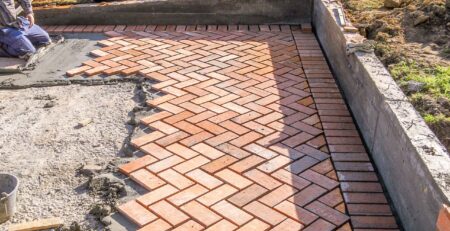
A resin driveway may be a good fit if the base can be prepared correctly, drainage matters, and you want a modern finish with lower weed growth than block paving.
It may be less suitable if you need the cheapest surface, want a DIY project, have heavy tracked vehicle use, or cannot fix a weak base first.
Choose resin if you value:
- Permeability
- Clean appearance
- Low weed growth
- Colour choice
- Fast installation on good bases
- Smooth walking surface
- Strong kerb appeal
- Long-term driveway improvement
A specialist such as Total Surfacing Solutions can inspect the site, explain the build-up, and help compare resin against other driveway options.
| Best Fit | Be Careful If |
| You want low maintenance | You need the lowest upfront cost |
| You need drainage control | The existing base is weak |
| You want modern kerb appeal | Repairs must be invisible |
| You want a quick installation | The weather is unsuitable |
| You want smooth access | Heavy vehicles use the drive |
For muddy or erosion-prone sites, guides on muddy driveway fix and driveway erosion fix may help before choosing resin. The ground must be stable before the surface is upgraded.
Frequently Asked Questions: Resin Driveway Pros and Cons
1. What is the biggest advantage of a resin driveway?
The biggest advantage is the combination of permeability, kerb appeal, and low maintenance. A resin-bound system can drain rainwater, reduce puddles, limit weed growth, and create a smooth, modern finish.
2. What is the main disadvantage of resin driveways?
The main disadvantage is the higher upfront cost and need for professional installation. If the base, drainage, resin mix, or curing conditions are wrong, the surface can crack, sink, or fail early.
3. How long does a resin driveway last?
A correctly installed resin-bound driveway can often last 15 to 20 years or longer. Lifespan depends on base strength, resin quality, drainage, vehicle load, cleaning, and whether repairs are handled early.
4. Can resin be laid over an old driveway?
Sometimes. Resin can be laid over a sound tarmac or concrete base if it is stable, clean, and suitable. It should not be laid over loose gravel, failed concrete, unstable block paving, or muddy ground.
5. Is resin better than gravel or block paving?
Resin is usually cleaner, smoother, and lower maintenance than gravel, with fewer loose stones. Block paving can be easier to repair in sections, while resin often gives a more seamless modern finish.