What Happens If Tarmac Is Laid Too Thin?
Tarmac is valued for its durability, relatively quick installation and ability to cope with regular vehicle traffic. However, those benefits depend heavily on correct preparation and installation. One of the most important factors is the thickness of the finished surface. When tarmac is laid too thin for the intended use of an area, its ability to distribute loads and withstand everyday wear can be significantly reduced.
A surface may initially look smooth and perfectly serviceable even when insufficient material has been installed. The problems often become apparent later, particularly after repeated vehicle movements, temperature changes and periods of wet or cold weather. Cracking, deformation, loose material and premature potholes can all indicate that the pavement structure is struggling.
Understanding why thickness matters can help property owners, facilities managers and commercial site operators make better decisions when planning new surfacing or assessing an existing area.
Why Tarmac Thickness Matters
A tarmac surface does more than provide a neat black finish. It forms part of a pavement structure designed to transfer the loads created by vehicles into the layers beneath it.
Every time a vehicle passes over a road, driveway, car park or access route, its weight places stress on the surface. A correctly designed pavement spreads that stress rather than allowing it to become concentrated in one small area. The required construction therefore depends on factors such as the condition of the ground, the quality of the sub-base and the type and frequency of traffic expected.
This is why there is no single suitable thickness for every project.
A lightly used domestic driveway has very different requirements from a commercial access road regularly carrying delivery vehicles. Industrial yards and areas used by HGVs can place considerably greater demands on the pavement.
Professional tarmac installation and road surfacing should therefore consider the complete pavement construction rather than simply applying a surface layer that looks acceptable when work is finished.
What Happens When Tarmac Is Too Thin?
Insufficient thickness reduces the amount of structural support provided by the tarmac layers. The consequences can vary depending on the underlying construction and traffic levels, but deterioration is likely to occur more quickly when the surface has not been designed for the loads it receives.
Cracking Can Develop Earlier
Cracking is one of the most noticeable signs of a deteriorating tarmac surface.
A surface that is too thin has less capacity to withstand repeated flexing under traffic. Small movements within the underlying pavement can therefore place greater strain on the surface material.
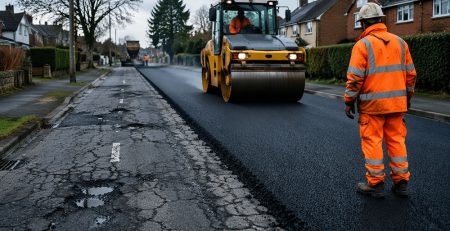
Initially, cracks may be narrow and easy to overlook. As vehicles continue to pass over the area and water enters the openings, those cracks can expand and connect.
Cracking should not automatically be blamed on insufficient thickness because other issues, including weak foundations, drainage problems and ageing materials, can produce similar symptoms. However, inadequate pavement construction can significantly reduce the ability of a surface to resist these stresses.
The Surface May Deform Under Vehicle Loads
Tarmac needs sufficient structural support to retain its shape under traffic.
Where the pavement is inadequately designed, repeated wheel movements can contribute to depressions and wheel-track deformation. These problems are particularly important on commercial sites where vehicles repeatedly follow the same route.
Loading bays, entrances, turning areas and access roads can experience concentrated traffic rather than vehicles being distributed evenly across the whole surface.
This makes appropriate construction especially important for commercial surfacing projects where the finished pavement may need to cope with frequent vans, delivery vehicles or heavier traffic.
Once significant deformation occurs, the problem is not purely cosmetic. Depressions can affect vehicle movement and encourage standing water, potentially accelerating further deterioration.
Thin Tarmac Can Increase the Risk of Potholes
Potholes rarely appear without an underlying cause. They generally develop as a surface progressively loses its integrity.
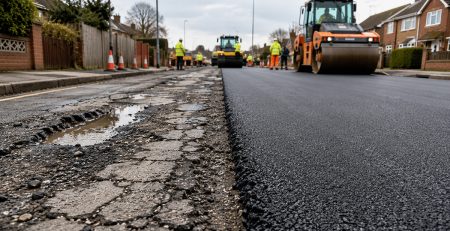
Cracks and damaged areas allow water to penetrate the pavement. Vehicle movements then place additional stress on weakened material, eventually causing pieces of the surface to loosen or break away.
UK weather can make this deterioration particularly troublesome because surfaces regularly experience rainfall, changing temperatures and winter conditions.
When tarmac has been installed with insufficient structural capacity, defects can progress more quickly under traffic. What begins as a relatively minor crack may eventually become an area requiring professional pothole repairs if deterioration is allowed to continue.
Early investigation is therefore preferable to waiting until significant sections of the pavement have broken apart.
Water Can Make the Problem Worse
Drainage and pavement construction are closely connected.
A properly surfaced area should allow water to leave the pavement effectively rather than collecting in depressions or continually entering damaged areas. If thin tarmac begins cracking or deforming, water can gain access to the layers below.
This can gradually weaken the pavement structure.
Standing water is another concern. If wheel tracks or depressions form because the surface cannot adequately resist traffic loads, rainwater may remain on the pavement rather than flowing towards the intended drainage points.
Over time, the combination of water penetration, traffic and surface movement can accelerate deterioration.
This is why drainage should be considered during the planning stage rather than treated as a separate issue once surfacing has been completed.
Why the Sub-Base Is Just as Important
Increasing the amount of tarmac cannot compensate for every construction problem.
The layers beneath the finished surface are fundamental to pavement performance. A properly prepared and compacted sub-base provides a stable foundation, helping distribute loads and reducing unwanted movement.
If the underlying ground is weak or the sub-base is poorly constructed, even a substantial tarmac layer may eventually experience problems.
Conversely, a good foundation does not mean the surfacing layer can automatically be made thinner than appropriate. The pavement needs to function as a complete system.
Preparation, drainage, material selection, layer thickness and compaction all need to work together.
This is particularly important when existing surfaces are being replaced. Simply covering an old, failing area without identifying why it deteriorated can leave underlying defects unresolved.
Heavy Traffic Makes Correct Construction More Important
Traffic type should always influence the specification of a surfaced area.
Cars place substantially different demands on a pavement from HGVs, refuse vehicles, buses or heavily loaded delivery vehicles. The number of movements matters as well.
An access road used by a handful of cars each day is fundamentally different from an entrance serving a busy warehouse or industrial facility.
Turning movements can also increase stress. Heavy vehicles manoeuvring at low speeds can exert significant forces on particular parts of a surface, especially around entrances, junctions and loading areas.
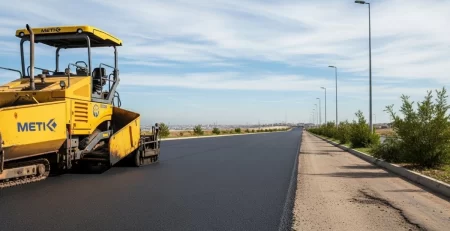
For larger projects, machine-laid tarmac can help achieve a controlled and consistent finish where the site and specification are suitable.
The important point is that the pavement should be designed around actual site conditions rather than applying the same construction approach to every location.
Can You Tell If Existing Tarmac Is Too Thin?
It is not always possible to determine tarmac thickness simply by looking at the finished surface.
A newly installed area can appear smooth and uniform while still having construction issues beneath the visible layer. Equally, cracks or potholes do not automatically prove that the tarmac was laid too thin.
Surface deterioration can have several causes.
Poor drainage, inadequate compaction, weak foundations, unsuitable materials, excessive vehicle loads and general ageing can all contribute to failure.
The pattern of damage can nevertheless provide useful clues. Repeated deformation along wheel paths, widespread cracking or unexpectedly rapid deterioration should be investigated, particularly when a relatively new surface is affected.
A professional assessment can examine the visible condition of the pavement alongside its expected traffic and underlying construction.
Can Thin Tarmac Be Repaired?
The appropriate solution depends on how extensive the problem is and why the surface has failed.
A small isolated defect may be suitable for a local repair where the surrounding pavement remains structurally sound. Localised treatment can prevent damaged areas from expanding and restore a safe, usable surface.
Widespread failure is different.
If insufficient construction affects a large proportion of the site, repeatedly repairing individual cracks or potholes may address the symptoms without resolving the underlying weakness. More extensive resurfacing or reconstruction may then be necessary.
The existing pavement needs to be assessed before deciding on the most appropriate approach. The objective should be to understand the cause of deterioration rather than automatically choosing the least disruptive repair.
Examples of completed surfacing work can also help property owners understand how different sites and pavement requirements are approached, with relevant surfacing case studies providing useful context for different project types.
Why Correct Installation Saves Money Over Time
Using less material can appear to reduce the initial cost of a surfacing project, but a pavement should be considered over its expected service life.
If an inadequately constructed surface begins failing prematurely, the cost of repairs, disruption and eventual resurfacing can outweigh the initial saving.
For commercial sites, disruption can be particularly significant. Repairs to entrances, loading areas or access routes may interfere with deliveries, staff movements and customer access.
Domestic properties face similar considerations. A driveway that requires extensive repairs shortly after installation is unlikely to represent good long-term value, even if the original quotation was inexpensive.
Professional domestic surfacing work should therefore be based on the requirements of the property and expected traffic rather than simply minimising the quantity of material used.
Getting the Tarmac Specification Right
Correct tarmac construction begins before the surfacing material arrives on site.
The existing ground conditions need to be understood, drainage requirements considered and the expected traffic established. The pavement layers can then be specified to suit those conditions.
Preparation and compaction are equally important. Each stage needs to provide a stable platform for the next, while the finished surface should have suitable falls to manage water effectively.
For roads and larger access routes, the requirements can be more demanding because traffic levels and vehicle weights may be considerably higher. Experienced highway surfacing contractors can assess these practical demands when planning the work.
Tarmac laid too thin can crack, deform and deteriorate earlier than a correctly designed pavement, but thickness should never be considered in isolation. Long-term performance depends on the complete construction, including the foundation, drainage, materials, compaction and expected traffic.
A properly specified surface is designed for how the site will actually be used. Getting those fundamentals right from the beginning helps provide a stable, practical and durable surface while reducing the likelihood of avoidable repairs and premature resurfacing.