Are Resin Driveways Slippery in Winter?
A resin driveway should not become dangerously slippery in winter when it is resin-bound, correctly textured, permeable, and maintained properly. The serious step is to check whether the surface has anti-slip aggregate, whether water drains through the system, and whether ice, moss, algae, or poor installation is creating a risk. The experienced solution is to choose the right resin-bound specification, use safe de-icing, keep the surface clean, and fix drainage or texture problems before winter weather exposes them.
Are Resin Driveways Slippery in Winter?
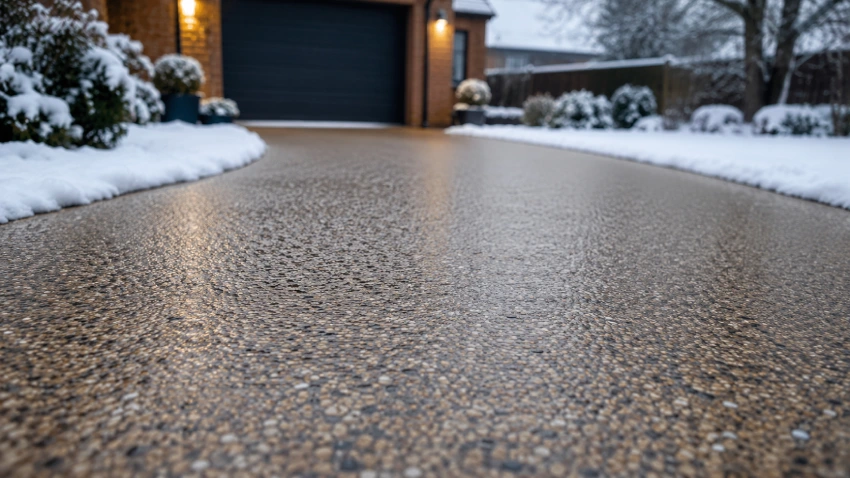
Winter slip risk depends on the resin system, anti-slip finish, drainage, slope, and maintenance. This section explains the real answer without treating every resin driveway as the same surface.
Are Resin Driveways Slippery in Winter? They can be slippery if poorly installed, too smooth, dirty, icy, or laid over the wrong base. But a properly installed resin-bound driveway with anti-slip aggregate is designed to provide practical grip in wet and cold conditions.
The safest winter performance comes from four things working together: resin-bound driveways, Added Traction, Permeability Reduces Ice, and Maintenance is Key. If one part fails, the driveway can feel slick.
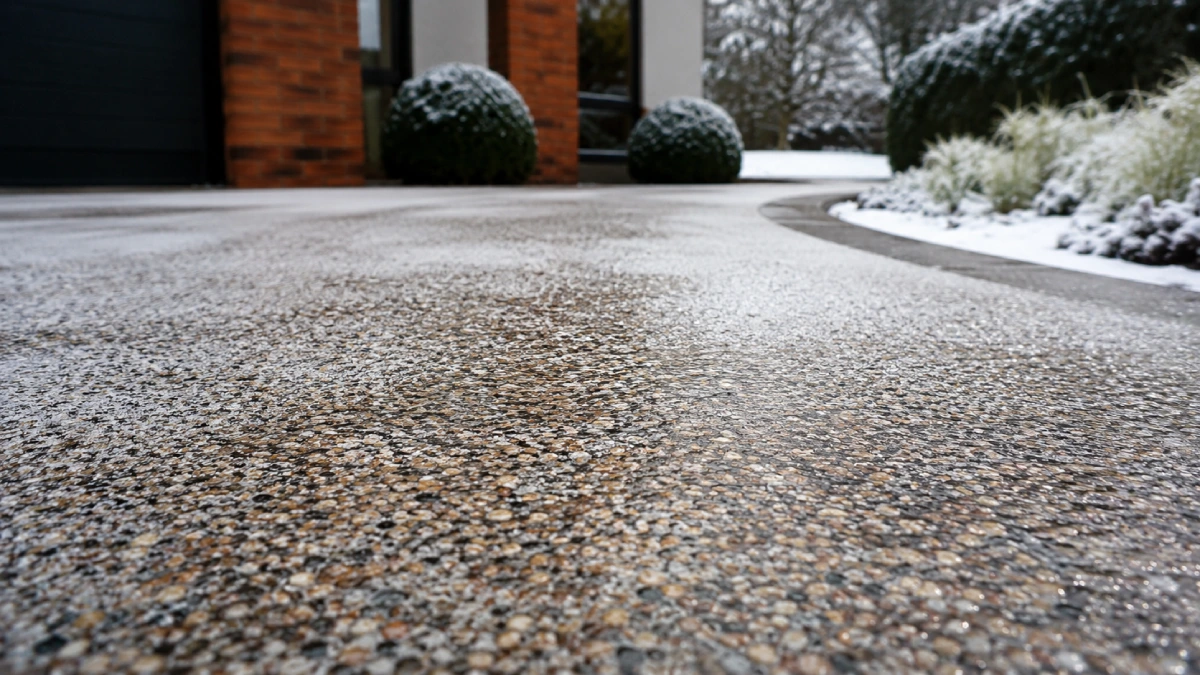
A resin-bound surface is made by mixing stone aggregate with resin before laying it. This creates a textured, porous finish. Water can pass through tiny gaps when the base underneath is also permeable.
A specialist such as Total Surfacing Solutions can assess whether an existing surface is safe for winter use or whether texture, drainage, or repair work is needed.
| Winter Factor | Safer Result | Risky Result |
| Anti-slip grit | Better grip | Glossy slick surface |
| Permeable base | Less standing water | Ice patches |
| Regular cleaning | Less moss and algae | Slippery film |
| Correct salt use | Safer walking | Residue and waste |
| Good installation | Strong finish | Loose or smooth patches |
The answer is not just “yes” or “no.” Resin driveways perform well in winter only when the surface texture, drainage build-up, and care routine are right.
Added Traction: Grip Layer
Added: Traction comes from the final surface texture. This section explains why crushed glass, quartz sand, aggregate size, and correct finishing decide winter grip.
The anti-slip layer is one of the most important winter safety details. Installers often scatter a fine anti-slip material over the wet resin-bound surface before it cures.
Common materials include crushed glass, quartz sand, or specialist anti-slip aggregate. These particles create extra bite under shoes and tyres without ruining the smooth driveway look.
If an installer skips this stage, the resin may cure too smooth. A glossy surface can feel slick during frost, light rain, or early morning condensation.
Added Traction depends on:
- Anti-slip aggregate
- Correct resin-to-stone ratio
- Suitable aggregate grading
- Even trowelling
- No resin-rich glossy patches
- Correct curing conditions
- Safe slope design
- Clean surface after installation
People comparing resin driveway pros cons should treat slip resistance as a specification issue, not only a material issue. Resin can be a strong choice, but only when the grip detail is included.
| Finish Detail | Winter Effect |
| Crushed glass finish | Improves foot grip |
| Quartz sand finish | Adds surface bite |
| Smooth resin-rich patch | Higher slip risk |
| Poor mixing | Uneven texture |
| Bad weather during laying | Weak cure or cloudy surface |
A good grip should be built in from day one. It is much harder to fix a dangerously smooth surface after the resin has cured.
Permeability Reduces Ice: Drainage Check
Permeability Reduces Ice because water has less chance to sit on the surface. This section explains why drainage, sub-base design, and SuDS-friendly build-up matter in winter.
A proper resin-bound driveway is porous. Rainwater drains through the surface into the base below, reducing puddles that can freeze into sheet ice.
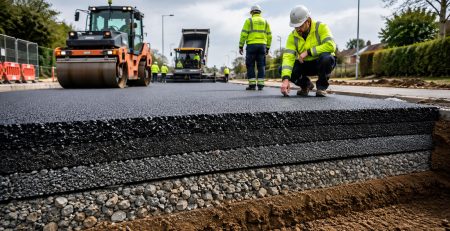
But the top layer cannot do this alone. The base must also allow water to move. If resin is laid over dense concrete or a blocked base, water may sit under or on the surface.
A winter-safe build-up may include:
- Resin-bound surface
- Open-graded asphalt or suitable permeable binder
- Type 3 free-draining sub-base
- Correct falls
- Clear edges
- No blocked drainage channels
- No trapped water under the resin
This is where resin bound driveways in cambridgeshire need careful planning, especially on flatter plots where water can linger. Drainage must be designed before colour is chosen.
| Drainage Issue | Winter Risk |
| Standing water | Freezes into ice |
| Dense concrete base | Trapped water |
| Blocked edges | Local puddles |
| Poor fall | Surface pooling |
| Weak sub-base | Frost movement |
Permeability helps reduce ice risk, but it does not remove every winter hazard. Frost, snow, shade, and freezing rain can still create slippery areas that need safe care.
Bound vs Bonded: Winter Difference
Resin-bound and resin-bonded surfaces behave differently in winter. This section explains why the installation method can change slip risk, drainage, and long-term safety.
A resin-bound driveway mixes stone and resin before laying. This creates a smooth but textured surface with small voids that allow water to pass through.
A resin-bonded driveway is different. Resin is spread over the base first, then loose aggregate is scattered over the top. This system is usually not permeable in the same way.
The winter difference is clear. Resin-bound systems can reduce standing water when the full base is permeable. Resin-bonded systems can hold water on the surface, making ice formation more likely.
| Feature | Resin Bound | Resin Bonded |
| Water movement | Permeable system | Often non-permeable |
| Winter pooling | Lower risk | Higher risk |
| Texture | Smooth with grip | Rougher loose-stone feel |
| Long-term surface | Integrated mix | Surface scatter |
| Best driveway use | Usually preferred | More limited |
People asking whether resin driveways slippery should first confirm which system they have. Many winter complaints come from confusing bound and bonded surfaces.
If you are planning a new driveway, choose the system based on drainage, grip, slope, and maintenance. A cheaper surface can become expensive if winter safety is poor.
Safe De-Icing: Salt Rules
Safe De-icing protects grip without damaging the surface. This section explains how to use salt, grit, and cleaning methods without creating new winter problems.
White rock salt and standard grit are commonly used on resin-bound driveways. They can help reduce ice and improve grip when used sensibly.
The key is not to overdo it. Too much salt can leave residue, create mess, and increase runoff. Use enough to treat the hazard, then rinse or sweep the surface when weather improves.
Safe winter steps include:
- Use white rock salt or normal grit when needed
- Spread lightly and evenly
- Clear snow first before salting
- Avoid heavy piles of salt
- Sweep residue after thawing
- Do not pour boiling water onto frozen resin
- Avoid metal shovels that scrape the surface
Never pour boiling water onto a frozen driveway. Sudden thermal shock can stress the resin matrix and may worsen surface problems.
| Winter Action | Safer Method | Avoid |
| Ice control | Light rock salt | Heavy salt piles |
| Snow clearing | Plastic shovel | Metal scraping |
| Frozen patch | Grit first | Boiling water |
| Cleaning after thaw | Sweep and rinse | Leaving residue |
| Algae removal | Gentle wash | Harsh chemicals |
Safe de-icing is simple. Treat the ice, protect the surface, and clean the residue before it becomes winter grime.
Maintenance is Key: Winter Routine
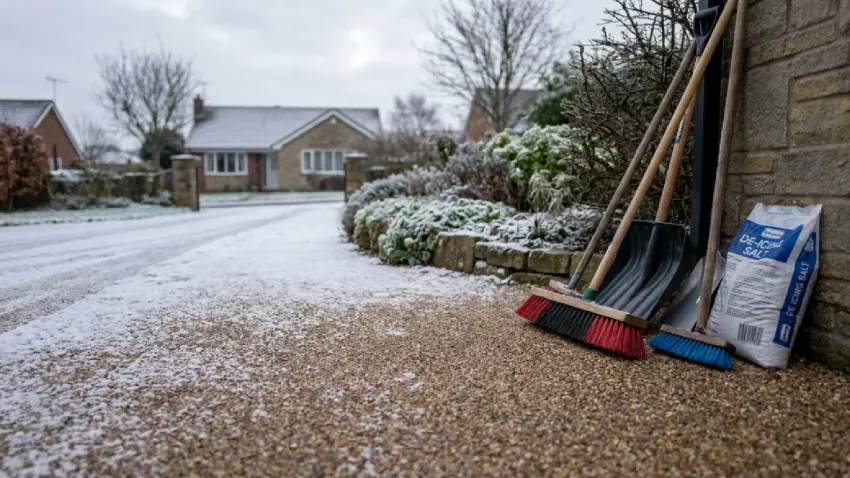
Maintenance is Key because moss, algae, leaves, tyre dirt, and trapped water can make any driveway slippery. This section gives a practical winter care routine.
Resin-bound driveways are low-maintenance, but they are not maintenance-free. A neglected driveway can become slick even if the original installation was good.
Leaves and organic debris can break down on the surface. This creates a film that holds moisture and encourages algae. In winter, that film can become slippery underfoot.
A strong winter routine includes:
- Sweep leaves weekly
- Clear drainage edges
- Remove moss and algae early
- Wash away winter dirt
- Use a pressure washer carefully
- Keep the nozzle around 200mm or more from the surface
- Use a fan spray, not a pinpoint jet
- Avoid aggressive blasting
People planning wider driveway work may also read the driveway width guide or check whether they need widen driveway permission UK before changing layout, access, or parking space.
| Maintenance Task | Winter Safety Result |
| Sweep leaves | Reduces slippery film |
| Clear drains | Prevents water pooling |
| Light wash | Removes dirt layer |
| Treat algae early | Improves grip |
| Check edges | Finds drainage blocks |
| Rinse salt residue | Protects appearance |
A clean resin driveway keeps its texture exposed. A dirty surface hides the grip layer and increases slip risk.
Area Coverage for Resin Driveways Slippery in Winter
Local winter performance depends on driveway slope, shade, drainage, surface finish, and installation quality. These area sections explain how resin-bound driveway safety should be planned across Bedfordshire, Cambridgeshire, Essex, Hertfordshire, and Oxford.
Resin Bound Driveways in Bedfordshire
For resin bound driveways bedfordshire, winter safety starts with surface texture and driveway layout. Many Bedfordshire homes have compact front drives, shared boundaries, and shaded areas where frost can sit longer in the morning.
A good installation should include anti-slip aggregate, a permeable build-up, and clear water movement away from the house. If the drive slopes toward the pavement or garage, drainage detail becomes even more important.
Homeowners should also check how the driveway is used daily. Short drives with tight turning can polish the same surface area over time, especially where cars turn in one spot. Regular sweeping, safe de-icing, and early algae removal help keep the grip layer working through winter.
Resin Bound Driveways in Cambridgeshire
Cambridgeshire homes often need drainage-led resin planning because many plots are relatively flat. Flat driveways can hold water if the base, fall, or edge detail is wrong.
A winter-safe resin surface should let water pass through the top layer and into a free-draining base. If water cannot move away, it may freeze into patches that make the drive feel unsafe.
For resin bound driveways in Cambridgeshire, the survey should check sub-base type, surface fall, nearby drains, and whether the existing base is dense or cracked. A quick overlay over the wrong base can trap water and create frost problems.
People reviewing driveway culvert issues may already understand how water movement affects driveways. Resin performs best when water is managed before winter begins.
Resin Bound Driveways in Essex
For resin bound driveways in essex, winter safety often comes down to grip under frequent vehicle and foot traffic. Essex homes commonly need practical parking space, neat frontages, and driveways that handle family use.
A resin-bound finish can work well when it includes anti-slip aggregate and uses a suitable stone blend. Very smooth resin-rich areas should be avoided because they can become slick during frost or rain.
Essex properties with short driveways, turning areas, or heavier vehicles need extra attention around surface texture. Safe de-icing should be used during icy spells, and salt residue should be swept or rinsed once the weather warms.
If driveway layout is changing, driveway widening cost may be useful before the winter-safe resin finish is planned.
Resin Bound Driveways in Hertfordshire
For resin bound driveways in hertfordshire, shaded areas and sloped entrances need careful winter planning. Frost often stays longer where driveways sit under trees, between buildings, or beside boundary walls.
A sloped resin driveway should never rely on looks alone. The installer should discuss aggregate texture, anti-slip additive, drainage channels, and where water travels during heavy rain.
If a driveway is steep, driveway on slope planning becomes important. Surface grip, water runoff, and edging must work together.
Hertfordshire homeowners should also watch moss and algae growth in shaded areas. A quick winter sweep and gentle wash can stop organic build-up from covering the anti-slip texture.
Resin Bound Driveways in Oxford
For resin bound driveways in oxford, winter safety should be built into the specification before installation starts. Oxford homes often need a clean finish that suits the property while still performing in frost, rain, and shaded conditions.
A good resin-bound driveway should include anti-slip aggregate, UV-stable resin, a suitable base, and drainage that reduces surface water. If the property has a traditional frontage, the surface should still be practical rather than only decorative.
Oxford homeowners should ask whether the installer will include crushed glass or quartz anti-slip material. They should also ask how the driveway will be maintained during winter without damaging the finish.
For layout upgrades, driveway apron meaning and driveway apron responsibility may help when the driveway meets the road or public access edge.
Installer Quality: Avoid Slick Finish
Winter safety is decided during installation. This section explains how resin quality, weather timing, sub-base preparation, and contractor shortcuts affect slip risk.
A resin driveway can look impressive on day one and still perform badly in winter if it was installed poorly. The most common safety problems come from smooth finishes, blocked permeability, poor curing, and weak bases.
Good installation should include:
- UV-stable resin binder
- Correct aggregate-to-resin mix
- Anti-slip crushed glass or quartz
- Proper curing conditions
- Permeable sub-base
- Edge restraint
- No trapped water pockets
- Clean handover advice
A contractor such as Total Surfacing Solutions can help check whether the driveway specification is suitable for winter foot traffic, car movement, and drainage.
| Installer Shortcut | Winter Problem |
| Skips anti-slip grit | Smooth slippery finish |
| Uses wrong base | Water trapping |
| Lays in wet conditions | Weak bond |
| Poor resin ratio | Loose or glossy patches |
| No maintenance advice | Faster algae build-up |
| Bad edge design | Water pooling |
People comparing surfaces may also look at driveway gravel size or paver driveway cost. The best winter driveway choice depends on drainage, grip, budget, layout, and maintenance commitment.
A safe winter resin driveway is not an accident. It comes from the right system, the right base, and the right finish.
Frequently Asked Questions: Winter Resin Driveways
1. Are resin-bound driveways safe when icy?
They can still become icy in freezing weather, but a proper resin-bound surface with anti-slip aggregate and good drainage can reduce standing water and improve grip compared with a smooth, non-permeable finish.
2. Can I use rock salt on a resin driveway?
Yes, rock salt or grit is commonly used on resin-bound driveways during icy weather. Use it lightly, clear snow first, and sweep or rinse residue after the thaw to keep the surface clean.
3. Why is my resin driveway slippery after rain?
It may be dirty, algae-covered, too smooth, resin-rich, poorly textured, or not draining correctly. If cleaning does not help, the surface may need a professional inspection for texture or installation defects.
4. Does a resin driveway need anti-slip grit?
Yes, anti-slip grit such as crushed glass or quartz is strongly recommended. It adds surface bite and helps reduce slip risk, especially during frost, rain, and winter morning condensation.
5. Can pressure washing damage resin driveways?
Yes, aggressive pressure washing can loosen aggregate. Use a fan tip, keep the nozzle away from the surface, avoid pinpoint jets, and use sweeping motions rather than blasting one spot.