Private Lane Surfacing Options For Rural Properties
Choosing the right Private Lane Surfacing Options For Rural Properties is important when an access road becomes muddy, develops potholes, or becomes difficult to use during wet weather. Rural lanes often carry everyday cars alongside delivery vans, refuse vehicles, and occasional agricultural traffic. Without a suitable foundation and drainage system, even an attractive new surface can deteriorate under repeated loading. Tarmac, compacted gravel, resin-bound surfacing, and block paving each offer different advantages, but the right choice depends on the lane’s condition, gradient, traffic, and maintenance requirements.
Total Surfacing Solutions provides residential and commercial tarmac installation, road surfacing, resin-bound driveways, block paving, and associated groundwork across Hertford, Hertfordshire, Bedfordshire, Oxford, Cambridgeshire, and Essex. The company can assess existing private lanes, identify drainage or foundation problems, and recommend suitable materials for the property’s intended use. Whether a rural homeowner needs a complete access-road surface or a more attractive entrance, Total Surfacing Solutions focuses on selecting the correct construction rather than covering existing defects with another temporary layer.
Quick Check: If your rural access lane has recurring potholes, muddy wheel tracks, or poor drainage, Total Surfacing Solutions can assess its condition and explain the suitable private lane surfacing and access-road options before you commit to a replacement surface.
Private Lane Surfacing Options For Rural Properties
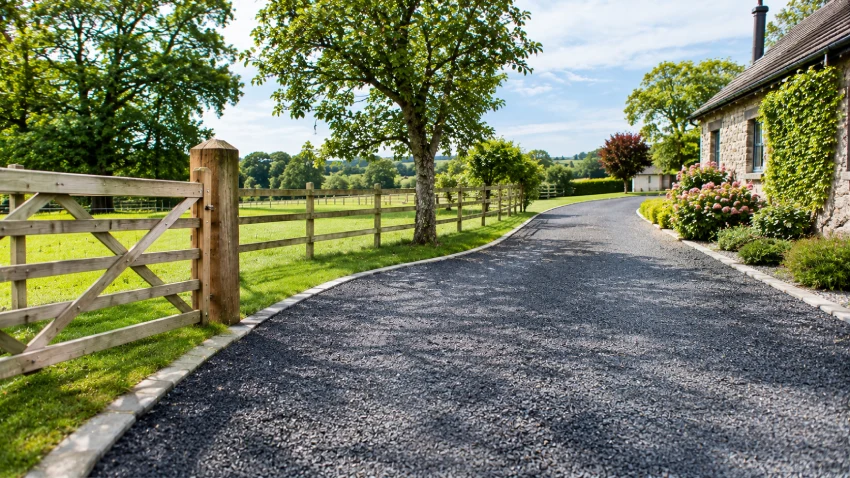
The main surfacing choices for a rural private lane are tarmacadam or asphalt, properly constructed gravel, resin-bound surfacing, and block paving. Each material performs differently under traffic, on gradients, and in wet conditions. A lane that serves several houses or regularly carries heavy vehicles should not automatically receive the same construction as a short decorative driveway entrance.
The supporting base is just as important as the material on top. Weak ground, poor compaction, insufficient drainage, or unstable edges can cause settlement and potholes regardless of the visible finish. Total Surfacing Solutions considers these conditions when recommending a suitable rural lane surface.
| Surface option | Suitable application | Main advantage | Main consideration |
| Tarmacadam or asphalt | Long access lanes, shared private roads and regular vehicle traffic | Continuous, stable driving surface | Requires a properly designed base and drainage |
| Compacted gravel or stone | Lower-traffic rural tracks with a suitable foundation | Natural appearance and flexible material choice | May require regrading and replenishment |
| Resin-bound surfacing | Residential entrances, suitable access areas and decorative sections | Continuous finish with permeability potential | Needs compatible groundwork and suitable traffic specification |
| Block paving | Gateways, entrance courts and selected parking areas | Defined appearance and replaceable units | Joint, edge and base maintenance |
| Localised asphalt repair | Isolated potholes in an otherwise sound lane | Repairs defects without replacing the whole route | Does not resolve widespread base failure |
The rural-road material selection and loading factors help explain why vehicle loading and construction conditions matter when selecting a durable surface.
For many frequently used rural access roads, professionally constructed tarmac is a practical option. Gravel remains relevant for some lower-traffic settings, while resin-bound surfacing and block paving can be considered for suitable entrances and sections with different appearance requirements.
Tarmac Surfacing For Rural Private Lanes
Tarmacadam and asphalt are well suited to many rural private lanes because they provide a continuous driving surface that can accommodate everyday vehicle movement when the pavement is correctly specified. Unlike loose gravel, a bound asphalt finish does not require routine raking to redistribute surface stones after traffic.
A properly planned tarmac lane can serve one rural home, several properties sharing an access road, or a larger estate entrance. However, the necessary construction depends on the ground conditions and expected vehicles. A lane carrying agricultural machinery or regular delivery lorries may need a different pavement specification from one used primarily by domestic cars.
Assessing The Existing Lane
Before resurfacing, the base should be checked for soft areas, potholes, rutting, surface water, and edge failure. An existing stone track may require excavation and a new compacted foundation before asphalt is installed. In other circumstances, an existing sound pavement may be suitable for a more limited resurfacing approach.
Total Surfacing Solutions provides tarmac installation for private roads and rural access lanes. The service is relevant where property owners need a finished road surface supported by appropriate groundwork, drainage, and installation methods.
For rural property owners comparing tarmac surfacing in Watford and surrounding Hertfordshire locations, the assessment should consider the entire lane rather than the visible surface alone.
Machine-Laying On Longer Lanes
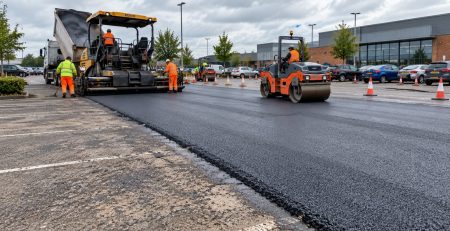
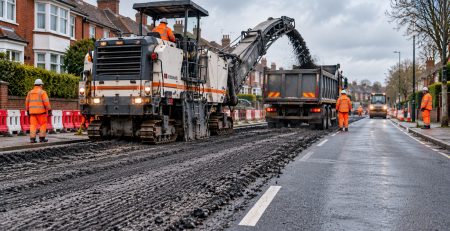
Machine-laid asphalt can be appropriate for longer lanes with sufficient width, turning space, and equipment access. It allows the material to be placed consistently before compaction, while smaller areas and restricted sections may need hand finishing.
The asphalt paving stages for domestic access routes explain how preparation and laying contribute to the finished result.
Total Surfacing Solutions can assess whether the lane’s width, bends, access restrictions, and construction requirements make machine-laying suitable.
Gravel And Stone Surfacing For Rural Tracks
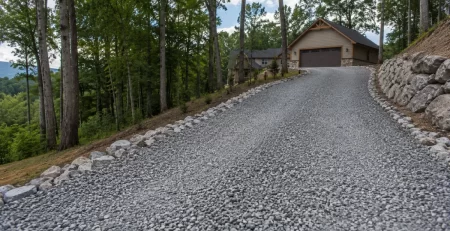
Gravel and crushed stone remain common choices for countryside access because they can provide a natural-looking surface that suits some rural settings. Where the lane is used relatively lightly, and the foundation is properly constructed, compacted stone can offer a practical alternative to a fully bound asphalt surface.
However, simply spreading fresh gravel over an existing muddy track is unlikely to correct deep rutting or weak ground. The surface may quickly mix with underlying soil, move under vehicle tyres, or collect in low areas if the supporting construction is inadequate.
Choosing Suitable Stone
Different aggregates have different properties. Angular, appropriately graded crushed material may compact and interlock differently from rounded decorative gravel. The intended use of the lane should therefore influence both the base material and finished surface choice.
The driveway aggregate grading and stone selection basics provide useful context when considering a stone-based finish.
A decorative aggregate suitable for a short pedestrian path should not automatically be specified for a vehicle access road.
Managing Loose Stone Movement
Gravel lanes may need periodic regrading, filling of wheel tracks, and replacement of displaced material. Steeper gradients and areas where vehicles brake or turn can be particularly difficult to maintain if loose aggregate moves downhill or towards the edges.
For owners who are repeatedly adding stone without achieving a stable lane, Total Surfacing Solutions can assess whether a properly constructed tarmac surface would reduce the recurring maintenance problem.
Resin-Bound Surfacing For Rural Property Entrances
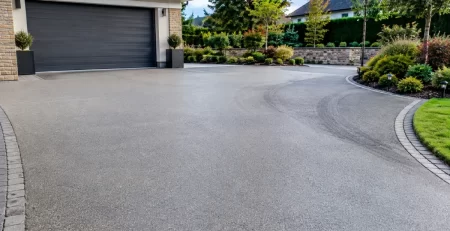
Resin-bound surfacing can be a suitable choice for selected rural property entrances, parking areas, and access sections where homeowners want a continuous decorative finish. The material is produced by mixing resin with aggregate before laying it onto a prepared, compatible base.
A resin-bound system can allow rainwater to pass through the finished aggregate layer when the complete construction is designed appropriately. This makes the material worth considering for some entrances where surface-water management and appearance are important.
However, resin-bound surfacing should not automatically replace tarmac across a long rural lane carrying frequent heavy or agricultural traffic. The specific resin system, supporting base, turning movements, and vehicle loading must all be considered.
Resin-Bound Entrance Design
The entrance to a rural property may need to accommodate cars, occasional delivery vehicles, and pedestrian access while complementing the surrounding buildings. Resin-bound surfacing can provide a defined finish for this area when the structural specification is suitable.
Total Surfacing Solutions provides resin-bound surfacing for rural access and entrance areas. The team can assess whether an existing surface is suitable for an overlay or whether new groundwork is required.
Property owners considering resin-bound surfaces in Hertford should take account of drainage and vehicle use before choosing a decorative aggregate blend.
Resin Driveways Alongside A Tarmac Lane
Some rural properties may benefit from different materials in different areas. A longer shared access lane may use tarmac, while a private driveway or entrance court may use resin-bound surfacing.
Total Surfacing Solutions also provides resin driveway installation for countryside homes. For homeowners researching resin driveways in Hertfordshire, the finish can be considered as part of a wider access scheme rather than as a replacement for every section of the private road.
Transitions between the lane and driveway should be designed to maintain suitable levels, edge support, and drainage.
Block Paving For Rural Driveway Entrances
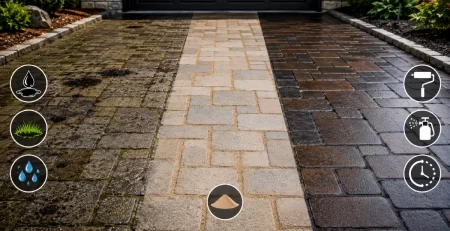
Block paving can be useful where a rural property owner wants a defined entrance, parking court, or transition between a private lane and the main house. It offers a different appearance from asphalt and allows individual paving units to be replaced when necessary.
The suitability of block paving depends on its base, bedding, jointing, edge restraints, drainage, and expected traffic. Poorly supported blocks may move or develop uneven areas, especially where vehicles turn or brake regularly.
For this reason, block paving is often better considered as a specified entrance or parking feature rather than automatically used over an entire long rural access lane.
Total Surfacing Solutions provides block paving for rural property entrances as part of its wider hard landscaping and surfacing services. The company can assess the connection between paving, neighbouring tarmac, and existing driveway levels.
For homeowners considering block paving for rural property entrances in Hertfordshire, the key priorities are sound groundwork, appropriate drainage, stable edging, and construction suited to the expected vehicles.
Why Rural Private Lanes Become Muddy?
Mud is a common problem where a rural track lacks a stable surface or where water remains within the supporting soil. Repeated vehicle movement can disturb weak ground and form wheel ruts, which then collect more water during rainfall.
Adding gravel may provide temporary improvement, but the material can sink into soft soil if the foundation is not suitable. Persistent muddy conditions usually require a closer look at drainage, ground stability, and the depth of the supporting layers.
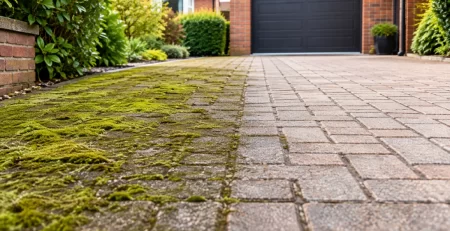
The year-round muddy access track repair approach explains why stabilising the underlying ground matters more than repeatedly adding loose material.
Soft Ground And Rutting
Where the lane crosses weak ground, the construction may require excavation, replacement of unsuitable material, and a compacted sub-base. Depending on the design, geotextile separation or other measures may be considered to prevent the supporting layers from mixing with the soil beneath.
Total Surfacing Solutions can assess whether the existing track is suitable for resurfacing or needs more substantial preparation first.
Waterlogged Sections
A lane may become muddy because rainfall cannot leave the surface or the surrounding ground is saturated. The drainage route should be established before a new finish is installed.
The non-gravel solutions for muddy access surfaces provides further context for considering constructed surfaces where repeated loose-stone repairs have not resolved the problem.
For some properties, a properly specified asphalt lane may reduce the need for repeated regrading and surface replenishment, provided the drainage is also addressed.
Groundwork And Sub-Base Requirements
The strength of a rural private lane comes from the complete construction, not only the visible surface. A properly prepared foundation distributes vehicle loads and helps prevent settlement under repeated use.
Before installation, the ground should be assessed for weak areas, existing fill, rutting, drainage, and expected traffic. The required construction varies significantly between a lightly used farm track and a shared private road serving several homes.
Excavation And Formation
Where the existing ground is unsuitable, excavation may be needed to remove soft or contaminated material. The exposed formation should then be assessed before new layers are constructed.
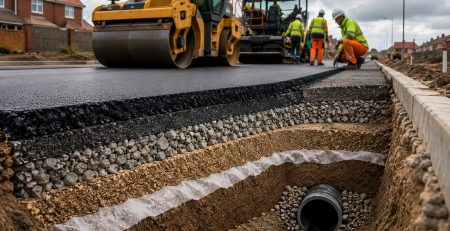
The road formation and compacted foundation preparation stages explain why the supporting layers matter to the performance of the completed road.
Layer Construction
A private lane may require a suitable sub-base, additional structural layers, and an appropriate surface course depending on its design and intended use.
The road pavement layer roles beneath the finished surface help distinguish ground preparation from the asphalt or other surfacing material seen at the top.
Total Surfacing Solutions considers these structural requirements when recommending tarmac for residential access roads and commercial entrances. An appropriate construction specification is particularly important where refuse vehicles, deliveries, or agricultural machinery regularly use the lane.
Drainage For Rural Private Access Roads
Drainage is one of the most important considerations for a countryside lane because water can damage both the finished surface and the ground beneath it. Standing water may contribute to potholes and rutting, while uncontrolled runoff can erode shoulders or carry loose stone away.
A suitable drainage design should account for the lane’s gradient, surrounding land, nearby buildings, and where rainwater can be discharged appropriately. Depending on the site, this may involve cross-falls, camber, ditches, drainage channels, or other engineered measures.
Preventing Puddles And Low Spots
A lane with depressions or poor levels may collect water regardless of the surface material. If these areas remain unchanged, a new surfacing layer may not eliminate the problem.
The surface falls and puddle formation diagnosis provides practical context for understanding low spots and drainage requirements.
Managing Water On Sloping Lanes
Water flowing down a steep private lane can gain speed and contribute to erosion, particularly where the surface or shoulders are loose. The route may need cross-drainage or other measures suited to the site.
The gradient control and runoff management on sloping access explains why slope and drainage should be considered together.
Total Surfacing Solutions can assess water movement as part of rural lane preparation. For landowners, correcting drainage before surfacing is usually more effective than repeatedly repairing damage caused by uncontrolled runoff.
Choosing Surfaces For Heavy Rural Vehicle Use
A rural private lane may look similar to a domestic driveway but experience very different traffic. Delivery vehicles, horsebox trailers, refuse lorries, maintenance equipment, and agricultural machinery can place substantial loads on the construction.
This is especially important where large vehicles turn, brake, or remain stationary. These movements apply concentrated stresses that may accelerate rutting or surface wear if the lane is not properly specified.
Assessing Vehicle Requirements
Property owners should identify the largest and heaviest vehicles likely to use the lane, along with the frequency of access and any restricted turning points. This information helps determine the supporting construction and whether tarmac, gravel, or a combination of materials is appropriate.
Planning Passing And Turning Areas
Long private lanes may also require practical passing or turning arrangements, depending on their width, length, traffic, and access needs. These features should be considered before the final surface is installed because adding them later may involve further excavation and reinstatement.
The private estate access and shared-road planning considerations provide context for lanes used by multiple properties or service vehicles.
Total Surfacing Solutions can consider these conditions when planning rural tarmac and access-road projects, helping owners select materials suited to actual traffic rather than appearance alone.
Repairing Potholes On Existing Private Lanes
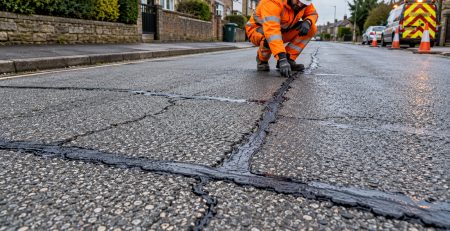
Potholes are a common sign of deterioration on private lanes, but their causes vary. Some develop from isolated surface damage, while others indicate weak supporting layers, water penetration, or repeated heavy loading.
A local repair may be appropriate when the surrounding lane is structurally sound. Where potholes recur or appear across a long section, resurfacing or reconstruction may be more effective than continued patching.
The rural access-road pothole repair methods explain why repair techniques should reflect the depth and cause of the damage.
Total Surfacing Solutions provides pothole repairs and road surfacing for private and commercial areas. The condition of the existing lane should determine whether damaged sections can be reinstated locally or whether the construction needs broader attention.
A practical repair should also address nearby drainage and edge support where these contribute to the defect.
How Much Does Rural Lane Surfacing Cost?
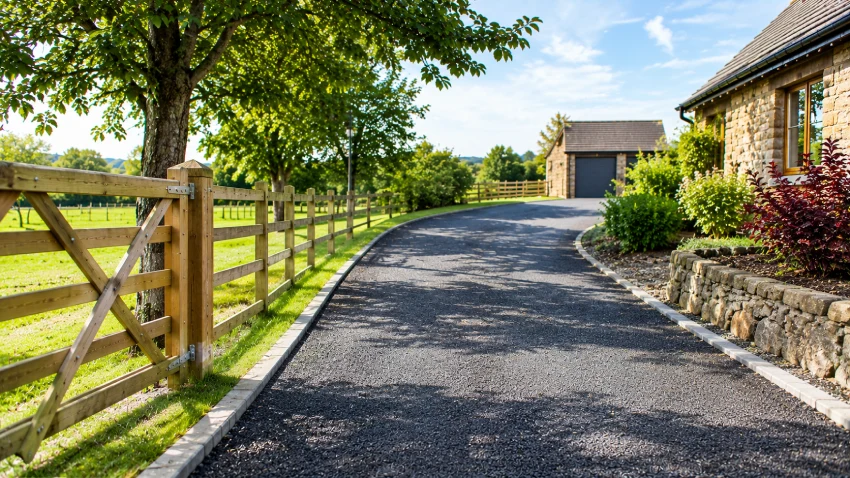
The cost of resurfacing a rural private lane depends on more than its length. Width, existing ground conditions, excavation, aggregate and asphalt quantities, drainage, access restrictions, machinery, and disposal requirements all influence the overall project.
A lane that already has a sound foundation may need less preparation than a muddy track requiring excavation and new supporting layers. Similarly, a narrow access route may need more hand finishing than a wider area where paving machinery can operate efficiently.
Comparing Tarmac And Gravel
Gravel may require less initial construction in some suitable low-traffic settings, but it can also involve recurring grading, topping up, and rut repairs. Tarmac often has a more substantial installation scope but may reduce those particular routine tasks when properly designed.
The tarmac surfacing budget and groundwork variables help explain why surface area and foundation requirements affect quotations.
Understanding The Full Specification
Property owners should compare quotations that identify the same construction scope, including excavation, drainage, sub-base, surface material, edging, and finishing.
Total Surfacing Solutions can assess the site before recommending a surfacing approach, helping property owners understand which elements are needed for the intended lane rather than comparing material prices in isolation.
Low-Maintenance Private Lane Surfacing
A rural lane is often expected to remain usable throughout the year without constant grading, stone replacement, or pothole patching. However, no surface is completely maintenance-free, particularly where traffic loads and drainage conditions change over time.
A properly constructed tarmac lane can reduce the repeated movement of loose gravel, while selected resin-bound and block-paved areas may offer manageable maintenance when installed for appropriate use. The best choice depends on the complete construction and the tasks the property owner is willing to maintain.
Total Surfacing Solutions offers surfacing options for reduced routine upkeep for residential and commercial properties. Owners considering low-maintenance private lane surfacing in Hertfordshire should focus on sound groundwork, stable edges, appropriate drainage, and materials specified for the expected traffic.
The construction quality and future road repair relationship explains why reducing long-term maintenance begins with the installation rather than relying on frequent surface treatments.
Planning Rural Lane Installation And Access
Surfacing a private lane can affect more than one household, especially where several properties share the same entrance. Owners may need to coordinate resident access, deliveries, refuse collection, visitors, and emergency arrangements before work begins.
Total Surfacing Solutions can plan lane installation around the necessary groundwork, material delivery, site access, and finishing stages. Larger or longer lanes may benefit from machine-laying where equipment access permits, while narrow sections may require additional hand work.
The machine paving and hand-finishing selection criteria explain why the installation method should suit the site layout.
For property owners researching efficient private lane surfacing installation in Hertfordshire, the company’s planned surfacing installation service is relevant to coordinating the work and reducing avoidable disruption.
A realistic programme should include preparation, drainage, surfacing, and safe reopening. The need to keep access available should not result in omitting essential construction stages.
Private Lane Surfacing Options For Rural Properties Area Coverage
Rural private lanes can require different surfacing solutions depending on ground conditions, lane length, traffic, and drainage. Total Surfacing Solutions provides road, driveway, and resin-bound surfacing across Hertfordshire, Essex, Bedfordshire, Oxford, and Cambridgeshire. The following area services can be considered according to whether a property needs a continuous access road, driveway entrance, or decorative surface.
Rural Access Lane And Driveway Surfacing In Hertfordshire
Rural homeowners across Hertfordshire may need to improve an existing gravel track, replace a damaged tarmac entrance, or construct a driveway that connects with a longer private access lane. Total Surfacing Solutions provides driveway surfacing across Hertfordshire, Watford, St Albans, Stevenage, and surrounding locations. The suitability of tarmac, resin-bound surfacing, or other finishes depends on the existing foundation, drainage, and frequency of vehicle use. Where the lane serves several properties, access arrangements and the overall construction should be considered before installation.
Machine-Laid Tarmac For Private Lanes In Hertfordshire
For longer private lanes and suitable estate access roads, machine-laid tarmac may provide a consistent finished surface when the base is correctly constructed. Total Surfacing Solutions offers machine-laid asphalt surfacing in Hertfordshire for residential and commercial applications. Before recommending the method, the company can assess lane width, gradients, equipment access, vehicle loading, and drainage. Restricted gateways or tight bends may need hand finishing as part of the project.
Private Lane And Rural Driveway Surfacing In Essex
Rural properties in Essex may have private access roads affected by potholes, loose gravel, or water collecting in wheel tracks. Total Surfacing Solutions provides driveway surfacing across Essex, including Chelmsford, Harlow, Colchester, and surrounding areas. Property owners can consider whether repairs, tarmac resurfacing, or a new driveway construction would suit the existing conditions. The company’s assessment can also account for transitions between a longer access lane and parking areas close to the property.
Machine-Laid Rural Road Surfacing In Essex
Machine-laid tarmac can be relevant where an Essex rural lane is long enough and accessible enough for paving equipment. Total Surfacing Solutions provides asphalt surfacing for suitable private roads, shared driveways, and commercial access areas. A successful installation depends on stable supporting layers, sufficient compaction, appropriate road levels, and drainage that prevents water from weakening the pavement. The company can assess whether existing groundwork can be retained or requires reconstruction.
Resin-Bound Entrances For Rural Homes In Bedfordshire
For rural homes in Bedfordshire, resin-bound surfacing may be suitable for the entrance or parking area connected to an existing private lane. Total Surfacing Solutions provides resin-bound driveways across Bedfordshire, including Bedford, Luton, and Dunstable. The material should be chosen according to the intended vehicle use and the condition of the supporting base. Where the main lane carries heavier vehicles, a separate tarmac access route and resin-bound entrance may be worth considering.
Resin-Bound Rural Property Entrances In Oxford
Homeowners planning a rural property entrance in Oxford can consider resin-bound surfacing where a continuous decorative finish and suitable drainage are priorities. Total Surfacing Solutions provides resin-bound driveway installation in Oxford and surrounding areas. Before work begins, the existing tarmac or concrete base should be assessed for stability, moisture, and compatibility. Where the property is served by a longer stone or asphalt lane, the transition between materials should be designed to maintain appropriate levels and edge support.
Countryside Driveway Surfacing In Cambridgeshire
Cambridgeshire homeowners may consider resin-bound surfacing for a driveway or entrance court adjoining a rural private lane. Total Surfacing Solutions provides resin-bound installations across Cambridge, Ely, Huntingdon, and surrounding locations. The existing ground, driveway layout, drainage, and expected vehicle traffic should determine whether resin-bound surfacing is appropriate. A stable foundation and compatible construction remain essential, particularly where delivery vehicles use the entrance.
What To Check Before Choosing Rural Lane Surfacing?
Before selecting a material, rural property owners should establish how the lane is used and whether the existing construction is suitable. A long access route used by several homes may require a more substantial specification than a short entrance used by one household.
The most important considerations include the expected vehicle weights, number of daily movements, ground stability, existing drainage, gradients, visibility, passing places, and access for construction equipment. Owners should also check who is responsible for the lane and whether any permissions, access rights, or shared maintenance arrangements affect the proposed work.
Total Surfacing Solutions can help assess the physical surfacing requirements, but legal access rights and permission requirements may need separate confirmation with the relevant landowners or authorities.
The chosen surface should be practical for the entire route. Where different areas have different needs, combining tarmac for the main lane with a suitable entrance finish may be more appropriate than using one material throughout.
Choose Total Surfacing Solutions For Rural Lane Surfacing
Choosing a private lane surface begins with understanding how the road will be used and what lies beneath the existing finish. Tarmac is often a practical option for regularly used access roads, while gravel, resin-bound surfacing, and block paving may suit particular settings or entrance areas. The correct decision depends on ground stability, drainage, vehicle loading, and long-term maintenance.
Total Surfacing Solutions provides tarmac installation, road surfacing, resin-bound driveways, block paving, and associated preparation for residential and commercial properties. As a road surfacing company in Hertford, it can assess existing lanes, identify potential construction problems, and recommend a suitable approach for the intended use.
For property owners planning a new rural lane or replacing an unstable access road, the company’s private road tarmac installation and resurfacing services provide a practical starting point. A site assessment can establish the likely groundwork, drainage, and surface requirements before installation is scheduled.
FAQs About Private Lane Surfacing Options
What is the best surface for a rural private lane?
The best surface depends on the lane’s length, ground conditions, gradient, vehicle traffic, and maintenance requirements. Tarmac is often suitable for frequently used access roads because it creates a continuous driving surface when supported by appropriate foundations. Compacted gravel may be suitable for lower-traffic settings, while resin-bound surfacing and block paving can be considered for particular entrances or parking areas.
Total Surfacing Solutions can assess the existing lane and recommend materials based on its actual use. The decision should consider the supporting construction and drainage rather than appearance alone.
Is tarmac better than gravel for a rural access road?
Tarmac can be more practical than gravel for a frequently used lane because it does not need routine raking or replenishment of loose surface stones. It can also provide a more consistent driving surface for cars, deliveries, and other vehicles when properly constructed.
Gravel may still be appropriate where traffic is lighter and a natural appearance is preferred. However, it can require more regular grading and attention to ruts, particularly on gradients. Total Surfacing Solutions can assess whether a constructed tarmac surface would suit the property’s long-term requirements.
How do you stop a rural private lane becoming muddy?
The first step is to identify why the lane retains water or loses stability. Common causes include weak supporting soil, inadequate drainage, insufficient sub-base construction, and wheel ruts that collect rainfall. Adding another layer of gravel may provide temporary improvement without correcting these problems.
A more dependable solution may involve removing unsuitable material, establishing a compacted base, correcting drainage, and applying a surface suited to the expected traffic. Total Surfacing Solutions can assess these construction requirements before recommending tarmac or another suitable finish.
Can resin-bound surfacing be used on a long private lane?
Resin-bound surfacing can be suitable for some access areas, but it should not automatically be specified for every long rural lane. Its suitability depends on the particular resin system, supporting base, gradients, traffic volume, and vehicle loading. Lanes carrying regular heavy or agricultural vehicles may need a different construction.
Total Surfacing Solutions can assess whether resin-bound surfacing is appropriate for the main access route or better suited to the property entrance and parking area. For many longer, frequently used lanes, properly specified tarmac may be a more practical choice.
How much does it cost to surface a rural private lane?
The cost depends on the lane’s dimensions, existing foundation, excavation requirements, drainage, materials, construction method, and access for machinery. A relatively sound stone track may need less groundwork than a muddy lane with weak soil and recurring potholes.
Property owners should request a quotation that separates preparation, drainage, supporting layers, and the finished surface. Total Surfacing Solutions can assess these requirements so the proposed work reflects the actual site rather than a general price per square metre.
Do rural private lanes need drainage?
Yes, rural private lanes need suitable surface-water management because uncontrolled rainfall can contribute to erosion, rutting, potholes, and weakening of the supporting ground. The appropriate drainage arrangement depends on gradients, surrounding land, ground permeability, and available discharge routes.
A lane may require correctly formed falls, roadside drainage, channels, or other measures. The drainage system should be planned alongside the road construction rather than added after surface problems appear. Total Surfacing Solutions can assess drainage when preparing a rural lane for resurfacing.
Can you tarmac over an existing gravel lane?
An existing gravel lane may be suitable for tarmac installation, but it should not be assumed that asphalt can simply be laid over the loose surface. The condition, depth, compaction, stability, and drainage of the existing construction must first be assessed.
Where the foundation is inadequate, additional excavation or sub-base construction may be necessary. Total Surfacing Solutions can determine whether the existing material can contribute to the new construction or whether more extensive groundwork is required before asphalt laying.
What surface is suitable for a sloping rural driveway?
The appropriate surface depends on the gradient, expected vehicles, water runoff, and structural design. Tarmac can be suitable for some sloping access roads when correctly installed, while loose gravel may move downhill under traffic and rainfall. Resin-bound surfacing may also be considered where the gradient and selected system permit it.
The lane should be assessed for traction, drainage, edge support, and potential erosion. Total Surfacing Solutions can consider these factors when recommending materials for sloping entrances and private access routes.
Who is responsible for resurfacing a private lane?
Responsibility depends on the ownership, title arrangements, access rights, and any maintenance agreements affecting the lane. Some private roads are maintained by one landowner, while others have shared responsibilities between several properties or a management company.
Before arranging work, property owners should confirm who can authorise resurfacing and how the costs will be shared. Total Surfacing Solutions can assess the physical road condition and proposed surfacing work, while ownership or legal responsibilities should be checked through the relevant documents and professional advice where necessary.
How long does tarmac last on a private rural lane?
There is no guaranteed lifespan because durability depends on the pavement construction, traffic loading, drainage, weather exposure, and maintenance. A properly specified lane with a sound foundation may remain serviceable longer than a surface laid over weak or poorly drained ground.
Routine inspection is important, particularly where heavy vehicles use the lane or water collects near the edges. Total Surfacing Solutions can assess early signs of cracking, rutting, and pothole development to determine whether maintenance or more substantial repairs are appropriate.
Can a rural private lane be resurfaced without closing it completely?
In some cases, work can be organised in stages or around planned access restrictions, depending on the width and layout of the lane. However, narrow single-track routes can be difficult to keep open safely during excavation, material laying, and compaction.
The project programme should consider residents, deliveries, and emergency access before work starts. Total Surfacing Solutions can discuss practical scheduling arrangements, but the need to maintain access must be balanced with safe working conditions and the requirements of the surfacing method.