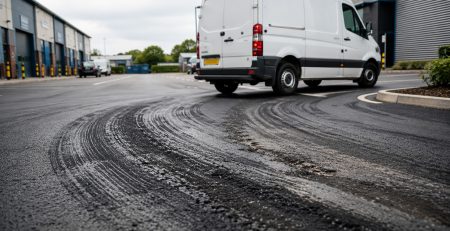
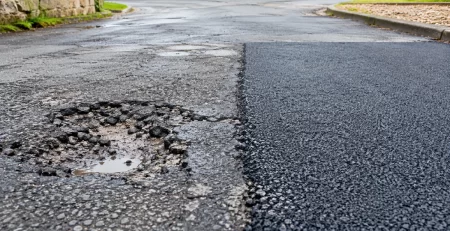
Do You Need Concrete Under Driveway Pavers?
Do you need concrete under driveway pavers? For most standard UK residential driveways, the answer is no. A full poured slab can add expense and create drainage complications when a flexible paving system over a correctly compacted aggregate sub-base would work better.
The bigger risk is choosing the wrong excavation depth, weak sub-base material, poor compaction, or unsuitable drainage and then expecting concrete to compensate. A sound existing slab may remain, and heavier loads may require a different engineered build. The first job is therefore to establish what should actually support the pavers.
Quick Check: Before choosing a base specification, ask a contractor providing driveway installation in Hertfordshire to explain the sub-base depth, compaction method, drainage route, existing ground condition, and expected vehicle loading.
Do you Need Concrete Under Driveway Pavers? Base Answer
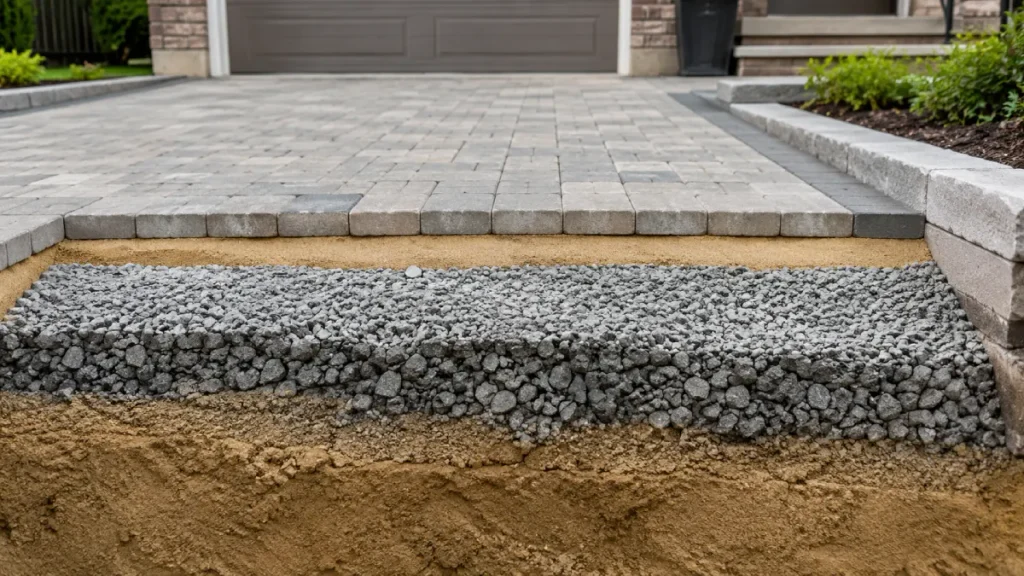
For a normal residential driveway, concrete under driveway pavers is usually unnecessary when the ground is properly excavated and a suitable aggregate sub-base is compacted correctly. Concrete is more relevant in specific rigid-base situations, existing-slab overlays, edge restraints, or engineered heavy-load designs.
Driveway Paver Base Comparison
| Base situation | Concrete slab normally needed? | Main issue to check |
| Standard domestic cars | No | Compacted aggregate sub-base |
| Weak or soft ground | Not automatically | Ground improvement and deeper design |
| Existing sound concrete | May be retained | Cracks, levels and drainage |
| Existing damaged concrete | Usually needs corrective work | Movement and structural failure |
| Heavy commercial loading | Possibly | Engineered pavement design |
| Paver edges | Concrete often used locally | Edge restraint stability |
| Permeable block paving | Usually no conventional slab | Open-graded permeable sub-base |
A conventional domestic paver driveway normally relies on a strong aggregate foundation rather than a continuous concrete slab. Understanding road sub-base preparation fundamentals is more useful than simply asking whether concrete makes the driveway stronger, because excavation, levels, moisture and compaction determine how well the pavers are supported.
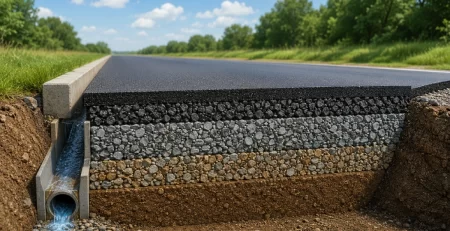
A correctly built flexible pavement spreads vehicle loads through several layers. The pavement construction layer sequence explains why each structural layer has a separate job instead of relying on one rigid material to carry everything. If the subgrade or sub-base moves, the finished blocks can settle even when the pavers themselves remain undamaged.
For many domestic situations, around 150mm of well-compacted Type 1 aggregate is a useful reference point rather than a universal specification. Ground conditions, vehicle loading, excavation depth and drainage can justify a different build, so homeowners should avoid copying one depth from a generic video or neighbouring driveway.
Driveway Paver Base Materials: What to Use
The recommended material under driveway pavers is normally compacted crushed aggregate with a separate laying course above it. The important distinction is between the structural sub-base, which carries loading, and the thin bedding material used to level and seat the blocks.
Compacted Aggregate Under Driveway Pavers
The sub-base should create a stable platform over the prepared ground. Aggregate is placed and compacted rather than simply tipped into the excavation, because loose stone can continue consolidating after vehicles begin using the driveway. The same structural principle appears in road base and binder layer roles, where load distribution depends on each underlying layer performing correctly.
A contractor should also consider the actual ground beneath the aggregate. Clay, disturbed fill, waterlogged ground and previously settled areas can require extra preparation before the normal paver build begins. This is why driveway paving groundwork and material factors can change dramatically between two driveways of the same visible size.
The finished excavation should also accommodate the paving level without leaving blocks too high against thresholds, paths or the public pavement. Where a driveway meets the highway, understanding driveway apron fundamentals helps identify why the entrance transition and surrounding levels should be considered during the base design.
Sand Above the Driveway Paver Base
The bedding layer is different from the structural sub-base. Typical flexible block paving uses a comparatively thin layer of sharp sand above the compacted aggregate, with the pavers laid and compacted into that prepared surface. The sand should not be expected to correct large dips, soft ground, or an inadequately compacted foundation.
Around 30–40mm of sharp sand is a common domestic reference for the laying course. It needs to be screeded accurately because excessive bedding depth can allow movement, while inconsistent levels make it difficult to keep the finished blocks even.
The complete paver driveway material and labour breakdown therefore needs to account for excavation, aggregate, compaction, bedding material, blocks, edge restraints and jointing rather than treating the pavers as the whole construction.
Concrete Around Paver Edges
Concrete still has a useful role even where it is not poured across the entire driveway. Edge blocks need firm restraint because repeated steering, braking and vehicle loading can push unrestrained paving outward and gradually open joints.
Concrete is commonly used beneath or behind edge restraints to hold the perimeter securely. This local use of concrete should not be confused with constructing a full reinforced slab under every paver.
A sloping site can place greater pressure on those restraints because gravity, rainfall and braking forces act along the driveway. A sloped driveway construction approach is therefore more appropriate than assuming a complete concrete slab is automatically required whenever the driveway is inclined.
Concrete Under Driveway Pavers: Main Risks
A concrete base can work beneath driveway pavers, but only when the build has been designed around that rigid surface. The biggest concerns are existing slab movement, trapped water, unsuitable finished levels and assuming that concrete automatically corrects structural problems underneath it.
Existing Concrete Under Driveway Pavers
A structurally sound existing concrete driveway does not always need to be demolished. If the slab is stable, suitably level and free from serious deterioration, paving over it may avoid unnecessary excavation and waste. Homeowners assessing an existing concrete driveway in Hertfordshire should first establish whether the slab is genuinely sound enough to become part of the new construction.
Visible cracks need more than a cosmetic inspection. Small stable cracking and serious movement are different problems, and understanding concrete crack repair method helps separate a repairable defect from evidence that the slab is no longer a dependable base.
Where the old driveway has widespread deterioration, localised repairs may not solve the underlying movement. The concrete driveway repair fundamentals should be considered before new blocks hide the condition of the concrete and make future diagnosis more difficult.
Water Trapped Over a Concrete Base
Water is one of the main technical concerns when driveway pavers are placed above impermeable concrete. Rain can enter through block joints and reach the bedding material, so that water needs a controlled route away from the pavement.
A conventional aggregate base can allow different moisture movement from an impermeable slab. If water becomes trapped within saturated bedding material, the paving can suffer local movement, pumping or deterioration even though the concrete beneath it remains hard.
Existing drainage features therefore need to be assessed before the overlay begins. Properties where water crosses an entrance or ditch may also need to consider driveway culvert drainage basics rather than concentrating only on the surface finish.
Poor water control can also remove material around edges or foundations. The driveway erosion causes and prevention become particularly relevant where runoff already leaves washed-out areas, because adding new blocks without solving the water route can reproduce the same failure.
Damaged Concrete Should Not Be Hidden
Putting attractive blocks over a failed slab does not remove the cause of the failure. If the concrete is moving because of weak ground, poor drainage or settlement, that movement may still affect the new paving system above it.
Some existing concrete can be restored rather than completely replaced. The concrete driveway resurfacing process helps distinguish surface deterioration from situations where the underlying structure itself is unsuitable.
If complete reconstruction is required, compare the amount of removal and retained material before selecting a specification. Driveway repaving scope and layer factors can determine whether keeping part of the existing construction is sensible or merely postpones a structural problem.
Driveway Paver Layers: Correct UK Build
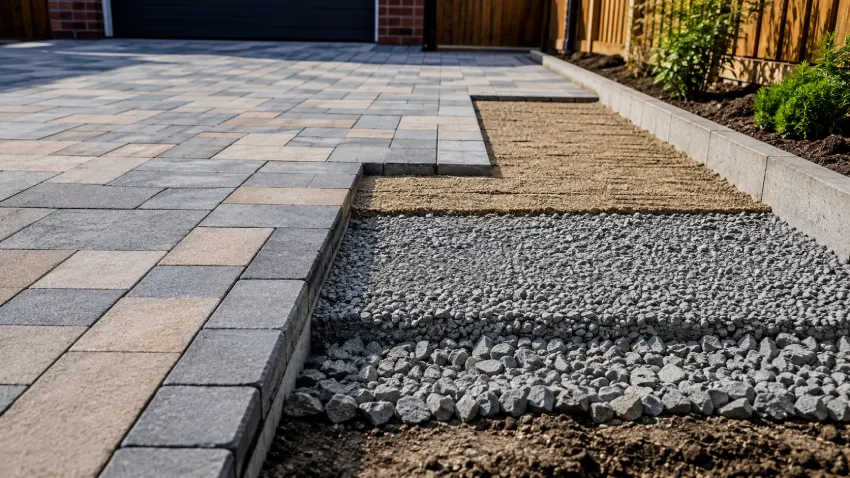
A driveway paver system should be viewed from the ground upwards rather than from the decorative block downwards. Each stage needs to support the next, and mistakes in excavation or compaction are difficult to correct once the pavers have been laid.
Driveway Paver Layer Sequence
| Stage | Typical role | Main failure if wrong |
| Prepared subgrade | Supports whole construction | Settlement and soft spots |
| Compacted aggregate sub-base | Spreads vehicle loading | Rutting and movement |
| Sharp-sand laying course | Creates uniform bedding | Uneven blocks |
| Driveway pavers | Running surface | Local damage or displacement |
| Jointing material | Locks block pattern | Open joints and movement |
| Edge restraints | Contains the paving | Blocks spreading outward |
The first stage is excavation to competent ground and the correct finished depth. Organic soil, badly disturbed material and obvious soft spots should not simply be covered with aggregate and forgotten, because the whole paver structure depends on the support beneath it.
Aggregate should then be compacted thoroughly, with thicker construction built in controlled layers rather than attempting to compact one loose deep layer from the top. Good compaction is the main reason a flexible paver driveway can carry normal domestic vehicles without needing a concrete slab underneath.
The bedding layer comes only after the structural base is stable and correctly levelled. It should remain relatively uniform because the sharp sand is there to bed the blocks, not replace missing aggregate or fill major depressions.
The pavers are then laid to the planned falls, restrained at the edges and jointed. Where a project is being compared with other options such as resin and block driveways in Essex, the same principle applies: the visible surface should not distract from checking the specification underneath it.
When a Concrete Base Can Make Sense
A concrete base becomes more reasonable where a suitable slab already exists and can safely be reused. It may also appear in specialist rigid paving specifications or situations where engineers have designed the pavement for unusually demanding loads.
Concrete depth must itself be appropriate for the loads being carried. The concrete driveway thickness criteria are relevant when someone proposes a slab beneath pavers, because adding concrete does little if the slab is inadequately designed or poorly supported.
The amount of concrete involved also needs to be understood before assuming a rigid base is a minor upgrade. Driveway concrete quantity factors show how driveway area and slab depth affect material requirements, which is one reason concrete should have a clear structural purpose rather than being added automatically.
Driveway Paver Bases Across Five UK Areas
The answer to do you need concrete under driveway pavers? remains broadly the same across these areas, but local ground, drainage, existing surfaces and intended loading still need individual checks. These location pages provide related surfacing options when comparing the most suitable driveway build.
Resin Shingle Driveways in Bedfordshire
A paver driveway in Bedfordshire should be designed around the existing ground and drainage rather than assuming a concrete foundation is compulsory. When comparing pavers with a resin bound paving driveway in Bedfordshire, check whether each quotation includes comparable excavation, foundation preparation and drainage so the surface options are being assessed on equal terms.
Driveway Finishes in Oxford
Oxford homeowners replacing an existing hard surface should first assess what is underneath it. When an epoxy stone driveway in Oxford is being replaced with pavers, the old construction should be checked for stability, finished levels and drainage before deciding whether any rigid base is worth retaining.
Driveway Paving Resin in Cambridgeshire
Cambridgeshire driveway bases should be selected according to ground strength and the intended surface system. Comparing pavers with stone surfacing in Cambridgeshire is more useful when both specifications clearly state the proposed excavation depth, base material and approach to surface water.
Coloured Driveways in Essex
Essex homeowners can choose from several decorative driveway finishes, but colour and surface appearance do not determine whether concrete is required beneath pavers. Where resin and block driveways in Essex are being compared, the structural foundation and drainage specification should carry more weight than the visible finish alone.
Driveways Resin Bonded Surfaces in Hertfordshire
Hertfordshire properties with an existing concrete driveway may have the option of retaining part of the old construction if it is genuinely stable. Whether comparing pavers, resin or another finish, a concrete driveway in Hertfordshire should be checked for cracks, settlement and drainage before it is accepted as a foundation for new work.
Concrete Under Driveway Pavers: Final Check
For most domestic properties, do you need concrete under driveway pavers? No, provided the flexible pavement is built on suitable ground with the correct compacted sub-base, bedding layer, drainage and edge restraints. If you are uncertain about an existing slab or proposed foundation, driveway installation in Hertfordshire should begin with a clear specification showing exactly what will remain, what will be removed and how vehicle loads and water will be handled.
Concrete Under Driveway Pavers: FAQs
Does concrete under driveway pavers stop weeds?
Concrete under driveway pavers does not guarantee a weed-free driveway. The homeowner discussions supplied for this topic repeatedly focus on weeds developing in paving joints, including seeds establishing in material that collects from above. Keeping joints correctly filled and maintaining the surface matters more than adding a concrete slab solely for weed prevention. Concrete underneath should therefore be chosen for structural reasons, not as a weed-control shortcut.
Is concrete under driveway pavers better on clay soil?
Concrete under driveway pavers is not automatically the right answer for clay soil. Clay can change volume as moisture conditions vary, so the key question is whether the ground and proposed pavement structure have been assessed properly. A suitable aggregate sub-base may still be used, but weak or unstable ground can require additional depth, separation or ground improvement. Concrete should only be introduced when the complete design supports that choice.
Does concrete under driveway pavers stop freeze-thaw movement?
Concrete under driveway pavers cannot remove every freeze-thaw risk. Moisture, drainage and ground movement still matter, particularly if water becomes trapped above an impermeable slab or beneath poorly drained construction. Interlocking pavers can accommodate limited local movement differently from a continuous slab, while damaged blocks can often be lifted individually. Climate therefore affects the whole pavement specification rather than proving that concrete is always required.
Is concrete under driveway pavers needed for vans?
Concrete under driveway pavers may become more relevant as vehicle loads increase, but a van does not automatically mean a concrete slab is required. Vehicle weight, frequency of use, turning loads, ground strength and sub-base thickness all affect the design. Normal domestic construction should not simply be copied for unusually heavy motorhomes, commercial vans or lorries. Where loads are substantially above normal passenger-car use, a load-specific pavement specification is safer.
Is concrete under driveway pavers worth the expense?
Whether concrete under driveway pavers is worth the extra expense depends on what structural problem the concrete is solving. Pouring a full slab beneath an otherwise standard flexible residential driveway can add excavation, concrete and drainage work without necessarily improving the result. Retaining an existing sound slab may be economical, while specialist loads can justify rigid construction. Ask for the technical reason before accepting the additional work.
Can DIY work avoid concrete under driveway pavers?
Yes, a flexible domestic paving system can be built without concrete under driveway pavers, although the absence of a slab does not make the groundwork trivial. DIY failures often come from shallow excavation, inadequate compaction, incorrect levels, unstable edges or poor drainage rather than the choice of paving block. Anyone carrying out the work needs suitable compaction equipment and enough knowledge to prepare the subgrade and base correctly.
Does joint sand replace concrete under driveway pavers?
No. Jointing material and concrete under driveway pavers perform completely different functions. Joint material fills the spaces between blocks and helps the interlocking surface work as a unit, while the sub-base beneath the bedding layer carries and distributes vehicle loads. Joint sand cannot compensate for a weak foundation, just as a concrete slab does not eliminate the need for correctly installed joints and restrained paving edges.